Los Laureles

Penguino, Los Laureles, Barracas

Penguino, Los Laureles, Barracas

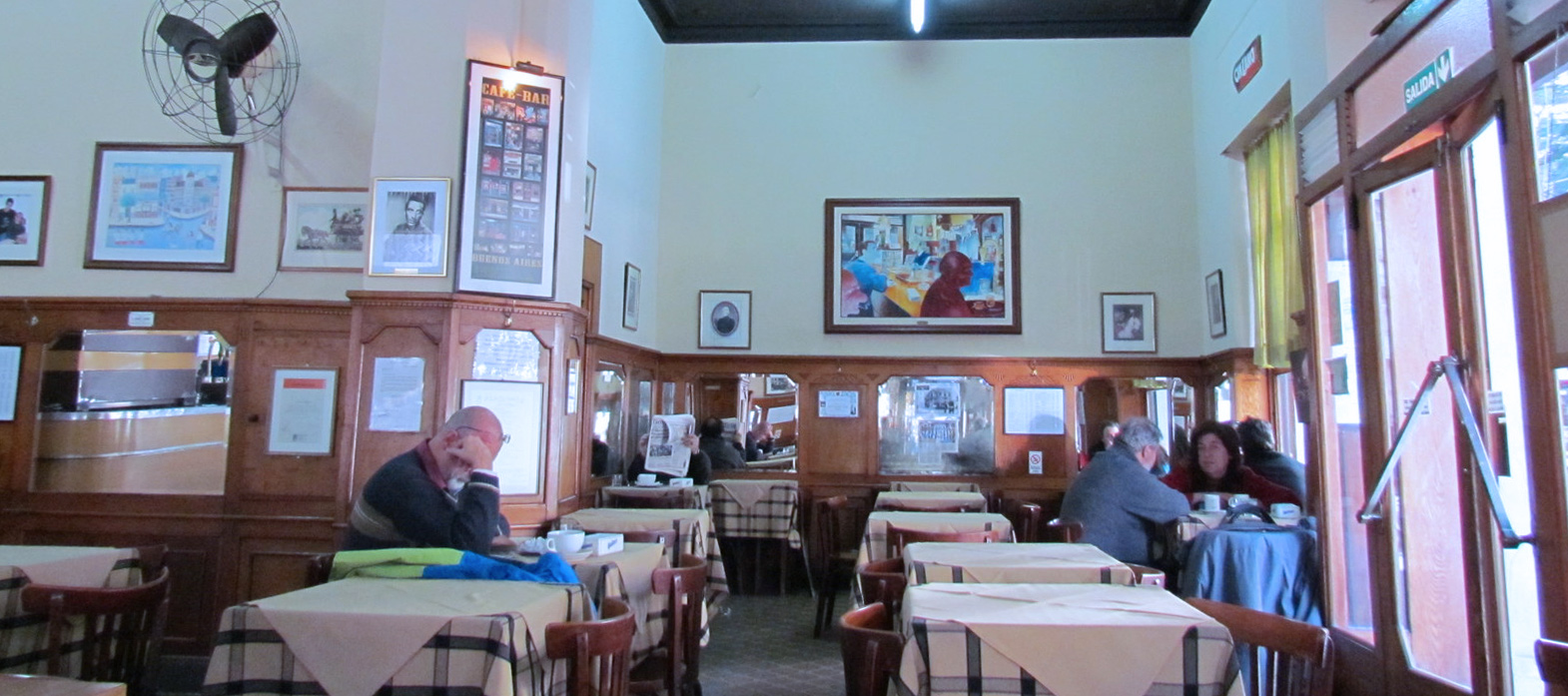
Situated in Barracas in the south of the city, Los Laureles is a little out of the way from the normal expat stomping grounds of Palermo and San Telmo. In 2009 I spent a few months in Barracas volunteering for a kid’s club so I know a little of the area but haven’t had reason to head down there recently. Getting there couldn’t be easier – the number 12 passes in front of my flat and drops me less than a block from the bar. Immediately on getting off the bus, there is a change of pace from the chaos of the centre. Avenida Iriarte is a wide avenue with a wide dividing area complete with benches and chess tables. It has a dusty, provincial feel to it, far-removed from where I started my journey. The bar itself sits on a street corner next to a busy railway bridge. It’s a large space filled with tables, some plain and others laid with tablecloths for lunch.
Los Laureles, Barracas

Los Laureles, Barracas


Pictures. newspaper clippings and boards advertising the day’s specials line the wall. It’s not busy when I go, but the employees all seem to be doing something and give the bar life.
Los Laureles, Barracas

Los Laureles, Barracas


Opened in 1909, and one of the few buildings in the area remaining from that period, the bar has always been an important part of life in the barrio. Closed in the evenings during the week, at weekends it clears the tables and comes to life as a milonga giving locals the chance to listen to and dance tango.
Los Laureles, Barracas

Menu boards, Los Laureles, Barracas


Los Laureles is a classic bar, in an out-of-way part of town but has enough going for it that it is most definitely worth a detour.

Bar Los Laureles: Avenida Iriarte 2290
Colectivos: 12, 102

This page is part of a series examining the Notable Bars of Buenos Aires.

For more on what the barrio has to offer, see Robert Wright’s excellent series on the architecture and history of Barracas.

London City

Opened in its current incarnation in 1954, London City is less than a block from the Plaza de Mayo on the corner of Peru and Avenida de Mayo. Named for 2 large English stores that has occupied the site in the early 20th Century, it’s easy to miss in the hustle and bustle of the busy downtown area.

London City, Buenos Aires

London City, Buenos Aires


Upon entering, it’s not immediately obvious why the bar has Notable status. Whilst it hasn’t had a total atmosphere transplant like the Bar Iberia, it doesn’t really stand out from dozens of similar Confiterias in the city.
Submarino, London City, Buenos Aires

Submarino, London City, Buenos Aires


At the back, in what was once a smoking area, lies a clue to the more glamourous past of London City. During the first half of the 20th Century, the bars and cafe along the Avenida de Mayo attracted many artists and writers who would sit around with an espresso, wrestling with the great philosphical and artistic questions of the day.
Quotes from Los Premios, London City, Buenos Aires

Quotes from Los Premios, London City, Buenos Aires


Influential Argentine author Julio Cortazar was one such artist and his favourite was the London City, going as far as mentioning it in his work, Los Premios.
London City, Buenos Aires

London City, Buenos Aires


These days however, the artists have moved on to be replaced by local office workers and tourists and London City has lost most of its charm.

London City: Avenida de Mayo 599
Subte: Peru, Line A

This page is part of a series examining the Notable Bars of Buenos Aires.

La Giralda

Chocolate con Churros

Chocolate con Churros


In case you are a little unclear as to why you should pay a visit to La Giralda, it is spelled out for you in large neon letters on the back wall. Chocolate and Churros. La Giralda is renowned as having the best of both in the city and when we visited it was certainly full of families sampling the house speciality.
A New Generation, La Giralda

A New Generation, La Giralda


Opened in 1932 on Avenida Corrientes, in the heart of the theatre district, La Giralda is not the most intimate of places; chaotic, noisy and brightly lit, but you don’t come for the ambience, you come for the chocolate and let me tell you, you won’t be disappointed.
Chocolate y Churros, La Giralda

Chocolate y Churros, La Giralda


The churros were good, not freshly-made but good nonetheless, but the chocolate was lovely – thick, creamy and just sweet enough. La Giralda might not become a regular haunt, but it’s definitely worth a visit to try the best chocolate in Buenos Aires.
La Giralda, Buenos Aires

La Giralda, Buenos Aires

La Giralda: Avenida Corrientes 1453
Subte: Uruguay, Line B

This page is part of a series examining the Notable Bars of Buenos Aires.

36 Billares

36 Billares WindowLooking at it from ground level, you could be mistaken for thinking that 36 Billares is just a cafe. An old-style, historic cafe which doesn’t look as though it has changed much in the last few decades, but just a cafe nonetheless. However, 36 Billares has an underground other half, one which is pretty much given away by the name, as the downstairs was home to the first billiard hall in Buenos Aires (opening in 1894), and is still going strong to this day. The upstairs area is an atmospheric cafe with plenty of dark wood on the walls, old clocks and billiard photographs. A small stage area is set up on the left-hand side, reserved for tango shows. It has a charm to it, past its hey-day yet still retaining charm and character.
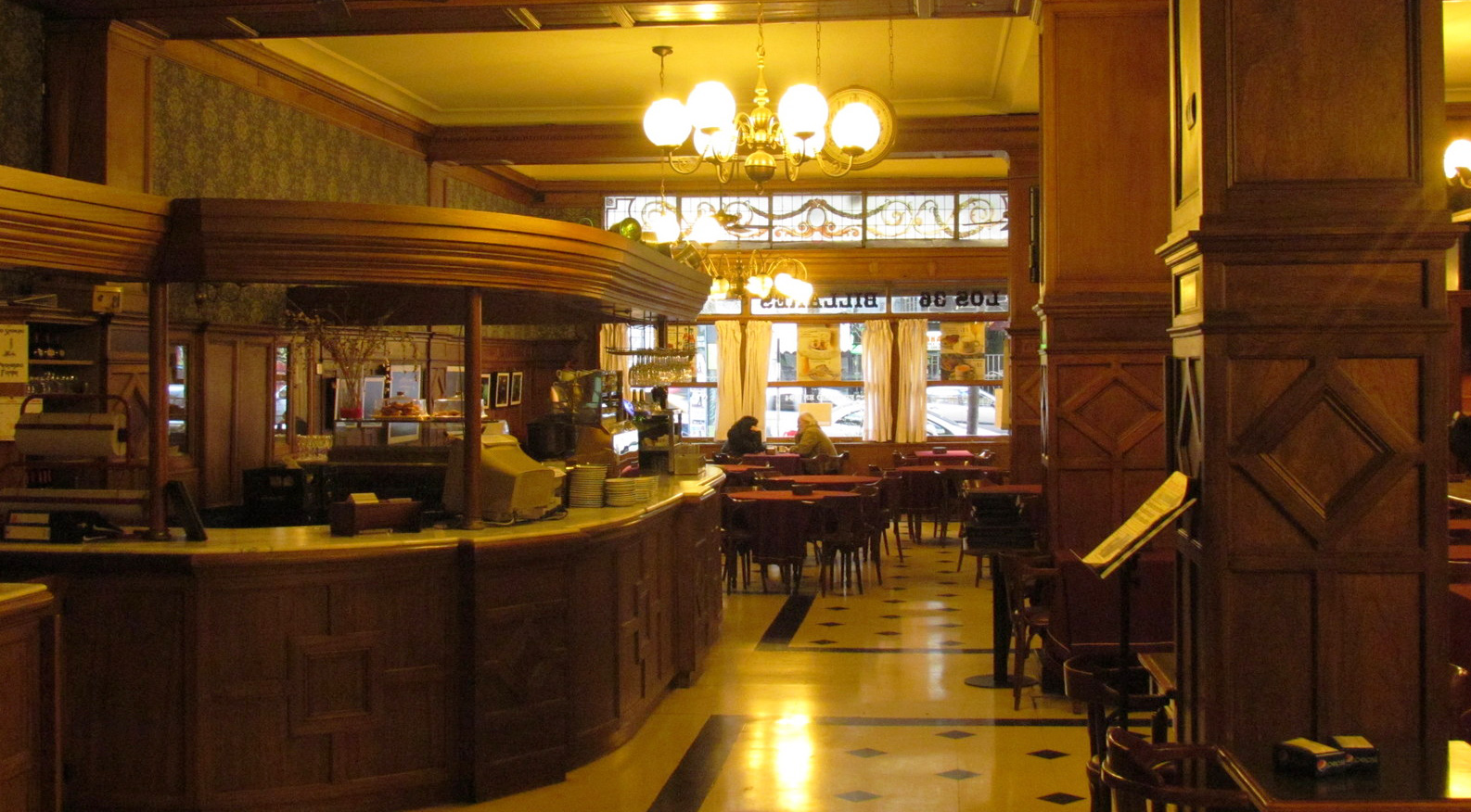
36 Billares Upstairs

36 Billares Ground Floor Bar Area


None of this however, prepares you for what goes on downstairs, and has been going on for the last 118 years. The space is huge and is filled with tables, old men and the gentle clack of balls striking each other. There are no longer the eponymous 36, but I’m told they now have 9 billiard tables, 6 more for pool pool and 1 for snooker. Also gone are the card, dice and chess tables which used to take up half the space upstairs.
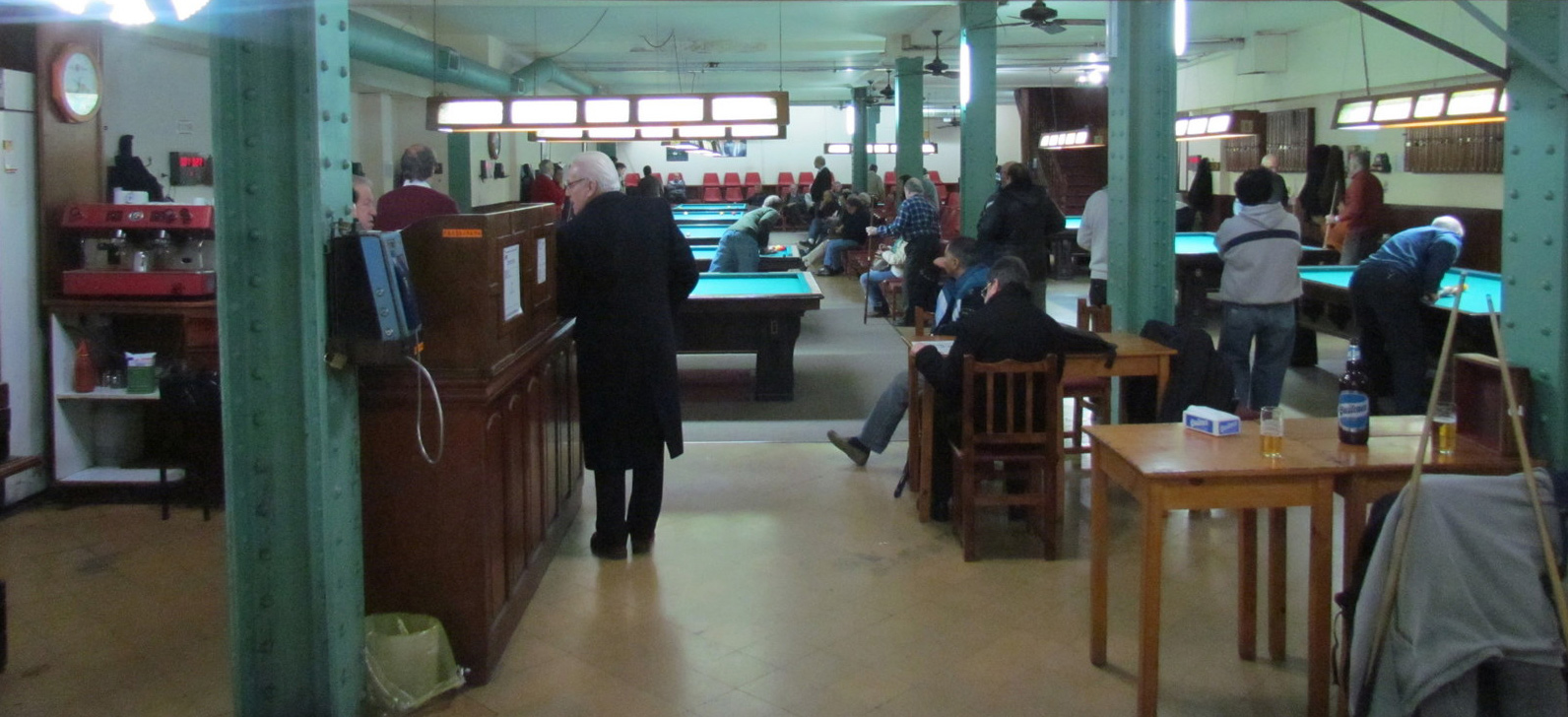
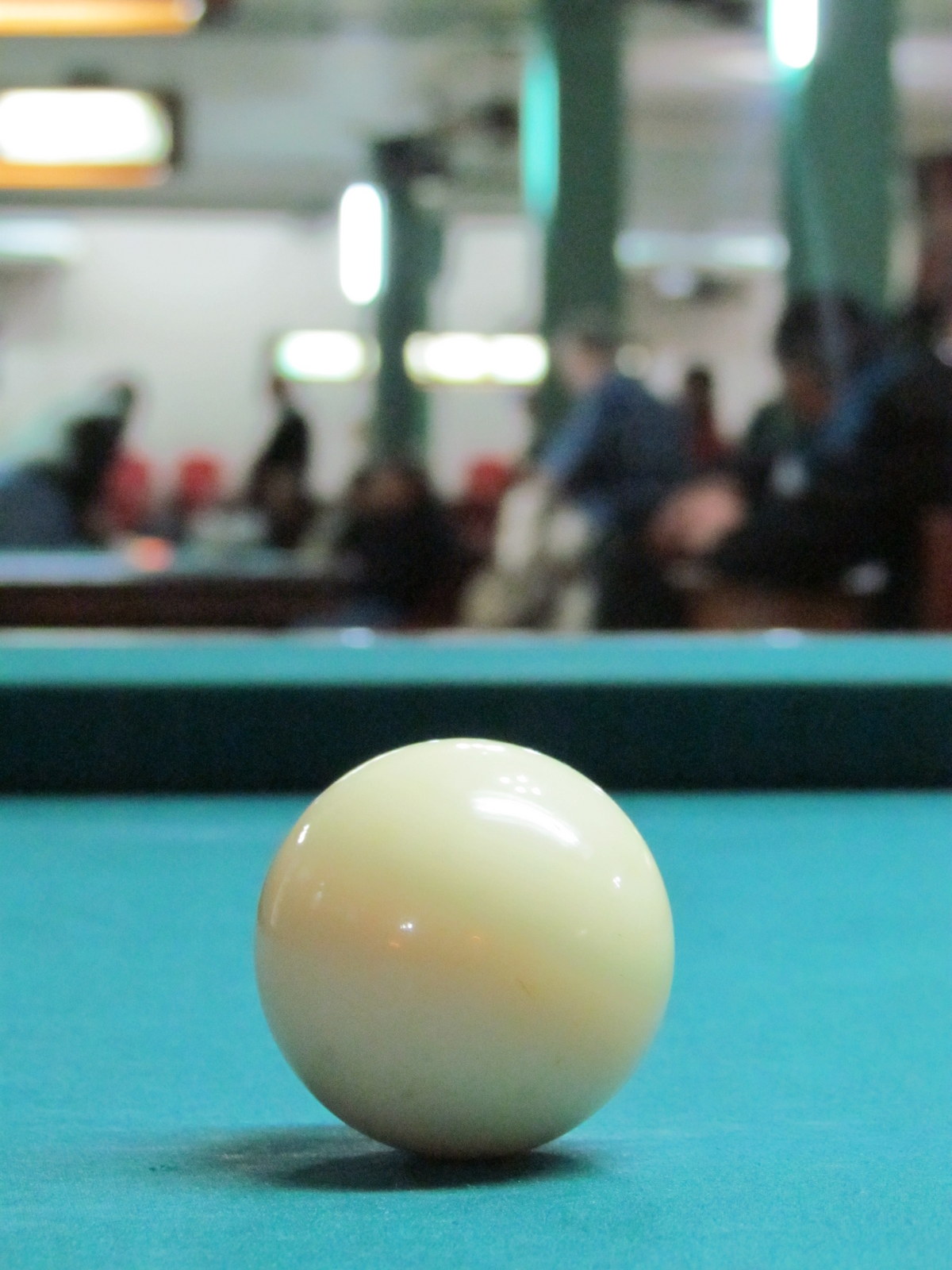
36 Billares - The Billiard tables

36 Billares – The Billiard tables


Simply ask the waiter for a table and he sets you up, starting the meter, which at the same time opens a small door releasing the cue ball which is then placed on the table – an ingenious system that’s clearly been around for a while as the meters (built in Paris) look like they were installed when the place opened. When you’re finished, the number of units shown on the meter is checked against a tarif sheet and you pay for the time played.
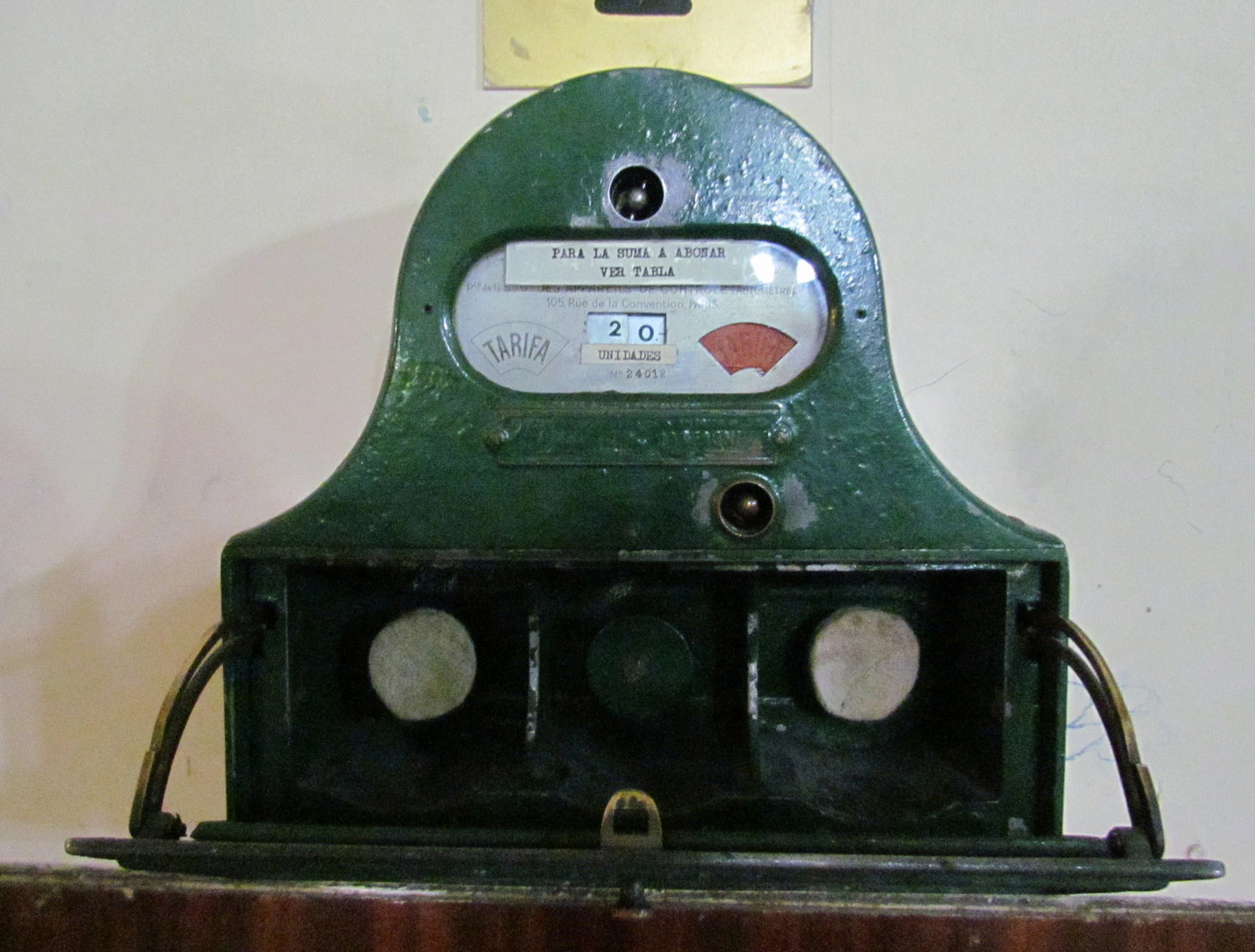
36 Billares, the meter

36 Billares, the meter


At 5pm on a Thursday afternoon the place was pretty full with the billiard tables being the busiest. Its clientele are, for the most part, elderly men who clearly spend a lot of time there. Around the walls are little lockers where the regulars keep their cues, and frequently the public phone would ring, answered by the barman who would then shout out the name of one of the customers who would take the call.
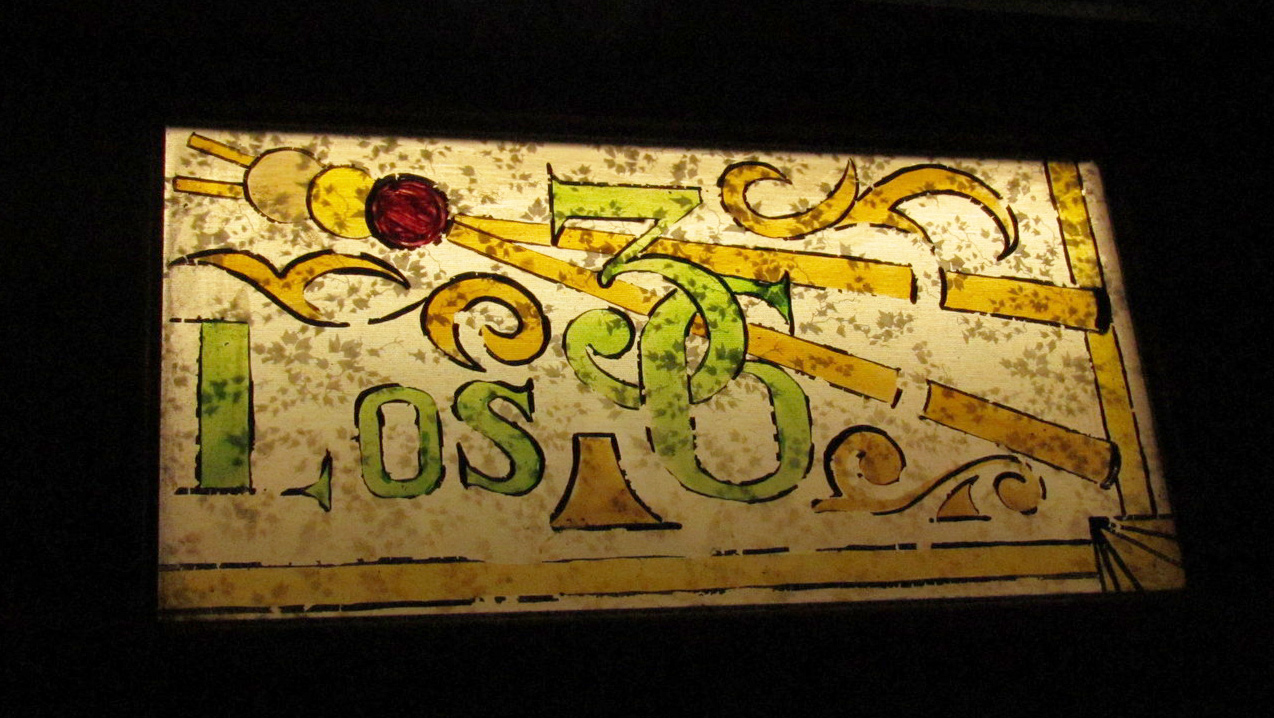
36 Billares, Table light detail

36 Billares, Table light detail


Hidden below the once-swanky Avenida de Mayo, 36 Billares feels like another world, a secret known only to a few who spend hours down there amongst friends, and have done so for years. Very little has changed in the last 100 years down in that basement and it doesn’t give the sensation that if the customers have anything to do with it that much will change over the next century.
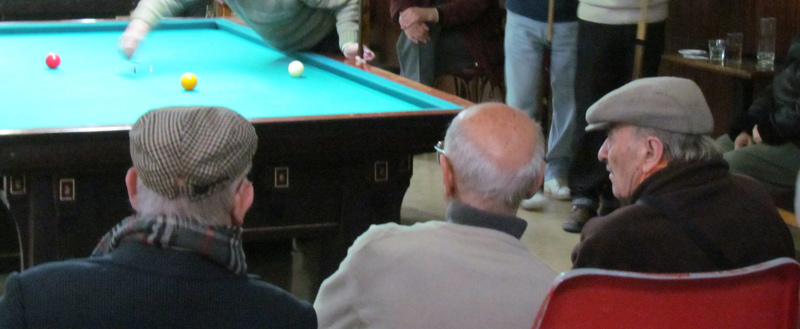
36 Billares - Watching the game

36 Billares – Watching the game


36 Billares - Artistic Ball Shot

36 Billares – Artistic Ball Shot


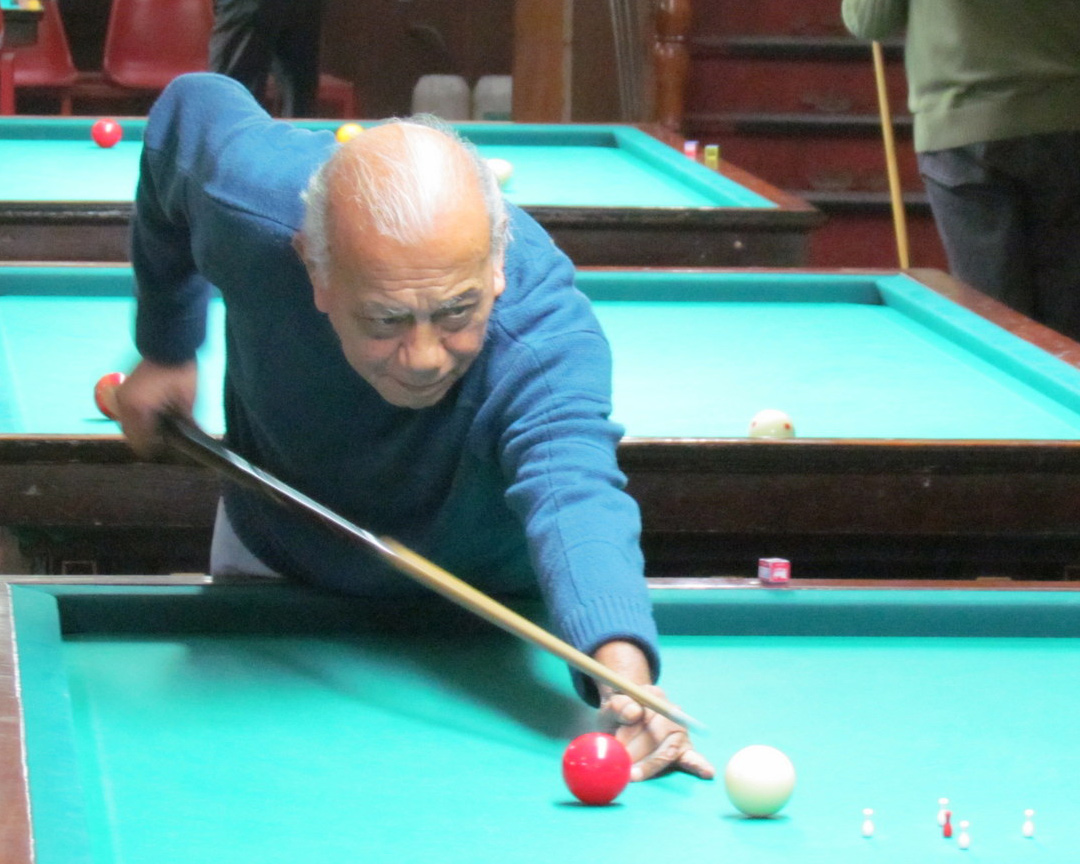
36 Billares - In action

36 Billares – In action

36 Billares: Avenida de Mayo 1265
Subte: Saenz Peña, Line A

This page is part of a series examining the Notable Bars of Buenos Aires.

Bar Mar Azul

Mar Azul opened in 1939 and, I’m proudly told by the waiter, hasn’t changed since. The windowframes are the original oak and the glass tiling on the far wall is the same as was installed when it opened.

Bar Mar Azul

Bar Mar Azul Interior


There’s something very familiar about Mar Azul and in a sense it’s identical to many small bars around the city. Its sole waiter runs the place very efficiently, so much so that when I asked him for a flan (crème caramel), he gave no sign of acknowledgement and I was getting ready to ask him again when it arrived on my table. The dark wood and tiled floor could be in any bar in the city and the menu has the same items would see all over.
Bar Mar Azul, Buenos Aires

Bar Mar Azul, Buenos Aires


For all its lack of originality it does have a warmth about it. As the gentlemen at the table behind me left after their lunch the waiter called out “Hasta mañana”, and after having heard me talk to the waiter the couple next to me asked me how to ask for the bill in English as they were on their way to Miami that evening for the first time. Turns out they were from Santiago del Estero and were going to be playing Argentine folk music over there.
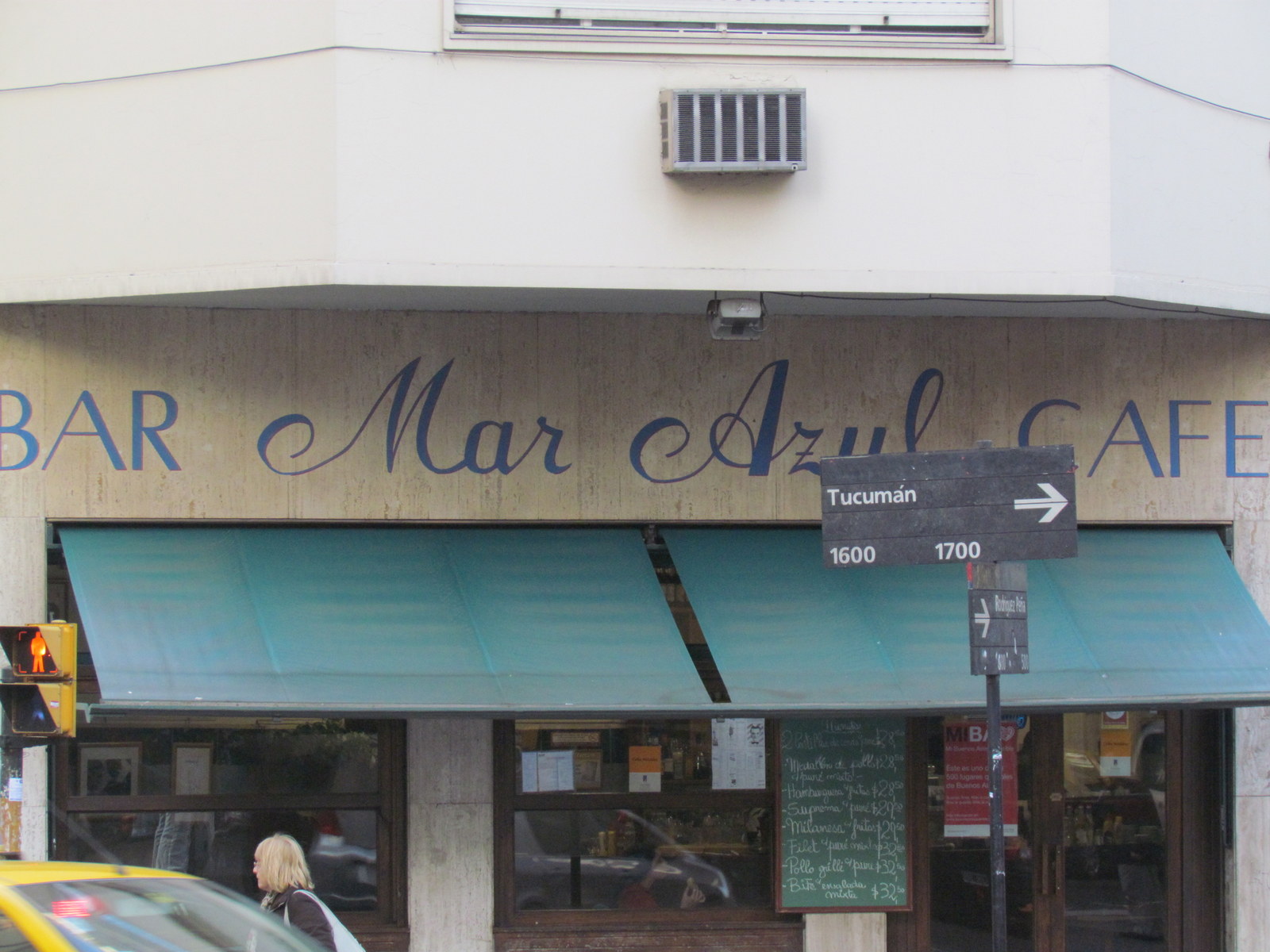
Bar Mar Azul

Bar Mar Azul Exterior


It’s not the sort of place you would go out of your way to visit, but if you lived nearby it would make a great little local, and has enough atmosphere and history to deserve its notable status.

Mar Azul: Tucuman 1700
Subte: Callao, Line D

This page is part of a series examining the Notable Bars of Buenos Aires.

Bar Los Galgos

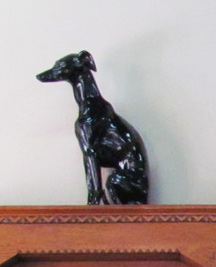
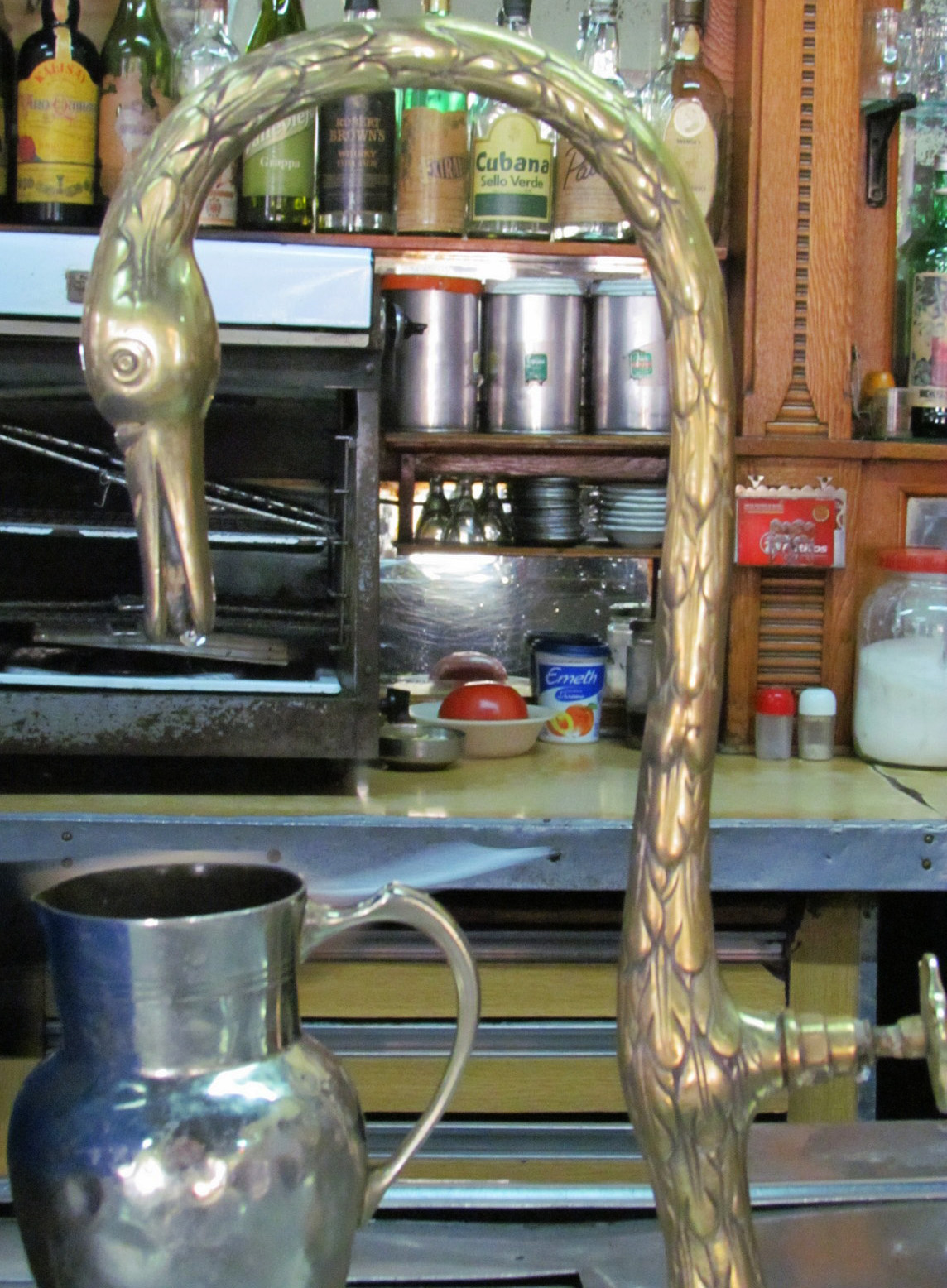
Los Galgos has 3 doors. One opens onto Callao and Recoleta, another onto Lavalle and San Nicolás and the third on the corner of the building is said to open onto neither, forming a kind of no-mans-land between the 2 neighbourhoods. Originally opened in 1930 in a building that has housed the first Singer sewing machine factory in Argentina, and named Los Galgos (The Greyhounds) by its dog-racing owner, it has been in the same family since 1948 when it was purchased by José Ramos. The bar today doesn’t look as though it has changed much in the intervening years, and in fact all the fittings, down to the formica topped tables and the “goose neck” water tap are the originals. The business itself has undergone many changes however, gone are the glory years of the 50s and 60s when the bar was open 24 hours a day and served such artistic luminaries as Aníbal Troilo, Enrique Santos Discépolo, Arturo Frondizi and Oscar Alende (the last two were both wonderfully named Intransigent Party – Alende founded it and Frondizi was President of Argentina from 1958 to 1962).

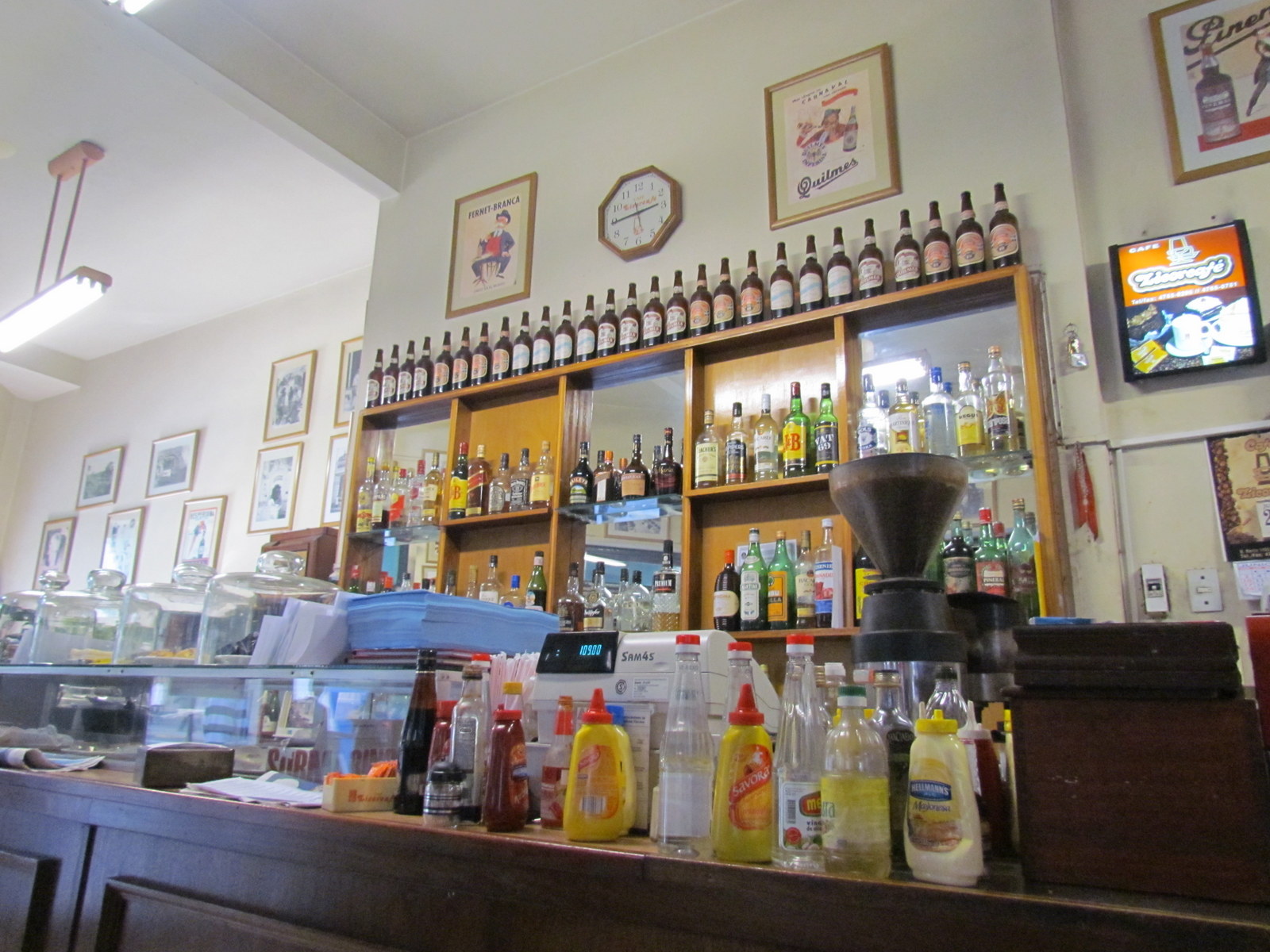
The bar, Los Galgos

The bar, Los Galgos

By the end of the 90s the bar had gone from employing 10 waiters and serving 3,000 coffees a day to 4 staff and less than 200 cups a day in the space of a decade. An article framed on the bar, written in July 2001, outlines the struggles the bar was having at the time in staying open due to the economic crisis. At the time a coffee cost 1 peso, when I visited 11 years later, the same cup cost 10 pesos.

The "goose neck" tap

Los Galgos is a fascinating slice of Porteño life that has changed very little its 82 years of existence – it may not be the most lively bar around these days but if you’re in the area and need a break, then it’s worth dropping in and soaking up a little of its history.

Los Galgos, Buenos Aires

Los Galgos, Buenos Aires

Bar Los Galgos: Avenida Callao 501
Subte: Callao, Line B

This page is part of a series examining the Notable Bars of Buenos Aires.

Confitería del Hotel Castelar

Opened in 1928 close to where the Avenida de Mayo meets the Avenida 9 de Julio, the Hotel Castelar (or Castelar Hotel as they seem to insist on calling it) has a Notable Bar in its lobby, and seemed like a nice spot to stop for a coffee on a chilly June evening.

Confiteria del Hotel Castelar seen from reception

Confiteria del Hotel Castelar seen from reception


The bar itself is a grand wooden affair, decorated with a large banner-like Argentinian flag, but the rest of the room is a little too bright, clinical and cold to have any sort of cozy bar feeling. It feels like, well, a hotel, complete with the breakfast buffet tables set up the length of one side of the room.
Confiteria del Hotel Castelar

Confiteria del Hotel Castelar


However, we were visiting on the Día de la Bandera, Argentina’s Flag Day (which perhaps explained the large flag above the bar, thinking about it), and the traditional snack on this day is Hot Chocolate with Churros, which we, of course ordered.
Churros, Confiteria del Hotel Castelar

Churros, Confiteria del Hotel Castelar


One of the hotel’s main claims to fame is that Spanish poet and dramatist Federico García Lorca https://en.wikipedia.org/wiki/Federico_Garc%C3%ADa_Lorca stayed there for 6 months in 1933 whilst his play was being performed at the Teatro Avenida next door (nearby Bar Iberia also claims him as a customer), and it’s not hard to imagine that not a great deal has changed since he checked out. From the grand revolving door and large CH which welcome you as you enter to the wooden bar and marble walls, the Confiteria has certainly kept its fittings intact but lacks atmosphere as it’s not really clear where the hotel finishes and the bar starts.
Castelar Hotel entrance

Castelar Hotel entrance

Confiteria del Hotel Castelar: Avenida de Mayo 1152
Subte: Péru, Line A

This page is part of a series examining the Notable Bars of Buenos Aires.

Bar Iberia

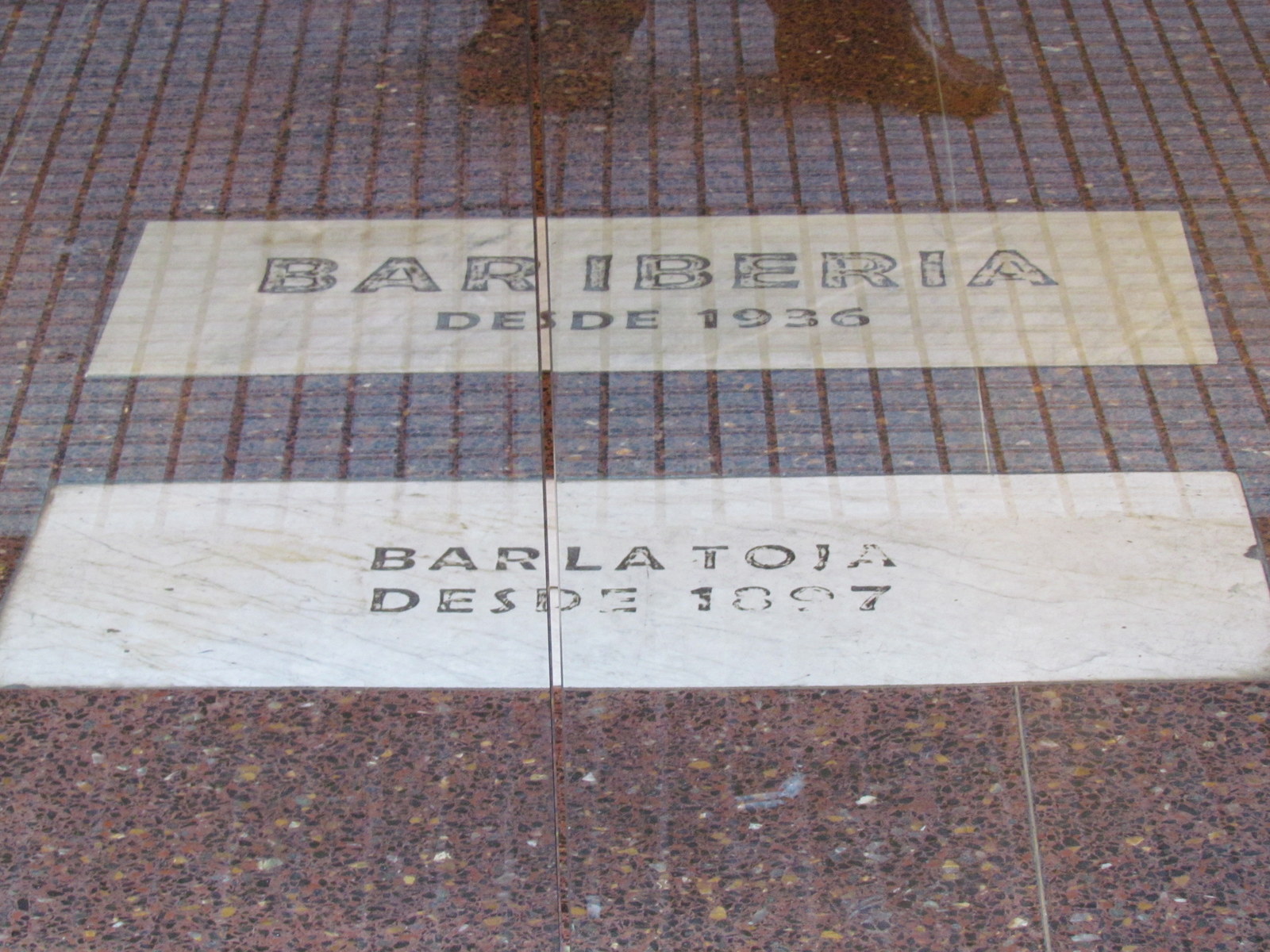
Situated on the corner of Avenida de Mayo and Salta, Bar Iberia has a turbulent political past and has played a large role in the history of the Spanish immigrants of Buenos Aires. First opened in 1897 and called Bar La Toja, the bar quickly became a meeting point for members of the Comité Central del Radicalismo, whose offices were a few doors away.

Bar Iberia, Entrance

Bar Iberia, Entrance


Changing its name to Bar Iberia in 1936 it gained a reputation as being the main Republican bar of the city, its clients following the events of the Spanish Civil War every day. This, of course, made it a target for Franco’s Nationalist followers who frequented a bar across the street call El Español, and on more than one occasion tables and chairs were flung across the Avenida de Mayo as the two sides fought a mini-version of the civil war here in Buenos Aires.
Customer, Bar Iberia

Customer, Bar Iberia


The bar also welcomed many customers from the cultural world including Spanish dramatist Federico García Lorca who stayed at the nearby Hotel Castelar from October 1933 to March 1934 while one of his plays was being performed in the next-door Teatro Avenida.
Bar Iberia

Bar Iberia


The bar today has obviously been recently renovated and visually, nothing of its historical past remains and it is now impossible to differentiate it from the hundreds of cafes that populate the centre of Buenos Aires. Plaques commemorate it’s Notable Bar status as well as it having been named a Corner of Hispanic Interest in 2003, however there is very little interest in the bar itself now.
Corner of Hispanicness

Corner of Hispanicness

Bar Iberia: Avenida de Mayo 1196
Subte: Peru, Line A

This page is part of a series examining the Notable Bars of Buenos Aires.

Buenos Aires Spanish Classes

Learn Spanish in Buenos Aires from a fun, experienced, professional & highly recommended Spanish teacher. Patricio will also teach you about local culture to help make your stay more interesting.