Las Violetas

Las Violetas is a stylish place. With murals, stained-glass canopies and rows of delicious-looking cakes on display, it’s obviously somewhere which attracts a certain type of clientele. When I visit, on a Sunday afternoon, it’s full of noisy families and groups of ladies on what could be their annual meetup over coffee and cakes.
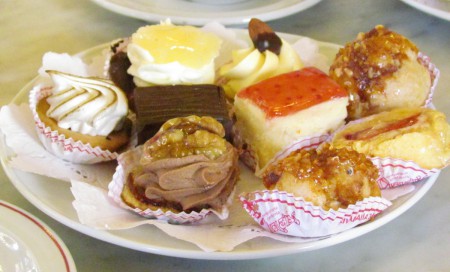
La Violetas, Almagro

Cakes, La Violetas, Almagro


Las Violetas is a Confiteria, that is to say it makes and sells cakes, as well as offering a large cafe ares to have a cup of coffee with your cake, and like most Confiterias in Buenos Aires is not a place to eat or drink, rather a place to talk. Nobody is rushing, the waiters included, and the high ceilings and sunlight streaming in from outside give it an open and welcoming feeling as witnessed by the fact it has been in business on the same corner in Almagro for over 125 years.
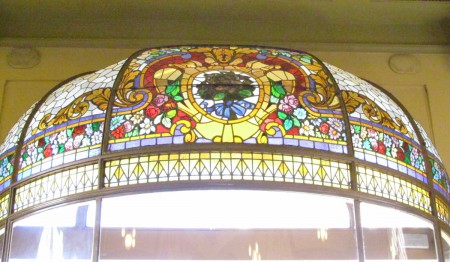
Las Violetas, Almagro

Window Canopy, Las Violetas, Almagro


It may not be obvious from the surroundings (which underwent a major reconstruction at the end of the 1990s), but La Violetas played a role in the struggle against the Dirty War when it was a regular meeting place for the Madres de la Plaza de Mayo in the 1970s.
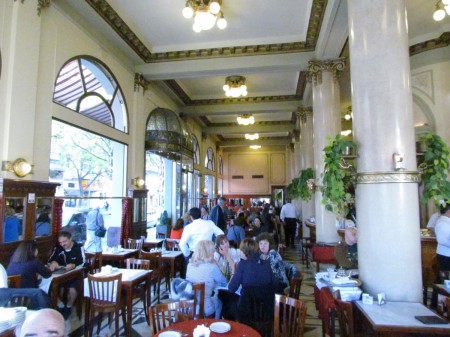
Las Violetas, Almagro

Las Violetas, Almagro


I must confess that it’s not really my kind of place. Maybe a little too bright, a little too neat, a little too elegant for me to feel totally at ease, however Las Violetas is the sort of place that I’m glad exists, proving that not everything in this world has to change and be replaced, that some ideas just work well and can stay that way.

Las Violeta: Avenida Rivadavia 3899
Subte: Castro Barros, Line A

This page is part of a series examining the Notable Bars of Buenos Aires.

Café de la Esquina

Avenida del Libertador is, to be honest, ridiculously long. No avenue should be that long. It starts in Retiro and makes its way northwards, getting swankier by the moment. By the time it leaves Capital Federal it has covered more than 80 blocks (each block being roughly 100 metres long), and actually continues into Provincia for at least another 50 or so. I don’t know the Belgrano stretch very well, I’ve crossed it a few times, or hunted for a cash point when visiting the nearby Barrio Chino, but my impression was one of tall apartment blocks and modern, brightly lit ice-cream parlours and cafes.

Cafe de la Esquina, Belgrano

Cafe de la Esquina, Belgrano


Sitting on the corner of Libertador and Olazabal, about 60 blocks from Retiro, the aptly-named and absolutely not-brightly-lit-in-the-slightest Cafe de la Esquina is a nice break from the local trend. In fact it may have gone a little too far – it is so dark and cosy inside that it actually appears, from the outside to be closed. Happily not the case, inside it has tall ceilings and wood-panelled walls decorated with a familiar array of old pictures and ornaments.
Cafe de la Esquina, Belgrano

Bar area, Cafe de la Esquina, Belgrano


It certainly has the look and feel of an old Notable Bar, but according to their website (the waitress wasn’t much help when I asked), whilst the building dates from 1906 the bar itself has only been going since 1983.
Cafe de la Esquina, Belgrano

Cafe de la Esquina, Belgrano


Despite that, I liked it nonetheless. It being dark and chilly outside it was nice and cosy space with an ancient-looking open stove giving heat in the corner and lace curtains in the windows. It felt a bit like your gran’s living room, although one with lots of tables and a very high roof.
Cafe de la Esquina, Belgrano

Cosy open stove, Cafe de la Esquina, Belgrano

Cafe de la Esquina: Avenida de Libertador 6196
Colectivos: 15. 64, 118

This page is part of a series examining the Notable Bars of Buenos Aires.

Bar Palacio / Museo Fotográfico Simik

Buenos Aires certainly is a city full of surprises. I visited the Bar Palacio in Chacarita on a grey August Saturday afternoon, with no real expectations other than to find an old, classic atmospheric Bar Notable. On one hand I did find that, although not really exceptional in any way, however the real find of the day was the museum which the bar houses.

Museo Simik, Bar Palacio, Chacarita

Museo Simik, Bar Palacio, Chacarita


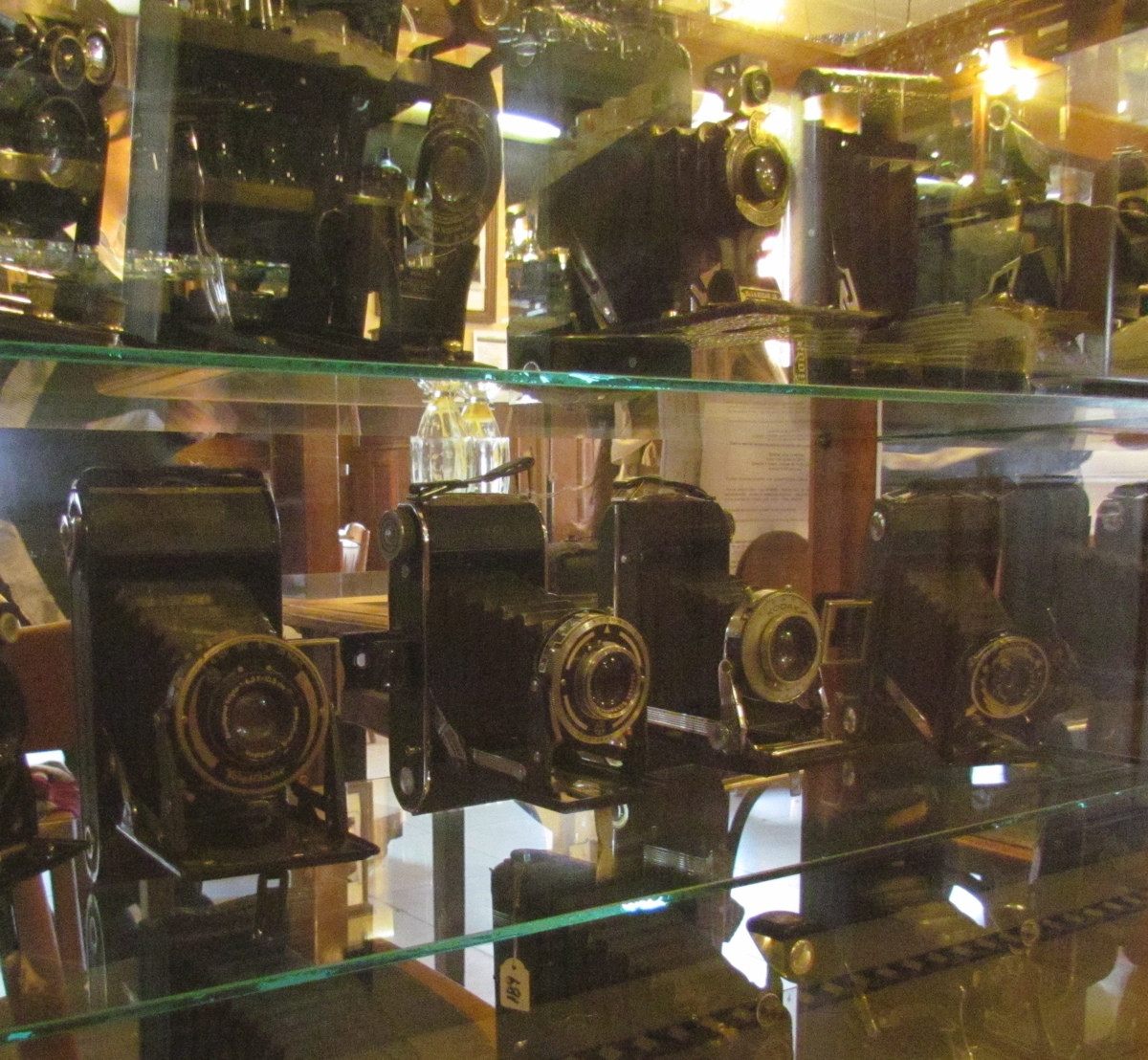
The bar itself has been open 40 years, and the owner, a Mr Simik, began displaying his collection of over 2,000 cameras, some dating from the 1870s in 2002 and the Museo Fotografico Simik was born.
Museo Simik, Bar Palacio, Chacarita

Museo Simik, Bar Palacio, Chacarita


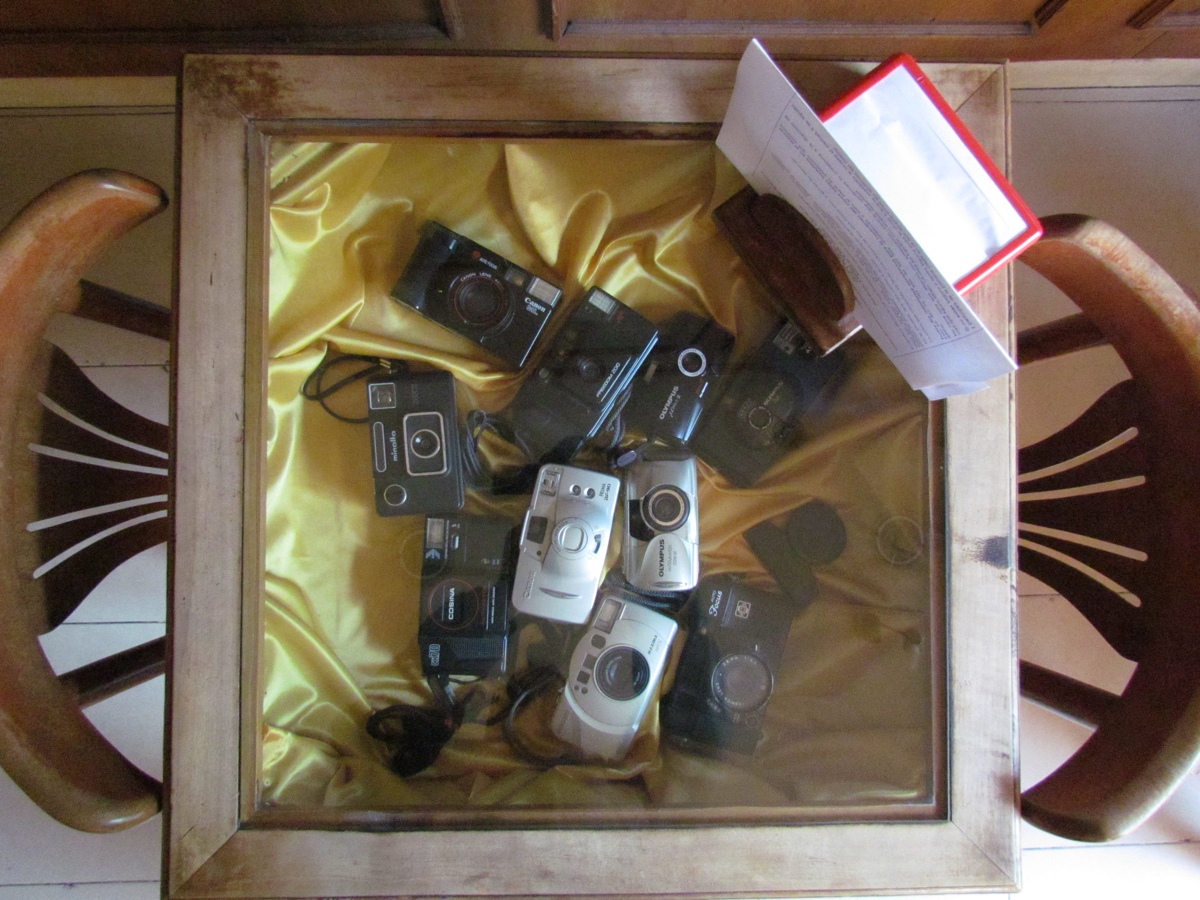
It’s a little cramped in places, as it’s packed with cabinets displaying photographic equipment. The tables are glass-topped and each one contains its own mini-collection of cameras. Downstairs the bar has a darkroom which is open to the public and it runs a series of classes on a variety of photo-related topics.
Museo Simik, Bar Palacio, Chacarita

Museo Simik, Bar Palacio, Chacarita


It clearly has an active community dedicated to the world of photography. Whilst I was there groups of people were sat at tables with their own cameras, animatedly discussing their latest attempts at capturing that elusive shot and outside the bar, stood a couple working with a old-style SLR and a light meter. From a cafe point of view, there is very little to distinguish or recommend Bar Palacio, but the camera collection and its obvious dedication to furthering the art of photography makes it worth a visit.

Bar Palacio / Museo Fotografico Simik: Av. Federico Lacroze 3901
Subte: Line B, Federico Lacroza

This page is part of a series examining the Notable Bars of Buenos Aires.

Bar Carlitos

In a few of the bars I’ve been to, I get talking to a waiter about the history of the place and after a while they disappear and come back with a map produced by the city, listing and showing the location of the Notable Bars of the city. Following the list of the 72, there is a list of 12 Notable Bars that have closed their doors, including the Cafe Richmond on Florida which was closed overnight in 2011 after 98 years in business. There was talk at the time of it being converted into a Nike store, but at the moment it’s is still sitting there, boarded up and covered with graffiti.

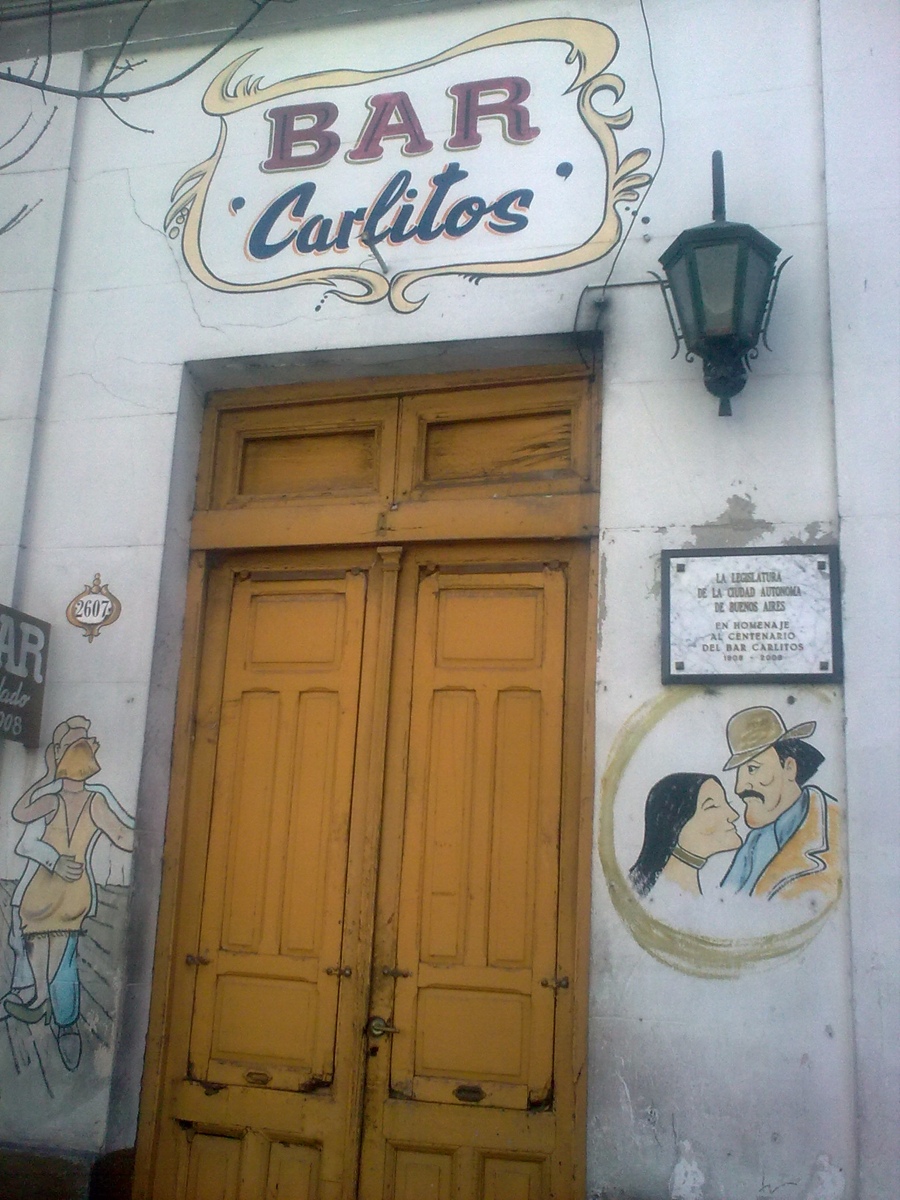
Bar Carlitos, San Cristóbal

Bar Carlitos, San Cristóbal


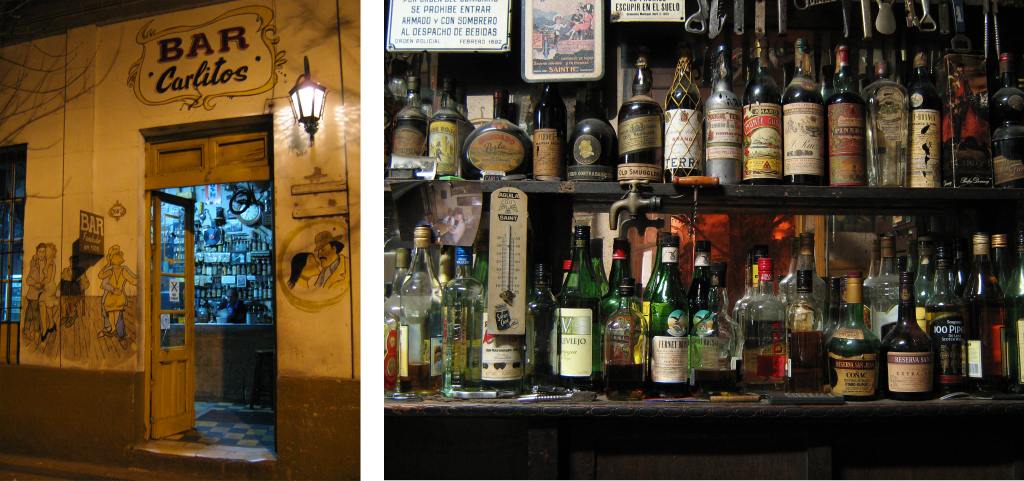
Unfortunately it seems that there is another casualty to add to the list, Bar Carlitos in San Cristóbal. I tried to visit it at 3pm on a Tuesday afternoon, and finding it closed made a note to come back another time, maybe in the evening when it was more likely to be open. Unfortunately, a little digging around unearthed the information that the bar closed in 2011 and due to financial problems will not be reopening. (I found the email of the owner on another post and he confirmed this to me).
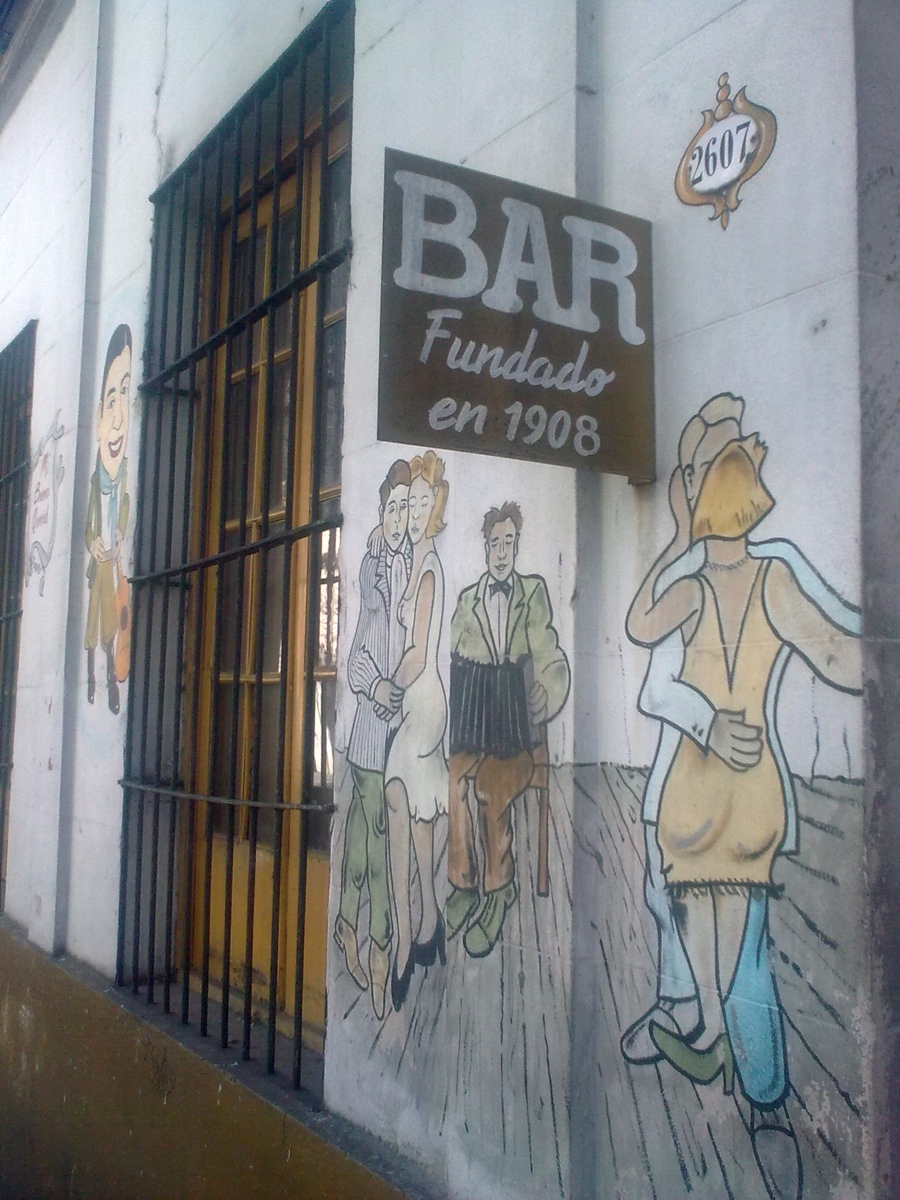
Bar Carlitos, San Cristóbal

Bar Carlitos, San Cristóbal


So, it seems that another part of Buenos Aires history is gone forever. Opened in 1908, Carlitos (named in the 30s for Carlos Gardel, a hero to the then owner) may not have the high-profile coverage that the closing of Cafe Richmond got, but it strikes me that the closure of any of these bars is a loss to the collective memory of the city, particularly one that had been open for over 100 years.
Bar Carlitos, San Cristóbal

Bar Carlitos, San Cristóbal – Archive photo of the bar


It raises the question what being given Notable status actually means for the bar. In the case of the Richmond it didn’t protect it against (presumed) property development and ultimately, the status was unable to help Carlitos, or the others on the Closed list either. The exterior for the moment is unchanged and is still decorated with tango images and caricatures of Carlos Gardel, so if you’re in the area pass by and take a look, but surely that too will soon be gone forever.

Bar Carlitos: Carlos Calvo 2607

This page is part of a series examining the Notable Bars of Buenos Aires.

Ocho Esquinas

Surrounded by fields when first built in 1938, Bar Rojo opened in 1944 named after its owner, Spaniard Fernando Rojo. Before long it became known as the Ocho Esquinas (8 Corners), due to its location in Colegiales on a junction where 3 large avenues cross (I could only see 6 corners, but who’s counting, right?).

Ocho Esquinas, Colegiales

Ocho Esquinas, Colegiales


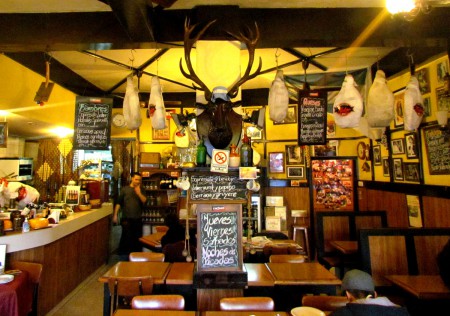
The place is small and quiet on the Saturday afternoon that we visit. I’m starting to recognise common elements in the Notable Bars that I’m visiting and at a glance, I can tell that the tables are all originals and the floor and bar have not been changed since opening in the 1940s. A quick chat with the waiter confirms all this (who also tells me that even the coffee cups are over 70 years old, recently a large stock of them was found in the attic), but Ocho Esquinas has one more thing unchanged since its early days which I’d not come across before – the menu.
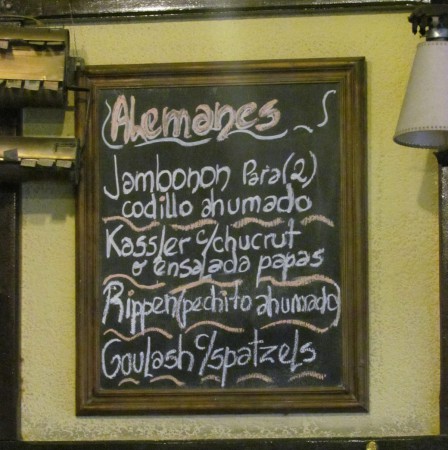
The German Menu, Ocho Esquinas, Colegiales

The German Menu, Ocho Esquinas, Colegiales


The Spaniard Rojo, came to Argentina by boat, where he met a German chef whom he invited to work in his new bar when it opened. The chef did so, on the condition that he would be allowed to include 4 German dishes on the menu. Rojo agreed and those four items have remained specialities of the house ever since. They’ve not been added to nor removed, just stayed the way they were. Ranging from Goulash to a classic Pork Shank for two, these are not your average Buenos Aires offerings.
Ocho Esquinas, Colegiales

Ocho Esquinas, Colegiales


On Fridays and Saturdays, the bar offers a tango evening to accompany their German specialities, and I made a mental note to return to experience it. I immediately like the bar and its atmosphere and the mix of classic Porteño with a German twist certainly makes it stand out from many of its fellow Notable bars.
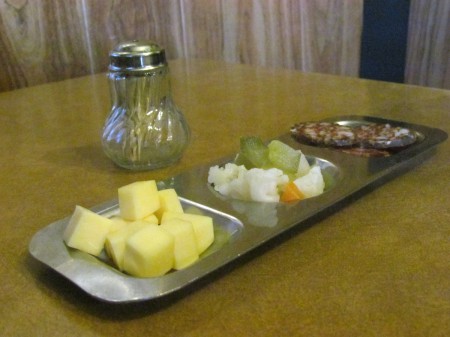
Picada con Cerveza, Ocho Esquinas, Colegiales

Picada con Cerveza, Ocho Esquinas, Colegiales

Ocho Esquinas: Av Forest 1186
Colectivos: 44, 65

This page is part of a series examining the Notable Bars of Buenos Aires.
El Miramar

El Miramar doesn’t have the same feel as many of the other bars I’ve visited so far. It shares the high roof and dark wooden furniture with many of its fellow Notables, but there is a distinct lack of faded advertising on the walls and the bottles stacked behind the bar look used, rather than relics from a previous age. As I enter around 4pm the bright interior is filled with tables, all with white tablecloths left over from lunch.

El Miramar, Buenos Aires

El Miramar, Buenos Aires


I order a coffee and take a seat, next to a glass cabinet which divides the space in two, making a smaller more bar-like area by the entrance and a larger area towards the back reserved for diners. As the waiter brings my coffee over, I ask my usual questions about the history of the bar (opened in 1950) and what sort of food they serve. He brings me over a menu and then disappears for a minute and comes back with the specials board and sitting down opposite me he then proceeds to talk me through it. The food has a definite Spanish and French influence and even includes frogs legs and snails. The smoked boar platter sounds especially good and catches my eye, it certainly makes a change from the usual menu of sandwiches, milanesa and pizza found in a lot of bars and restaurants.
El Miramar, Buenos Aires

El Miramar, Buenos Aires


He then disappears again and returns with a map of the Notable Bars produced by the city (it’s the 4th copy I’ve been given so far) and he talks me through his favourite spots, with the help of his colleague who stays safely behind the bar grunting contributions. They both like Los Laureles in Barracas and Carlitos in San Cristóbal (still has the original tin bar, although sadly turns out to have closed down). He tells me about the Bar Chino in Pompeya, also closed, but where you had to take an umbrella if it was raining due to the leaky roof.
El Miramar, Buenos Aires

El Miramar, Buenos Aires


We sit there for 20 minutes or so as they reminisce about the various bars they have known (El Puenticito in Barracas, always full of taxi drivers and a Japanese bar where a sandwich and a beer cost 200 pesos, but really good quality!), until he stands up, shakes my hand goes and gets his coat and heads home, telling me the coffee is on him. There is no messing about at El Miramar, and as I leave I make a mental note to return one day. I have a date with some smoked boar.

El Hipopótamo: Sarandí 1190
Subte: Line E, Entre Rios

This page is part of a series examining the Notable Bars of Buenos Aires.
Bar de Cao

If you believe the guide books, Buenos Aires may well be the Paris of the South, but Avenida Independencia in San Cristóbal sure ain’t the Champs Elysées. Walking down on it on a sunny, but cold July afternoon is a bleak experience. Not much seems open, there are very few people on the streets and those that you do see are scurrying, heads down, with other places to be.

Bar de Cao, Buenos Aires

Bar de Cao, Buenos Aires


Bar de Cao provides relief from the bitter wind and, once inside, the sun streaming through the windows combined with the warm wood and smell of cafe soon make me forget the cold outside.
Bar de Cao, Buenos Aires

Bar de Cao, Buenos Aires


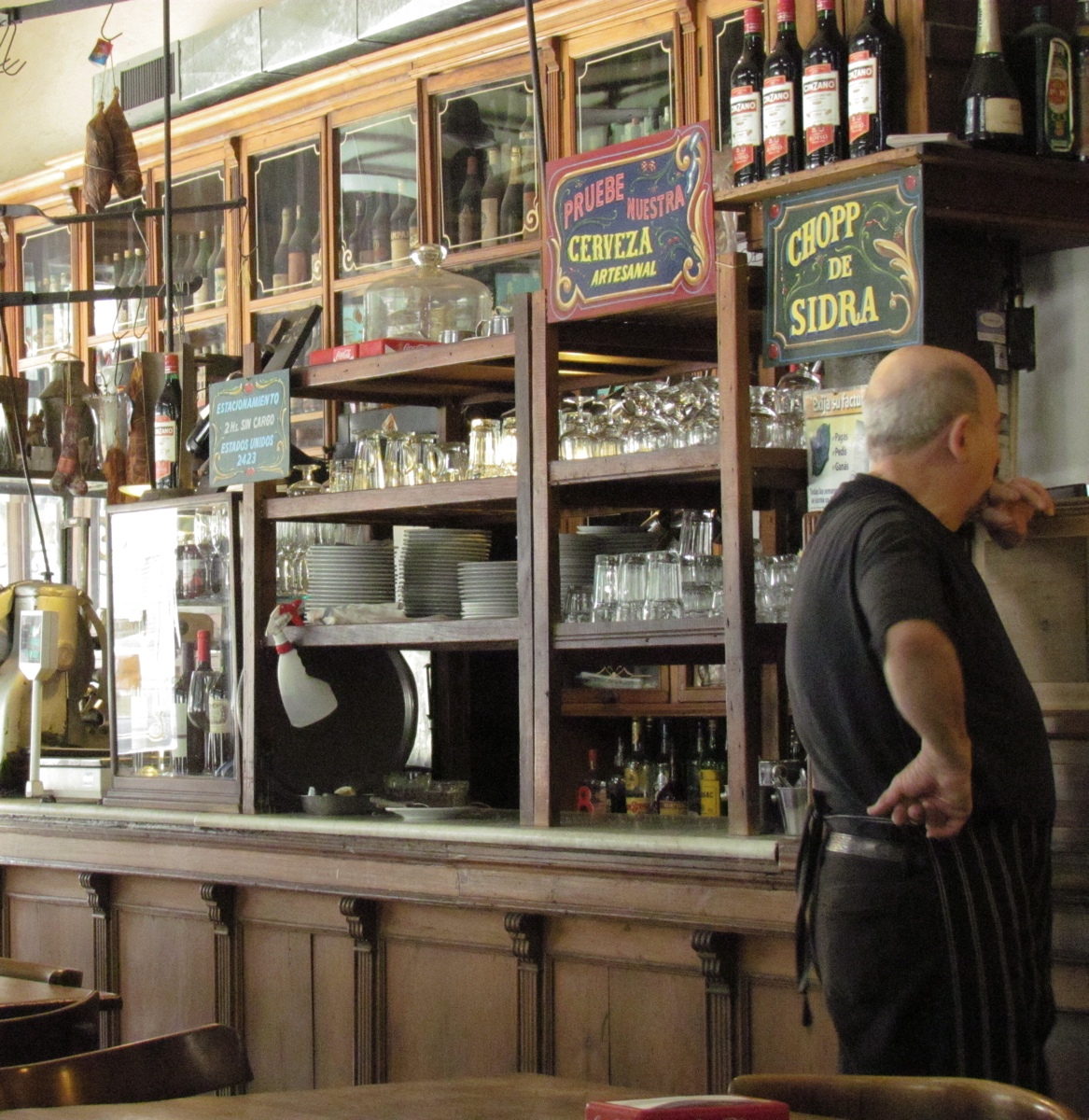
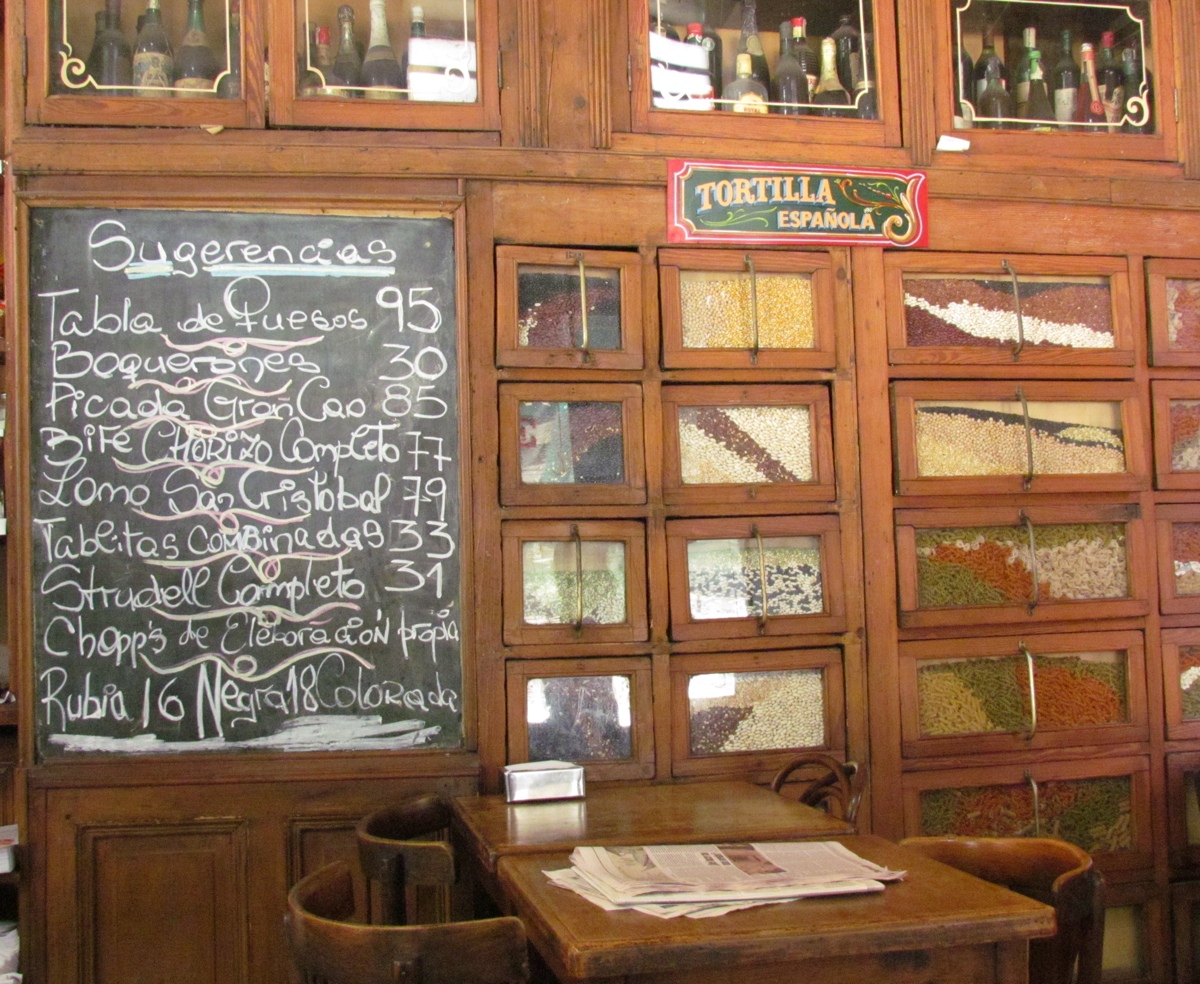
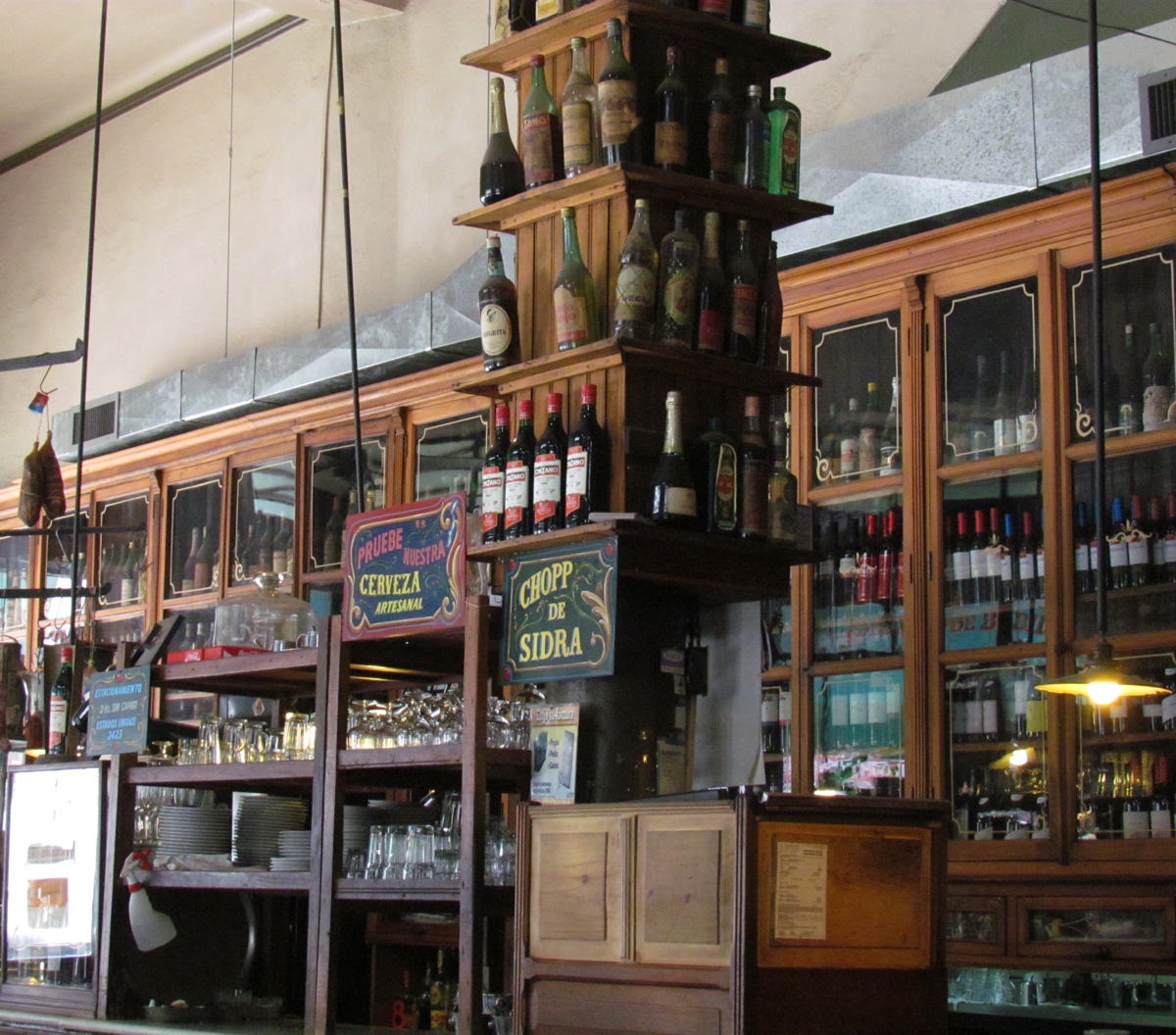
Opened in 1915 and named for its founders, Spanish immigrants the brothers Cao, their bar doesn’t feel like it’s changed much in the last 10 decades. Fitted out with the original bar and spice cabinets (which are purely for show) from the 1950s, Bar de Cao has a relaxed feel, the sort of place you could sit and read your paper in peace surrounded by your neighbours all doing the same.
Bar de Cao, Buenos Aires

Bar de Cao, Buenos Aires


Interestingly, given its location well away from the tourist trail, prices here don’t seem much less than in bars in the centre (10 pesos for a coffee, compared to 12 in a more central bar), but I like the overall feel which is similar to Bar El Federal and La Poesia in San Telmo. The menu is the usual standard fare of most Porteño bars, but the decoration and barrio feel of the makes it worth a trip.
Bar de Cao, Buenos Aires

Bar de Cao, Buenos Aires

Bar de Cao: Avenida Independencia 2400
Subte: Venezuela, Line H

This page is part of a series examining the Notable Bars of Buenos Aires.

Bar Británico

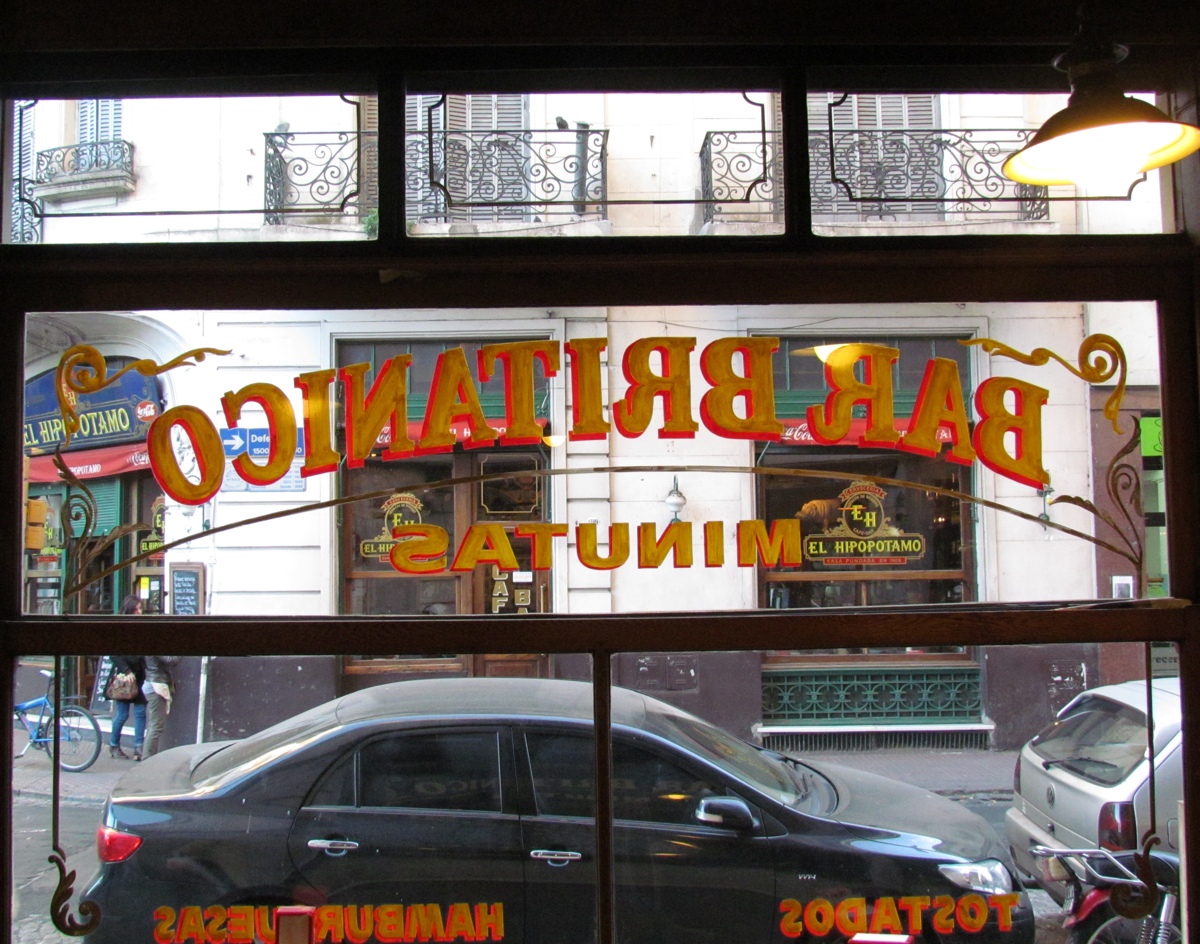
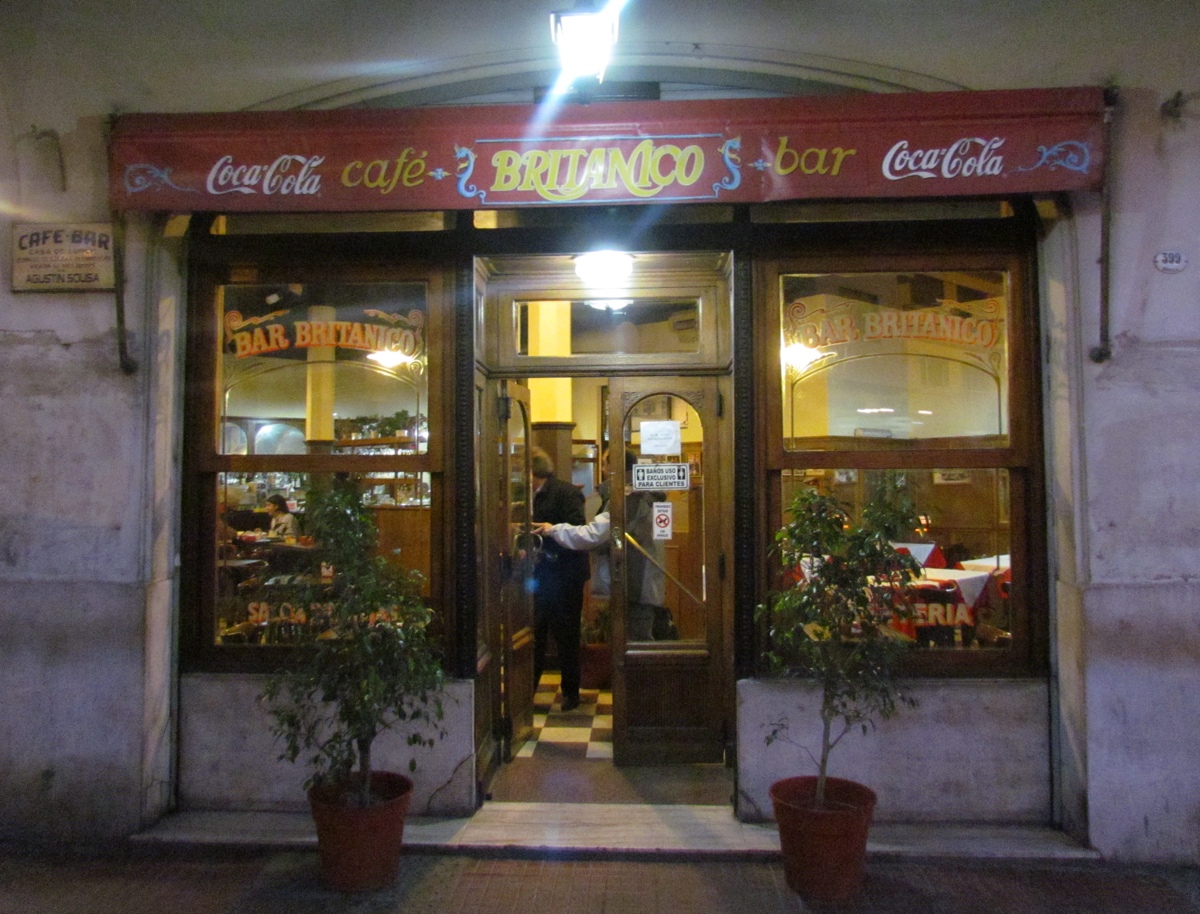
Right across the street from El Hipopótamo is another San Telmo institution, the Bar Británico. Named for the nationality of its patrons, rather than the owner (who was Spanish) it has sat on the corner of Defensa and Brasil since 1928. Originally a corner store, the locals (who were mainly British railway workers and First World War veterans) would buy coffee and food and then hang around to drink and eat it, converting it from shop to cafe.

Bar Britanico, San Telmo

Bar Britanico, San Telmo. Note El Hipopótamo across the street.


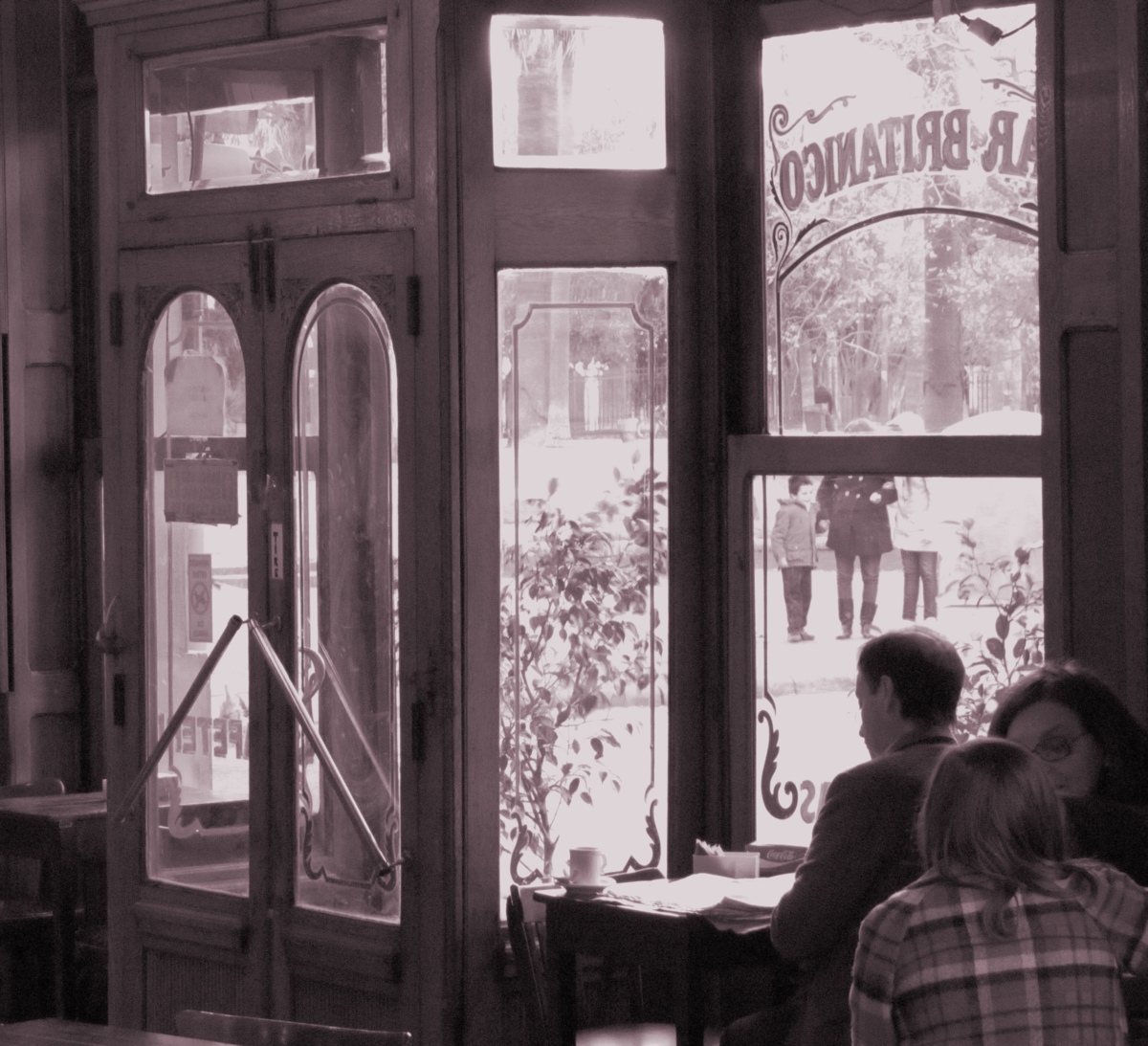
Run by a trio of Gallegos (Spaniards from Galicia) from 1960 until 2006, El Británico gained a reputation as a friendly and atmospheric hangout in San Telmo, open 24 hours a day. As no Notable Bar is complete without a literary connection it is said that Ernesto Sabato wrote part of his novel ‘Sobre Héroes y Tumbas’ at the window seat.
Bar Britanico, San Telmo

Bar Britanico, San Telmo


In 1982, faced with a wave of anti-British sentiment, the owners covered the first 3 letters of the bar’s name to avoid controversy and the “Bar Tánico” survived intact until a few years later when it was safe to uncover the unpopular Bri once again.
Bar Britanico, San Telmo

Bar Britanico, San Telmo


It underwent refurbishment in 2006, following the death of the last of the 3 owners and reopened in 2007 under new management. As far as possible all the original fixtures have been kept intact but some say that El Británico has lost its character.
Bar Britanico, San Telmo

Bar Britanico, San Telmo


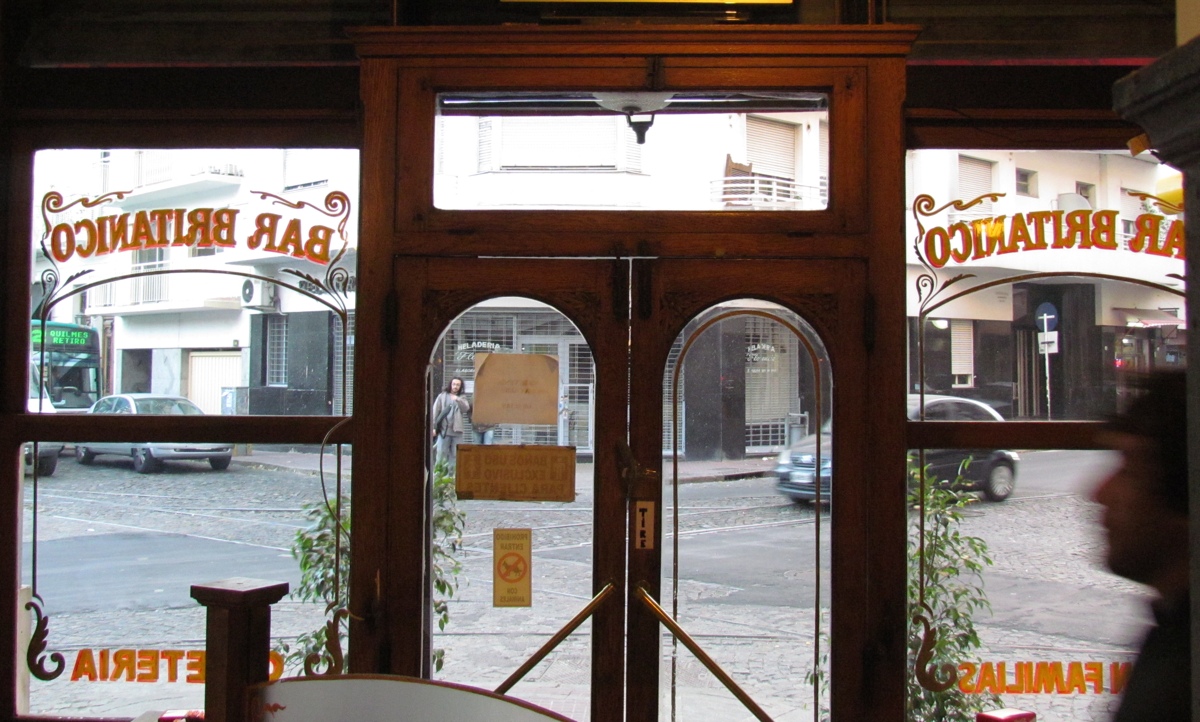
On the day I visited I found it to have little less warmth than El Hipopótamo across the street, it’s smaller and brighter which may mean, that on a late winter’s afternoon it lacks a homeliness that can be found opposite. However I love the fact that it has by and large kept its character, down to the squat toilet in the gents nestling next to a more modern convenience. Due to their location it’s hard not to want to pick a favourite and ultimately, of the two I think El Británico is my favourite although it’s a close-run thing. Of course, the name clinches it.

Bar Británico: Brasil 399
Colectivos: 62, 29, 22

This page is part of a series examining the Notable Bars of Buenos Aires.
El Progreso

Update!

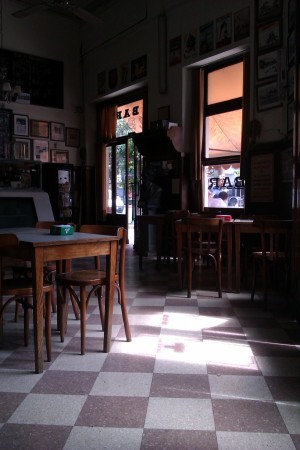
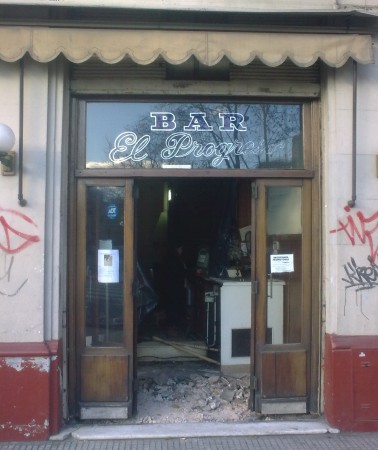
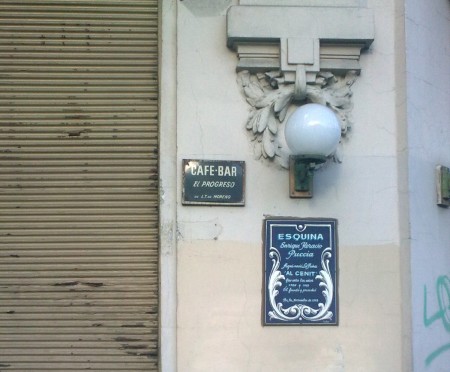
El Progreso has reopened and is looking great – highly recommended!

El Progreso is back

El Progreso is back

El Progreso, Barracas

El Progreso, Barracas


They say progress is a good thing, but for me and El Progreso it means that we are not destined to meet, at least not for the time being. I hope we get another chance.
El Progreso, Barracas

El Progreso, Barracas

El Progreso: Montes de Oca 1700
Colectivos: 12, 70, 22

This page is part of a series examining the Notable Bars of Buenos Aires.
El Hipopótamo

El Hipopótamo, San Telmo

El Hipopótamo, San Telmo

For many tourists San Telmo starts at Plaza de Mayo and stops at Plaza Dorrego – very few will venture southwards and beyond San Juan the tourist traps dry up and the area buzzes with local flavour. The bar dates from 1909 but it has not always gone by the name it has today. Originally called La Estrella del Sur, and later renamed to Don Pedro (it stands opposite a statue commemorating the city’s founder Don Pedro de Mendoza) the owner gave it its current moniker about 30 years ago as a tongue-in-cheek tribute to an upscale establishment popular at the time with upper-class society. Whilst its patrons may not be as well-heeled as those of its namesake, it has outlived the original and is still going strong, offering classic Porteña picadas and café fare.
El Hipopótamo, San Telmo

El Hipopótamo, San Telmo


Filled with dark furniture, classic advertisements and posters, the interior has a warm feeling and large windows emblazoned with the bars logo allow some great people watching opportunities on the passing streets.
El Hipopótamo, San Telmo

El Hipopótamo, San Telmo


It may only be a few blocks from Plaza Dorrego but the clientele is most definitely local and when I visited most were nursing a cortado, glued to the TV playing silently above the door.
El Hipopótamo, San Telmo

El Hipopótamo, San Telmo


El Hipopótamo is in a great location, literally across the street from another Notable Bar, Bar Britanico, and at the entrance to Parque Lezama, one of the most interesting parks in the city. With its warm, cozy interior El Hipopótamo is well worth continuing the couple of blocks past Plaza Dorrego to experience one of the most classic bars in San Telmo.
El Hipopótamo, San Telmo

El Hipopótamo, San Telmo

El Hipopótamo: Brasil 401
Colectivos: 62, 22, 29

This page is part of a series examining the Notable Bars of Buenos Aires.