Day Trips from Buenos Aires: Which One Fits Your Visit?

Further Afield: a boat trip from Buenos Aires to Uruguay
Browse: BuenosTours › Buenos Aires Guide › Day Trips

Just outside the boundaries of the sprawling metropolis of Buenos Aires lie several options for day trips that will feel like a world away.

A day outside Buenos Aires can mean a boat through the Paraná Delta, a ferry to another country, time in a Pampas town, or a visit to Argentina’s planned provincial capital. Those are quite different days. If you have only three days in the city, you may prefer to stay put. With more time, choose the trip for what you want to do when you arrive, then check the return journey before committing.

Tigre: the easiest change of scenery

Choose Tigre for the river and delta. The town has a waterfront promenade, old rowing clubs and the Puerto de Frutos shopping area, but the waterways are the reason many visitors go. From the Estación Fluvial, you can choose a sightseeing boat or transport to an island destination. Decide which sort of boat trip you want before buying a ticket: a short circuit and a visit that lets you get off on an island are different outings.

The Mitre train’s Retiro–Tigre branch is a straightforward independent route when it is operating normally. Rail works can change the service, so check Trenes Argentinos’ Retiro–Tigre information shortly before travel. If you are going onto an island, check the last boat back as carefully as the outward departure. You can also keep the day simple: walk Paseo Victorica and visit the waterfront without arranging an island stay. The city tourism introduction to Tigre helps you choose.

Colonia del Sacramento: a day abroad, with border formalities

Choose Colonia for its compact historic center and a slower walk. Across the Río de la Plata in Uruguay, its older streets, waterfront and layers of Portuguese and Spanish history make a satisfying visit without a packed itinerary. The Uruguayan tourism ministry notes that the historic quarter has held World Heritage status since 1995.

Ferries connect Buenos Aires and Colonia. Compare a same-day outward and return sailing with Buquebus or Colonia Express before making other plans. Timetables, prices, terminals and check-in requirements can change. The crossing is only part of your day: allow time for check-in and exit and entry procedures in both directions. Confirm the documents and any visa requirements for your nationality and Argentine immigration status with the operator and the relevant Uruguayan and Argentine authorities.

Do not assume that a day trip to Uruguay renews your permission to stay in Argentina. Check your own immigration situation before planning a border crossing. For a day visit, the historic quarter is enough. If you want to explore beyond town or have an unhurried evening, stay overnight.

San Antonio de Areco and the Pampas: town first, estancia by arrangement

Choose Areco if crafts and rural history interest you. Around its central plaza you can see a Pampas town on foot; the national tourism guide points visitors towards local artisans and the Museo Taller Draghi. The Museo Gauchesco Ricardo Güiraldes and Parque Criollo offer another way into the region’s history; check the museum’s current visitor information before making it your anchor.

An estancia visit is a separate choice, not something you should expect to find simply by turning up in town. If you want lunch, a horse ride or a hosted countryside day, check the individual property’s program, availability, transport and what is included before booking. Leave enough time for Areco itself if its silversmiths, streets and riverbank are part of your reason for going.

Luján is a different Pampas-side outing. Its basilica is the draw for visitors interested in pilgrimage and religious architecture. You could pair it with a meal in Carlos Keen, but that requires its own transport and a check that your chosen restaurant is open. Areco, an estancia day, and Luján with Carlos Keen each deserve a deliberate plan; trying to combine them all would mostly give you a day in transit.

La Plata: architecture and science

Choose La Plata if you would rather visit another city than escape the city altogether. Its planned grid and diagonals lead to Plaza Moreno and the cathedral. You could make those streets the focus of your day, then choose one further interest: the natural history museum and Paseo del Bosque, for example, or a guided architectural walk. La Plata’s tourism office lists routes around the founding axis and the Bosque, with current arrangements to check before you go.

The Roca line connects Plaza Constitución with La Plata. Use Trenes Argentinos for the service that applies on your date, and check any museum’s own visitor page before travelling for an exhibition. Allow for the current train timetable and confirm which attractions around the Bosque are open on your chosen day.

What belongs on a longer trip?

Colonia works as a day trip because you can explore its historic center on foot after the ferry. Montevideo and Punta del Este are different propositions: even when a booking site shows them alongside Colonia, a ferry-plus-bus connection can take several hours each way. Save them for an overnight stay rather than counting the transfer as sightseeing. An overnight stay can also improve a Tigre island visit or an Areco countryside trip if the journey itself is what you want to slow down for.

For the simplest independent outing, start by comparing Tigre and La Plata. For Colonia, sort out the border documents before the ferry ticket. For an estancia, choose the actual property and program before arranging transport. BuenosTours’ Essentials walking tours take place within Buenos Aires; the trips above are ideas to arrange separately, not stops on that tour.

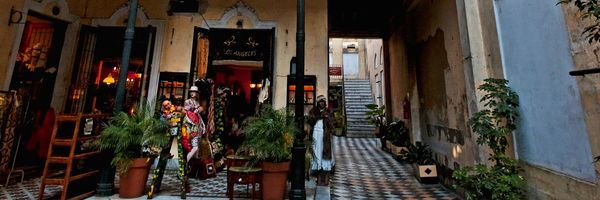
San Telmo, Buenos Aires

An old "casa chorizo" in San Telmo, Buenos Aires
Browse:  BuenosTours › Buenos Aires Guide › Main Neighborhoods › San Telmo

Explore San Telmo on foot

San Telmo’s cobblestone streets, old houses, antique shops and cafés are a short walk from Plaza de Mayo. The neighborhood grew around working-class and immigrant life; today its streets mix long-standing businesses with artists, small shops and visitors. It is worth exploring even when there is no fair.

The Sunday fair and the indoor market are different outings

On Sundays, the Plaza Dorrego antiques fair and stalls along nearby streets make San Telmo especially lively. The City also lists its Sunday Patio de Tango at Plaza Dorrego, although outdoor activity can vary with the weather and the day. If you want time to search individual stalls, make this an independent Sunday outing.

The Mercado de San Telmo is a separate covered market at Defensa and Carlos Calvo. Its iron-and-glass structure dates from the late nineteenth century, and today you can browse food counters and antiques inside. It is open beyond the Sunday fair; check the market’s current information before making a special trip. For a comparison with Palermo’s art fairs and Colegiales’ flea market, see our Buenos Aires markets guide.

Two more stops on a San Telmo walk

At San Lorenzo 380, Casa Mínima is famous for its remarkably narrow façade. The City notes that the tale of an emancipated slave living there is a local legend, not a confirmed account of that particular house. On Defensa 1179, Pasaje Defensa occupies an 1880s house with patios and galleries. These are small, easy additions to a walk rather than reasons to rush across town.

Our Full Day Essentials Tour includes San Telmo and the covered market as part of a route through the city center and Recoleta; on Sundays, that route begins in San Telmo. It is designed for a guided overview, not a long stall-by-stall shopping session. If you want to combine San Telmo with La Boca or follow your own interests at a different pace, explore our private La Boca and San Telmo walking tour.

[Top photo credit: Elliot Solomon / All Rights Reserved]

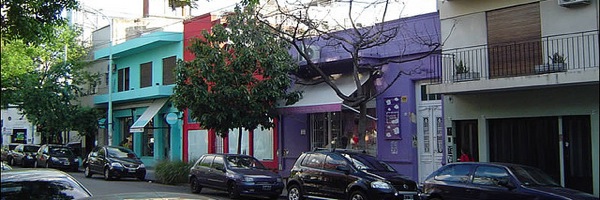
Palermo, Buenos Aires

A street in the "SoHo" area of Palermo, Buenos Aires
Browse:  BuenosTours › Buenos Aires Guide › Main Neighborhoods › Palermo

Choose your Palermo outing

Palermo is one of Buenos Aires’ largest neighborhoods, so a single plan will not show you all of it. Choose its green spaces for an outdoor afternoon, Palermo Soho for small shops and makers, or Palermo Hollywood for a meal and a stroll. The area is farther from the historic center than San Telmo or Plaza de Mayo; leave room for the journey rather than treating it as a quick add-on.

Parks or plazas?

If you want a break from busy streets, head for the Bosques de Palermo, the broad parkland of Parque Tres de Febrero with lakes, walks and the Rosedal. Around Palermo Soho, Plaza Julio Cortázar, often called Plaza Serrano, is a different sort of stop: design shops, cafés and restaurants surround a fair of local artists on Fridays, weekends and holidays. Nearby Plaza Armenia adds another craft fair on weekends and holidays. See our Buenos Aires markets guide to decide whether those fairs, San Telmo or the Colegiales flea market fit your day best.

Look beyond the boutiques

Palermo Soho’s present-day galleries and boutiques sit in streets with an older story. Jorge Luis Borges spent much of his childhood in Palermo; his family lived on Serrano, and the City has a self-guided Borges route for readers who want to follow that thread. It is a more rewarding way to add context than assuming the neighborhood has always looked like its current shopping streets.

For a food-focused Palermo outing, see our AsadoAdventure recommendation. Our regular Buenos Aires Essentials Tour does not cover Palermo. Explore it independently at your own pace, or see our 7 hour Retiro, Recoleta and Palermo walk if you want a guide to connect one part of Palermo with those northern neighborhoods.

[Top Photo Credit: https://www.flickr.com/photos/latangueraviolenta/ / CC BY-NC-SA 2.0]

Getting Around Buenos Aires: A Practical Transport Guide

For most visitors, the best way to get around Buenos Aires is a mixture of walking and the Subte, with taxis or ride apps for late nights, luggage and longer cross-city journeys. Buses reach far more places than the underground network, but they take a little more confidence on a first trip. A physical SUBE transport card is still the simplest dependable way to pay on buses and trains.

Buenos Aires is flatter and more walkable than its size first suggests, but distances can be deceptive. The right choice depends on the neighborhood, time of day, weather, luggage and how comfortable you are navigating a new city.

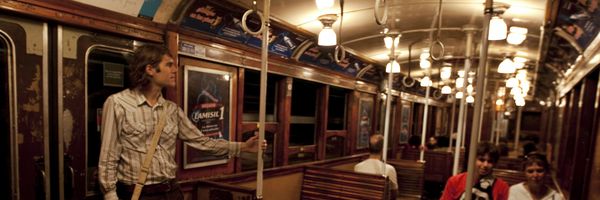
Getting around Buenos Aires on the Subte

[Photo credit: Elliot Solomon / All Rights Reserved]

Which type of transport should you use?

  • Walking: Best for exploring one neighborhood or moving between nearby central areas.
  • Subte: Often the fastest option for longer journeys along its six lines, particularly at busy traffic times.
  • Bus, or colectivo: The broadest public transport coverage and useful once you are comfortable with the route and direction.
  • Taxi or ride app: Convenient after dark, in heavy rain, with luggage or when public transport would require awkward changes.
  • Train: Most useful for destinations beyond the central visitor areas, including some day trips.
  • Bike: A good option for confident city cyclists using the protected cycle-lane network and a current tourist pass.

Do you need a SUBE card?

A physical SUBE card works on the city’s buses, Subte and metropolitan trains. For a visitor planning to use buses or trains, it is the most useful transport purchase to make.

Buy a card at an authorized Punto SUBE, then add credit at an authorized shop, station machine or other supported point. Stock and loading facilities vary, so use the official SUBE site to locate current options. If a digital load needs to be confirmed, follow the official validation instructions rather than assuming the balance is immediately available.

Some SUBE app and registration functions require identity verification with an Argentine DNI. Foreign visitors should not build their transport plan around having access to every resident-only feature. The physical card remains the straightforward option.

You can also pay directly at marked multipay turnstiles throughout the Subte network using supported contactless credit, debit or prepaid cards, including foreign-issued Visa and Mastercard, or a compatible phone or watch. That does not mean the same payment method is available on every bus. Use SUBE for buses and trains unless an official source confirms otherwise for the exact service you are taking.

Using the Subte

The Subte has six lines and covers many journeys through the city center and well-visited neighborhoods. It does not reach everywhere, but it is often the quickest way to avoid surface traffic.

Before entering a station, check the line letter and the name of the terminal station in your direction of travel. Platform signs usually describe direction by the end of the line, not by north, south, east or west. You can change between connected lines without leaving the paid area.

The Subte does not run all night, and first and last train times vary by line and day. Check the official Emova schedule and current service notices if you are traveling early, late or on a public holiday.

At busy times, let passengers off before boarding and move away from the doors. Keep your phone, wallet and open bag secure, especially on crowded platforms and trains.

Using Buenos Aires buses

Buenos Aires buses are called colectivos, or informally bondis. Their great advantage is coverage: they reach many places the Subte does not. Their disadvantage for a new visitor is that there can be several plausible routes, stops may be easy to miss and traffic affects journey time.

Taking your first colectivo

  1. Plan the route before leaving. Note the bus number, direction, stop location and a useful cross street near your destination.
  2. Make sure you are waiting on the side of the street used by traffic traveling in the correct direction, then join the queue at the marked stop.
  3. Raise your arm clearly when the bus approaches. A driver may continue past if nobody signals.
  4. Tell the driver your destination or nearest cross street. For example: Hasta Santa Fe y Callao, por favor.
  5. When the driver sets the fare, tap your SUBE card on the reader.
  6. Move away from the entrance, keep priority seating available for passengers who need it and hold on while the bus is moving.
  7. Press the stop button with enough time for the driver to pull in safely.

A bus becomes much easier after the first successful journey. It is not, however, the moment to improvise with a low phone battery and no saved address.

Walking around Buenos Aires

Walking is often the most enjoyable way to understand the city. The terrain is generally flat, street numbering is logical and each neighborhood changes the feel of the journey. Comfortable shoes matter because the city is large and a route that looks close on a map may involve many long blocks. See our Buenos Aires packing guide for practical clothing and footwear advice.

Save the full address and nearest cross street for your destination. Look both ways before crossing, even on one-way streets, and do not assume a turning vehicle will give way. At night, in an unfamiliar area or when carrying visible luggage, a taxi or ride app may be the more sensible choice.

Taxis and ride apps

Black-and-yellow taxis are part of everyday Buenos Aires transport and can be flagged down on the street when the illuminated sign shows LIBRE. Stand somewhere the driver can stop safely and raise your arm clearly. Have the full address and nearest cross street ready, because the cross street can help distinguish similar addresses and entrances.

A street taxi fare is determined by the regulated meter. You do not need to negotiate a city fare before setting off, but it is sensible to confirm the payment method you want to use. Avoid relying on published fare examples because inflation makes them obsolete quickly.

The City’s official BA Taxi app lets passengers request a licensed taxi, see vehicle and driver information, estimate the journey and choose among supported payment methods. Other ride apps are also widely used and can be helpful when you want the destination, vehicle details and journey recorded in advance.

For any app-booked ride, check the driver’s name and vehicle registration before getting in. Keep the address ready and do not accept an unsolicited ride from someone approaching you at an airport, ferry terminal or bus station.

Taxis or ride apps are particularly useful late at night, in bad weather, with luggage, or when a public transport route requires several changes. Airport transfers have additional considerations, so use our separate Arriving in Buenos Aires guide rather than ordinary city-taxi advice.

When are trains useful?

Metropolitan trains are not usually needed for a visitor moving among the central neighborhoods, but they can be useful for destinations farther out. Tigre is a common example. Route, station and service conditions can change, so plan the trip through an official journey tool and check the operator’s notices before leaving. A SUBE card is the simplest payment option to carry.

Can visitors use Ecobici?

Buenos Aires has protected cycle lanes and the city’s Ecobici bike-share system. Visitors can use it through the official app with a current tourist pass. Check the official tourist instructions for registration, pass prices and ride conditions.

Cycling is best for someone already comfortable in urban traffic. Check the bike and brakes before setting off, follow the lane direction and do not assume every street has protected infrastructure.

How should you plan a route?

The City of Buenos Aires journey planner, Cómo Llego, compares public transport, walking, cycling and driving routes. Map apps can also be useful, but check that the stop, entrance and direction match what you see on the street.

Download or screenshot the important part of a route before leaving Wi-Fi. A street address plus its nearest cross street is more useful than a venue name alone.

Accessibility and reduced mobility

Do not assume every Subte station is step-free. Elevator and escalator availability varies, and equipment can be temporarily out of service. Check the current accessibility information from Emova before traveling. A direct taxi or ride may be more dependable when step-free access is essential.

Getting into the city from the airport

Airport transfers need a little more planning than an ordinary city journey, especially from Ezeiza. Our separate guide to arriving in Buenos Aires compares official taxis, remises, pre-booked transfers, ride apps, shuttles and public transport without overloading this page.

Simple transport safety

Most journeys are uneventful, but crowded transport rewards ordinary city awareness. Keep bags zipped and in front of you, avoid holding a phone loosely beside an open train or bus door, and move somewhere well lit before studying a map. Our Buenos Aires safety guide covers the broader precautions.

Keep a working payment card and a modest cash backup rather than depending on one method. The maintained guide to money, cards and exchange rates in Argentina explains the current options.

A useful first-day orientation

A transport map tells you how to move, but not always how the neighborhoods fit together. BuenosTours has been helping visitors understand Buenos Aires since 2006. The small-group Buenos Aires Essentials Tour gives first-time visitors a practical introduction to the city’s layout, history and character, with Half Day, Full Day and Full Day with La Boca options.

Frequently asked questions

Can I use a contactless credit card on Buenos Aires public transport?

You can use supported contactless payment, including foreign-issued Visa and Mastercard, at marked multipay turnstiles on the Subte. Do not assume that contactless bank-card payment is available on every bus or train. Carry a physical SUBE card if you plan to use those services.

Do tourists need a SUBE card?

You do not need one merely to ride the Subte if your contactless card or device works at a multipay turnstile. A physical SUBE card is still the simplest dependable option for buses and metropolitan trains.

Does the Buenos Aires Subte run all night?

No. Operating times vary by line and day, so check the current Emova schedule before an early or late journey.

What is the best way to plan a route?

Use the official Cómo Llego planner or a reliable map app, then confirm the stop, station entrance and direction on the street. Save the important details offline.

What is the easiest transport for a first-time visitor?

Walk within one area, use the Subte for straightforward longer trips and take a taxi or ride app when it is late, raining or inconvenient to change. Add buses once you are comfortable with the route and SUBE system.

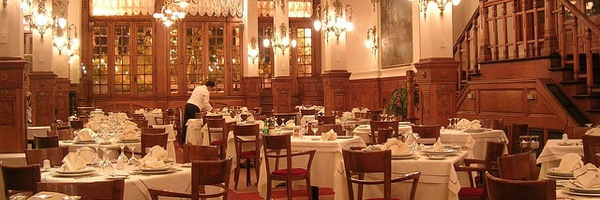
Buenos Aires Restaurants

Buenos Aires restaurants are a foodie's paradise

Browse: BuenosTours › Buenos Aires Guide › Restaurants

The difficult part of eating in Buenos Aires is not finding a restaurant. It is deciding what sort of meal you want from a city that takes parrillas, pizza, pasta, cafés, ice cream and late dinners equally seriously.

This is not a ranking of the latest fashionable tables. Those lists date quickly. It is a guide to the kinds of places worth looking for, the neighborhoods that make sense for different evenings and the local habits that make ordering easier.

Start with the kind of meal you want

Parrilla

A parrilla is a grill or steakhouse, and it can range from a simple neighborhood room to a destination restaurant requiring a reservation. Beef may be the headline, but the full experience can include sausages, sweetbreads, grilled cheese, vegetables, salads and shared sides.

Portions are often generous, so ask before ordering several starters and a main course each. Our guide to Argentine meat cuts explains the names you will see on the menu. If you want to understand asado as a social ritual rather than only order steak in a restaurant, read about our friend Frank’s Asado Adventure.

Bodegón

A bodegón is a traditional, informal restaurant associated with generous portions and familiar cooking. Menus often reflect the city’s Spanish and Italian immigration as much as a narrow idea of “Argentine food.” Expect some combination of milanesas, tortillas, pasta, stews, seafood and large plates designed for sharing.

The best reason to choose one is atmosphere and appetite. A busy neighborhood bodegón can tell you more about everyday Buenos Aires than a meal designed entirely for visitors.

Porteño pizza and empanadas

Buenos Aires pizza is its own thing. Al molde is thick and soft, a la piedra is thinner, and a slice of very cheesy muzzarella is often paired with fainá, a chickpea flatbread. Corrientes is the classic avenue for eating a quick slice at the counter before or after the theater.

Empanadas work for a quick lunch, an inexpensive dinner or the first round of a longer meal. Fillings vary by province as well as by shop. Our Argentine empanadas guide explains the common names.

Cafés, merienda and ice cream

Traditional cafés are places to pause rather than rush. Coffee and medialunas at breakfast, a sandwich at lunch or a late-afternoon merienda can all happen at the same table. Start with our guide to ordering coffee in Buenos Aires and then explore the city’s historic cafés as part of their neighborhoods.

Ice cream belongs in the same conversation. Italian immigration helped make the local heladería an everyday institution, and ordering a quarter kilo to share or take home is perfectly normal. Dulce de leche, dark chocolate, sambayón and seasonal fruit flavors are useful places to begin.

Modern Buenos Aires cooking

The city also has ambitious contemporary restaurants, wine bars, bakeries and kitchens drawing on food from across Argentina and neighboring countries. Palermo and Chacarita receive much of the attention, but interesting places are spread through Villa Crespo, Colegiales, Belgrano, Almagro and beyond.

Do not feel that every dinner must be traditionally Argentine. Buenos Aires has been shaped by successive migrations, and its Armenian, Jewish, Korean, Chinese, Peruvian and other communities are part of the city’s food story too.

Where to eat by neighborhood

Palermo

Palermo has the widest concentration of destination restaurants, bars and modern cafés. It is useful when a group wants many choices within walking distance, but famous places may need advance reservations and the neighborhood’s different subareas are farther apart than they look on a map.

San Telmo

San Telmo suits a meal built around older streets, cafés, the indoor market and traditional atmosphere. On Sundays the area is much busier because of the street market. Choose it for the setting, then check recent information for the particular restaurant rather than assuming every historic-looking dining room is equally good.

Recoleta and Barrio Norte

These central neighborhoods are convenient for a quieter dinner close to many hotels. They offer parrillas, cafés and polished restaurants without requiring a separate nightlife expedition. They also work well after a day around the cemetery or museums.

City center and Avenida Corrientes

The center is strongest for classic pizzerias, cafés and a meal tied to the theater district. Some office-heavy blocks become much quieter after business hours, so pick the restaurant first rather than arriving downtown and expecting every street to feel lively.

Villa Crespo, Chacarita, Almagro and Belgrano

These neighborhoods reward a little more planning. They are especially useful for a longer stay, when traveling for one restaurant or exploring a residential area feels like part of the evening rather than an inconvenience. Belgrano also adds Chinatown and a strong Asian dining scene.

Practical dining advice

  • Dinner runs later than in many countries. An early table can be convenient, while the room will often feel livelier later in the evening.
  • Reserve places that matter to you, particularly small restaurants and well-known parrillas. For everything else, recent opening information matters more than an old “best of” list.
  • Check the restaurant’s own website or social account on the day. Hours, reservation systems and holiday closures change too often for a static guide to promise them.
  • Ask about portion size before ordering heavily. Sharing starters, sides or a large main course is common and often sensible.
  • Request the bill when you are ready by saying La cuenta, por favor. It will not always arrive simply because the plates have been cleared.
  • Vegetarians and vegans have far more choice than the city’s steak reputation suggests, but a traditional parrilla is not automatically the easiest place for a mixed group. Check the current menu before committing.

For a wider introduction to what appears on local menus, see Traditional Argentine Foods. The City of Buenos Aires also maintains a current restaurant finder that can be filtered by neighborhood and type. Treat it as a starting point, then confirm the details directly with the venue.

Our Buenos Aires Essentials Tour includes a local lunch on both full-day options. It is meant to fit naturally into the day rather than become a formal food tour, and your guide is always happy to help you think through where to eat next.

[Top Photo Credit: https://www.flickr.com/photos/gerrysan/ / CC BY-NC 2.0]

Where to Stay in Buenos Aires: A Neighborhood Guide

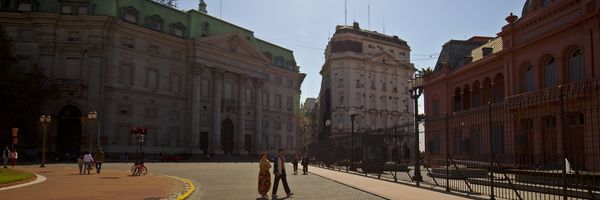
Plaza de Mayo in Buenos Aires, a must visit

Browse: BuenosTours › Buenos Aires Guide › Main Neighborhoods

The diverse neighborhoods of Buenos Aires add a layer of depth to the city. The best place to stay is not simply the area with the longest list of sights. It is the one that makes your mornings, evenings and journeys across the city work the way you want them to.

For many first-time visitors, the choice comes down to Recoleta or Palermo. Recoleta puts you among grand architecture, traditional cafés and several major sights, with a more settled feel in the evening. Palermo has the strongest concentration of restaurants, bars and independent shops, but it covers a large area and can place you farther from the historic center.

San Telmo, the city center and Puerto Madero each make sense for a different kind of short trip. If you are staying longer, Belgrano, Almagro, Caballito, Villa Crespo and Chacarita give you more ways to experience residential Buenos Aires. The comparison below will help you narrow the choice before you start looking at individual hotels or apartments.

The short answer

  • Recoleta and Barrio Norte: A strong all-round choice for a first visit, especially if you value architecture, museums, cafés and a relatively central base.
  • Palermo: Best if restaurants, bars, shopping and evening life matter more than being close to the historic center.
  • San Telmo: Best for historic atmosphere, antiques, tango associations and easy access to the southern side of the center.
  • City center, including Monserrat and San Nicolás: Best for major landmarks, public transport and a short sightseeing-focused stay.
  • Puerto Madero: Best for a modern waterfront setting, newer buildings and quieter surroundings.
  • Belgrano: Best for a more residential base, longer stays and travelers who do not need to be close to the main historic sights every day.
  • Almagro, Caballito, Villa Crespo and Chacarita: Stronger choices for a longer stay, when living within a neighborhood matters more than checking off the major sights quickly.

Buenos Aires neighborhoods compared

Area Best suited to Main advantages Tradeoffs to consider
Recoleta and Barrio Norte First visits, architecture, museums, traditional cafés Elegant streets, several major sights, useful position between the center and Palermo Less concentrated nightlife than Palermo; the exact address still matters because the area is broad
Palermo Dining, bars, shopping, parks, later evenings Huge choice of places to eat and drink; several distinct sub-areas; parks and museums in eastern Palermo Farther from many historic sights; a Palermo address can mean very different surroundings and travel times
San Telmo Historic character, antiques, tango atmosphere, Sunday activity Cobblestone streets, older buildings, cafés and easy access to Monserrat Sunday crowds and street noise can affect some blocks; older accommodation may need closer checking for lifts and accessibility
City center Short stays, landmarks, transport connections Close to Plaza de Mayo, the Obelisk, Teatro Colón and several Subte lines Some office-heavy blocks feel much quieter after business hours; choose the exact location rather than booking on “downtown” alone
Puerto Madero Modern hotels, waterfront walks, newer apartments Open space, contemporary buildings and easy access to the docks and ecological reserve Less of the traditional street life many visitors imagine when they picture Buenos Aires; some journeys begin with a walk across the docks
Belgrano Longer stays, residential atmosphere, repeat visits Local shops and restaurants, parks, Chinatown and a less sightseeing-led rhythm North of the main historic areas, so a short first visit can involve more daily travel
Almagro Longer stays, tango and everyday neighborhood life Central position, traditional cafés and a strong residential character Fewer visitor-oriented services and hotels than Recoleta or Palermo; the exact block matters
Caballito Longer stays and a quieter residential base Parks, local shops and a position near the geographic center of the city Less convenient for a short sightseeing trip and fewer obvious visitor landmarks nearby
Villa Crespo Longer stays close to Palermo’s dining and nightlife Residential streets, restaurants and easy access to neighboring Palermo Less concentrated visitor infrastructure; compare the exact address with the places you expect to use most
Chacarita Longer stays, food-focused trips and repeat visitors An increasingly interesting restaurant and café scene with a strong local identity Farther from the historic center and most useful when its own neighborhood life is part of the appeal

Recoleta and Barrio Norte: a balanced first-time base

Recoleta is a good starting point if you want to feel close to the classic Buenos Aires of grand apartment buildings, tree-lined streets, traditional cafés and cultural sights. Recoleta Cemetery is the best-known landmark, but the wider area also puts you near museums, parks, Avenida Santa Fe and the bookshop inside the former Teatro Grand Splendid.

The neighboring area commonly called Barrio Norte is useful when comparing accommodation. It is not a single official barrio with neat boundaries, so hotel descriptions can use the name quite loosely. In practical terms, addresses between Recoleta, Avenida Santa Fe and the northern part of the center can give you a convenient middle ground between historic sightseeing and the restaurants of Palermo.

Choose this area if you want a polished, walkable base without making nightlife the center of your trip. Check the exact address rather than assuming every property described as Recoleta is beside the cemetery or equally convenient for the places you plan to visit.

Palermo: food, nightlife and several neighborhoods in one

Palermo is the city’s largest official barrio, and the informal names inside it matter. Palermo Soho and Palermo Hollywood put you close to restaurants, bars, independent shops and busy evenings. Palermo Botánico and the areas closer to the parks have a different feel, with greener surroundings and easier access to museums and open space.

This is often the best choice for travelers who want to have dinner, a drink or a late coffee near their accommodation. It can also work well if you have already visited the historic center or prefer neighborhood life to starting each day beside the main monuments.

The tradeoff is distance. Palermo is not one compact visitor district, and some addresses are a substantial journey from Plaza de Mayo, San Telmo or La Boca. Before booking, look at the actual block, the nearest public transport and the places where you expect to spend your evenings. The word Palermo on its own does not tell you enough.

San Telmo: historic atmosphere and a busier Sunday

San Telmo has some of the atmosphere visitors hope to find in old Buenos Aires: cobblestone streets, historic buildings, antique shops, traditional bars and strong associations with tango. It is close to Monserrat and Plaza de Mayo, making it practical for exploring the historic center as well as the southern side of the city.

The area changes noticeably on Sundays, when the San Telmo antiques fair around Plaza Dorrego and the wider street fair bring large numbers of visitors to Defensa and the surrounding streets. That can be a highlight if you want to be in the middle of it, or a reason to choose a quieter side street if you prefer slower mornings.

San Telmo rewards careful accommodation selection. Older buildings can be full of character, but travelers who need a reliable lift, step-free entry or strong soundproofing should confirm those details rather than assuming them. Read the most recent property reviews and check the exact block.

The city center: landmarks and transport on the doorstep

Buenos Aires does not have one official neighborhood called “the city center.” Visitors and hotel listings may use downtown or Microcentro for parts of San Nicolás and Monserrat, while Retiro and the Congreso area are sometimes grouped into the same broad central zone.

A well-chosen central address can put you close to Plaza de Mayo, Avenida de Mayo, the Obelisk, Teatro Colón and several public transport connections. It can be especially practical for a short trip built around major landmarks or for someone who wants straightforward journeys in several directions.

The atmosphere can change from one block to the next. Some parts are busy commercial areas during the day and much quieter after offices close. Look beyond the downtown label and check what is immediately around the property, especially where you would eat in the evening and how you would return after dinner. Our Buenos Aires city center guide gives more context on the areas that make up the historic and commercial heart of the city.

Puerto Madero: modern, spacious and less traditional

Puerto Madero occupies the redeveloped former docks beside the city center. Its brick warehouses, modern towers, waterfront paths and newer hotels create a calmer and more contemporary setting than the older neighborhoods nearby. It is a natural choice if modern accommodation, open space or walks around the docks matter to you.

It is also different from the everyday street life found in Recoleta, Palermo or San Telmo. Restaurants and services are concentrated in particular stretches, and crossing the docks is part of many trips into the rest of the city. This does not make Puerto Madero inconvenient, but it does mean you should choose it for its particular atmosphere rather than simply because it looks central on a map.

If the docks, ecological reserve and waterfront are priorities, read our guide to Puente de la Mujer and Puerto Madero’s history and our Costanera Sur Ecological Reserve article before deciding.

Belgrano: residential Buenos Aires for a longer stay

Belgrano is a large, leafy and largely residential district north of Palermo. It has local shopping and dining around Avenida Cabildo, the parks at Barrancas de Belgrano, Chinatown and a mixture of older houses and modern apartment buildings.

For a repeat visit or a longer stay, that more residential rhythm can be an advantage. You can settle into a neighborhood without organizing every day around the best-known visitor sights. It may also suit travelers whose plans already include northern Buenos Aires.

For a short first visit focused on Recoleta, Plaza de Mayo, San Telmo and La Boca, Belgrano usually means more time in transit. That is not a problem if you prefer the area itself, but it is a tradeoff worth recognizing before you book.

Other strong neighborhoods for a longer stay

A longer stay changes the calculation. You do not need every day to begin beside a major sight, and having useful shops, cafés and restaurants close to home becomes more important. These neighborhoods are worth considering when you have time to settle into a routine.

Almagro

Almagro is central, residential and closely associated with tango, traditional cafés and the everyday movement of the city. It can suit travelers who want to feel part of a lived-in neighborhood while remaining within reasonable reach of Palermo, Recoleta and the center. Accommodation is more likely to be an apartment or smaller property than a large international hotel, so check the building and block carefully.

Caballito

Caballito sits near the geographic center of Buenos Aires and has parks, local shopping streets and attractive residential pockets. It makes more sense for a longer visit than for two or three sightseeing days. Choose it if a quieter base and neighborhood routine appeal to you, and accept that the best-known visitor areas will usually require a journey.

Villa Crespo

Villa Crespo borders Palermo and offers easy access to many of the same dining and nightlife areas without placing you in the middle of Palermo Soho or Hollywood. It has its own restaurants, cafés, street art and shopping, but still feels more residential in many blocks. It can be a useful compromise for a longer stay if you want Palermo nearby rather than directly outside your door.

Chacarita

Chacarita has developed a notable restaurant, wine-bar and specialty-coffee scene while retaining a strong neighborhood identity. It also contains the city’s largest cemetery, where Carlos Gardel is among those buried. This is a better fit for repeat visitors, longer stays and food-focused travelers than for someone trying to minimize travel during a brief first visit.

Choose the block, not just the neighborhood

Once you have narrowed down the area, compare the exact addresses. In a large city, moving ten blocks can change the noise level, transport options and the places you can comfortably reach on foot.

Before booking, check:

  1. The walking route to the nearest useful Subte station or main transport corridor.
  2. Recent guest comments about street noise, building access, lifts and air conditioning.
  3. Whether you will have somewhere appealing to eat near the property when you return late or feel tired.
  4. The journey to two or three places you know you want to visit, rather than the distance to an abstract city center.
  5. Pickup instructions if you have booked an airport transfer or a tour.

Our guide to getting around Buenos Aires will help you judge those journeys. Wherever you stay, the same practical city precautions apply; see our Buenos Aires safety advice rather than relying on simple “safe” and “unsafe” neighborhood labels.

Which Buenos Aires neighborhood should you choose?

If this is your first visit and you still cannot decide, start with Recoleta or Barrio Norte for a balanced base, or Palermo if having restaurants and evening life close to your accommodation matters more. Choose San Telmo for historic atmosphere, the city center for landmark access, Puerto Madero for a modern waterfront setting, or Belgrano for a more residential stay.

La Boca is an important place to visit, but most first-time visitors plan it as a daytime outing or tour rather than use it as their accommodation base.

Wherever you sleep, you will probably spend time in several barrios. Our Buenos Aires Essentials Tour connects Barrio Norte and Recoleta with the city center and San Telmo, giving first-time visitors context for the rest of their stay. If one or two neighborhoods matter most to you, a custom private tour can be shaped around those priorities.

[Top photo credit: Elliot Solomon / All Rights Reserved]