Casa SaltShaker ‘Closed Door’ Restaurant

At chef Dan Perlman’s ‘closed door’ restaurant in his apartment the atmosphere is relaxed and intimate. Guests feast on five courses of Perlman’s culinary creations, each paired with a different wine.

BuenosTours – Small Group Walking Tours of Buenos Aires
The Buenos Aires Essentials Tour: find your footing in Buenos Aires
At chef Dan Perlman’s ‘closed door’ restaurant in his apartment the atmosphere is relaxed and intimate. Guests feast on five courses of Perlman’s culinary creations, each paired with a different wine.
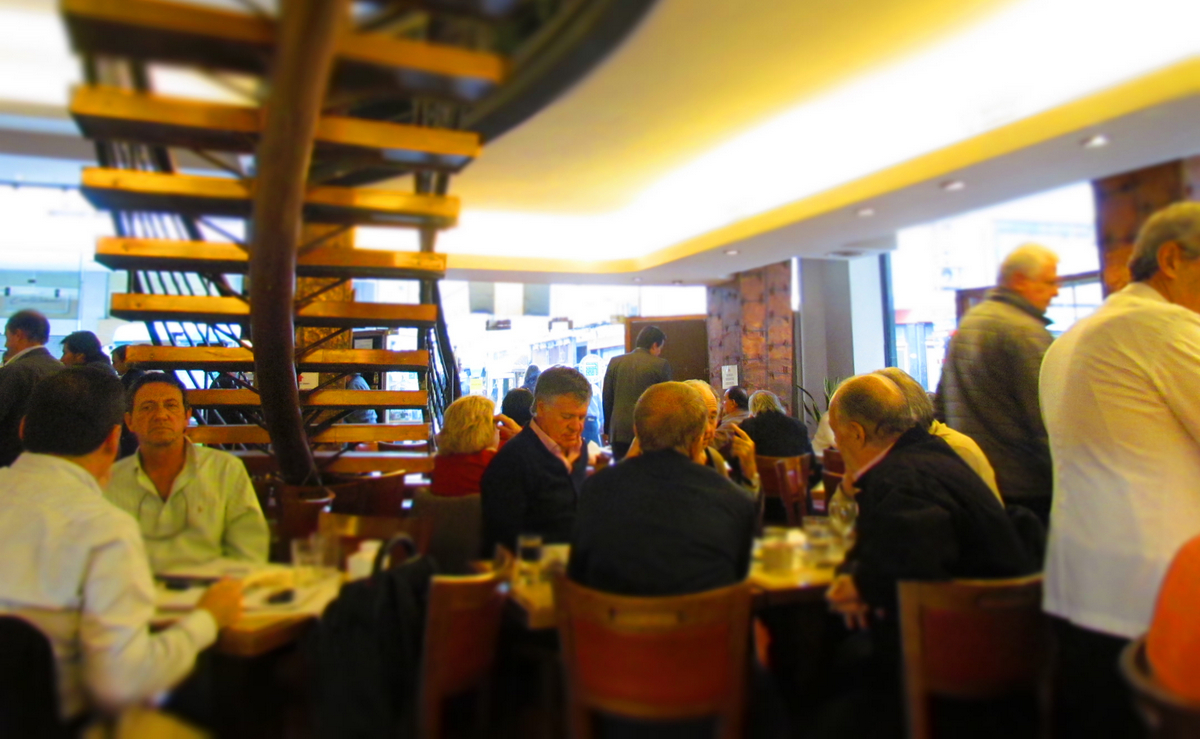
Florida Garden
I must confess that I’m not much of a fan of Florida, the main pedestrianised shopping street in central Buenos Aires. It may feature in all the tourist guides, but after navigating only a couple of blocks of the crowds, touts and vendors I find myself checking that all my possessions are intact like my my wallet or a kidney.
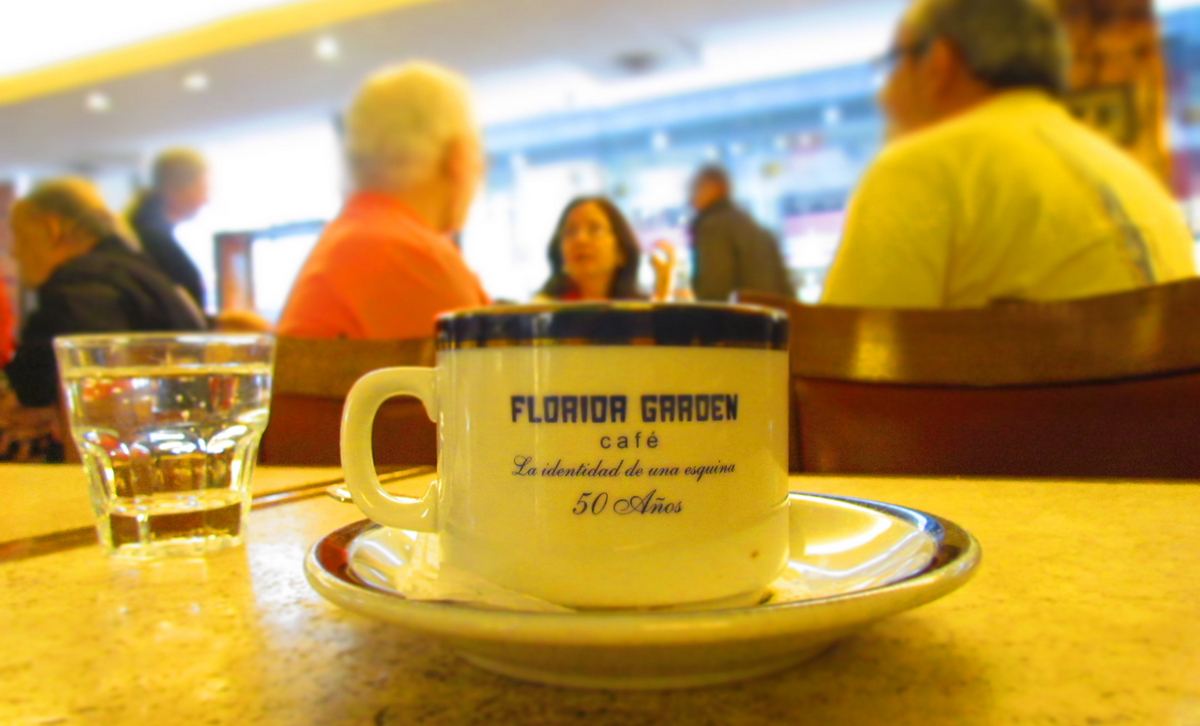
Florida Garden
Situated on a busy corner in the heart of the action Florida Garden has been serving the residents and workers of Microcentro since 1962. Like many Notable Bars it has kept a lot of its original fittings and it’s clear that most of the interior decoration was done in the 1960s.
I visited on a rainy Friday afternoon and the place was packed with a small army of white-coated waiters zipping between the tables. I was served by a 12 year veteran but he pointed out a colleague of his who has been working there for the last 4 decades.

Florida Garden decoration
Florida Garden is not the most atmospheric of the bars I’ve visited but it has its own style and has clearly resisted any attempt to modernise and lose its character, and for those reasons it’s worth a visit if you’re in the area and need a break from all that shopping.
Florida Garden: Florida 899
Subte: San Martín, Line C
This page is part of a series examining the Notable Bars of Buenos Aires.
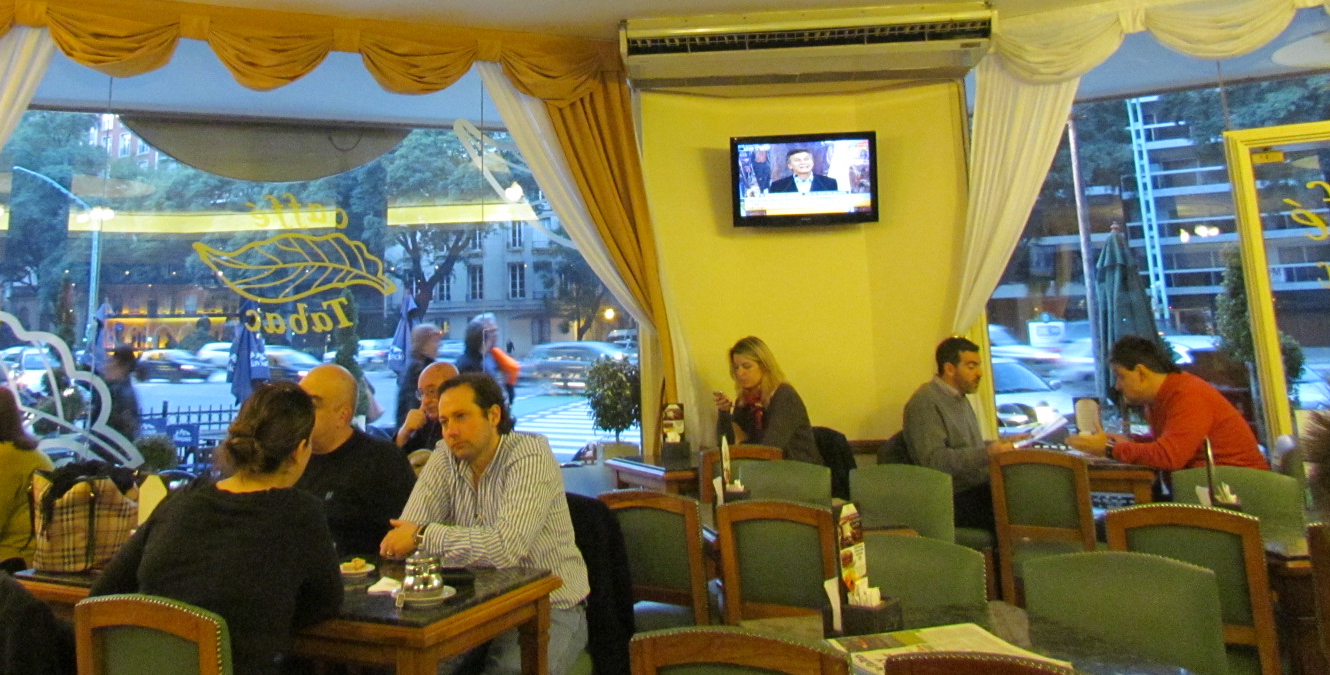
Caffe Tabac
Situated amongst the residential tower blocks on busy Avenida Libertador on the boundary between Palermo and Recoleta, I’m told by the waiter that Caffe Tabac has been serving coffee since 1958. Apart from that fact and the fact the bar is “historic” because it used to be 2 blocks from the river (but then that was stolen, just like everything else in Argentina), there doesn’t seem to be much else to tell.
It’s a nice enough cafe, but after spending an hour in there, I can’t report that it is particularly notable.
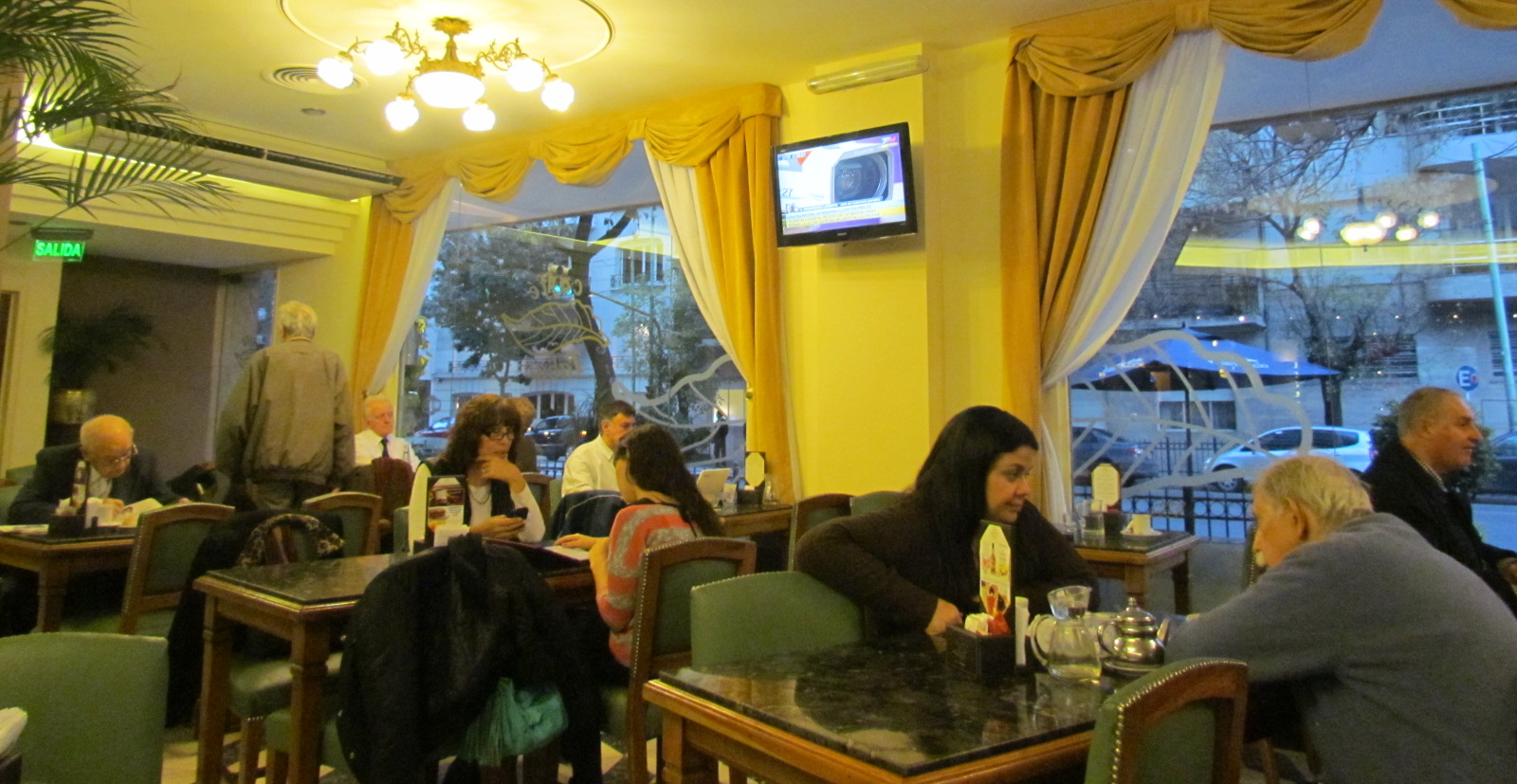
Caffe Tabac: Avenida del Libertador 2300
Colectivos: 102
This page is part of a series examining the Notable Bars of Buenos Aires.
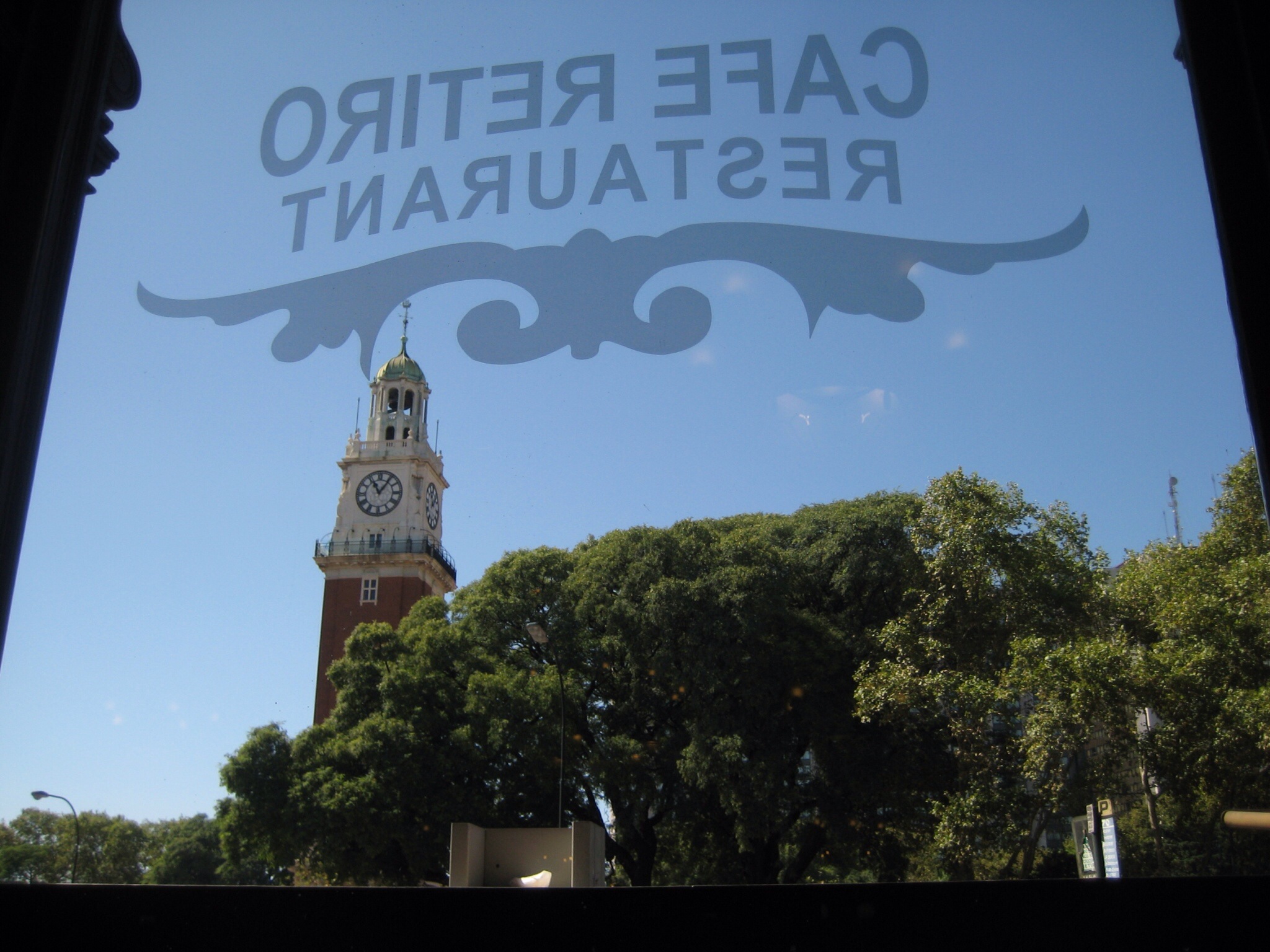
Retiro Cafe
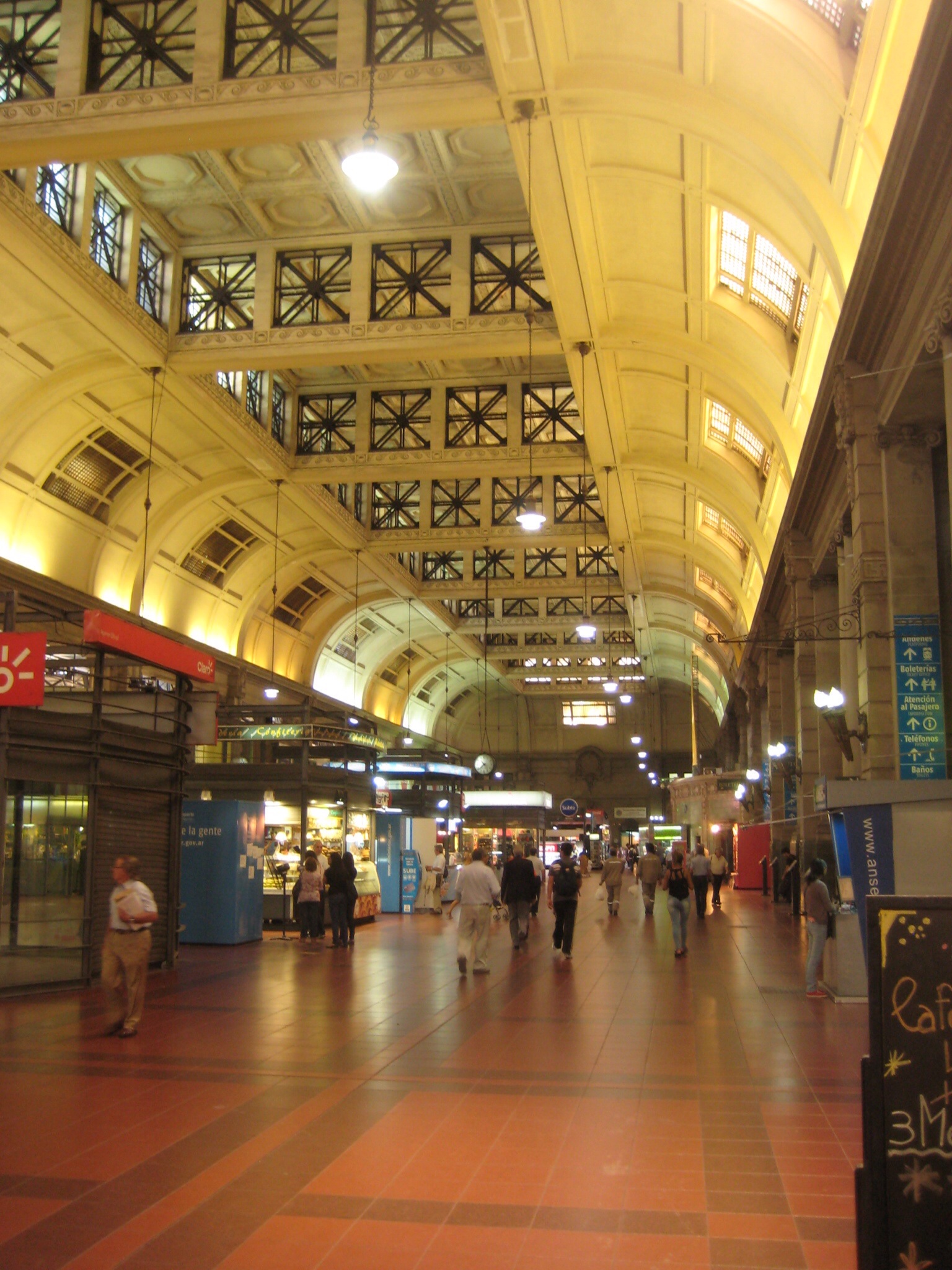
Retiro Station
The station, the area as a whole along with the railway lines and trains, is a shadow of its former glory. The cafe however has just reopened after a renovation and provides a glimpse of what this building once represented.
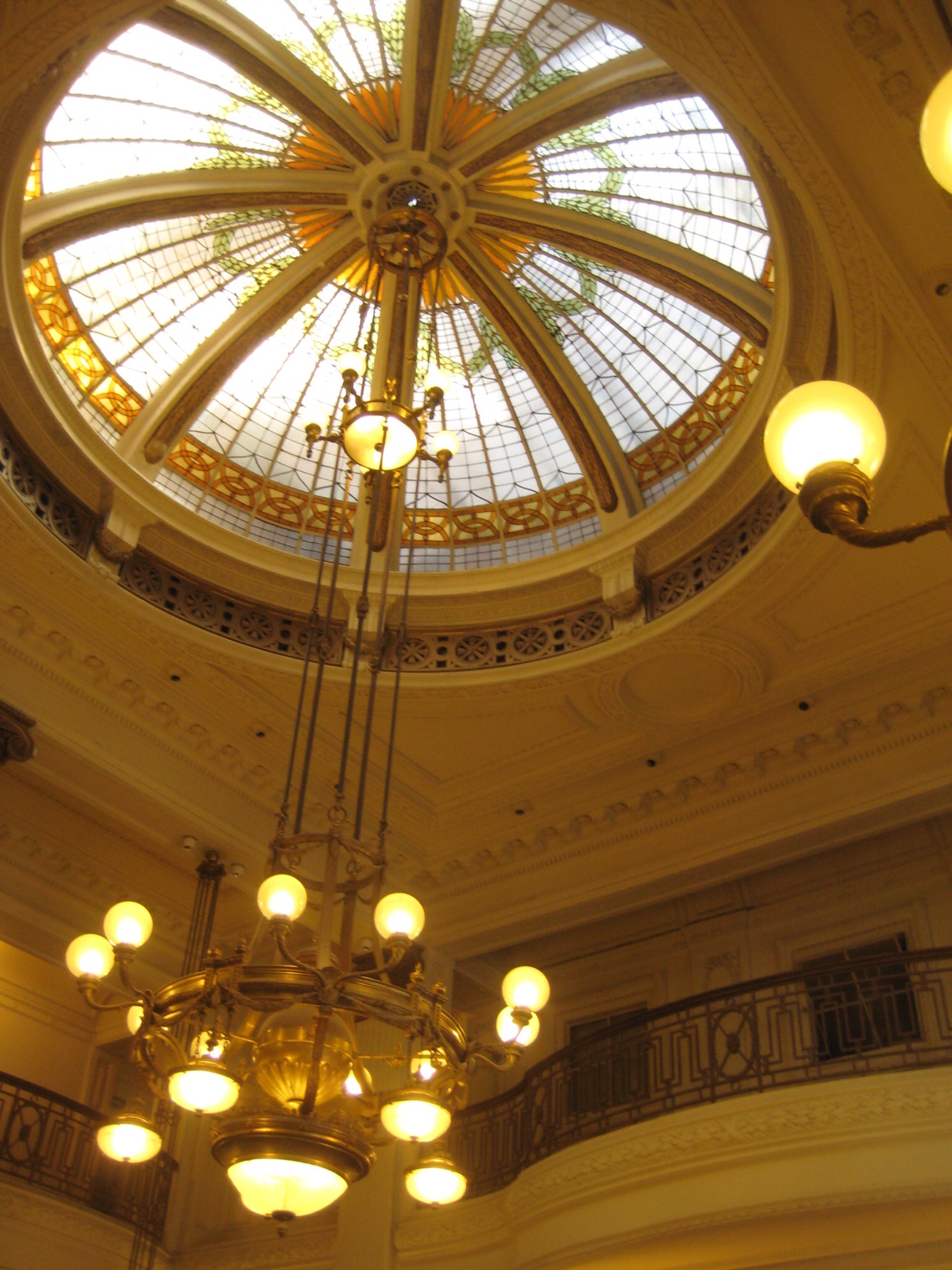
Retiro Cafe Chandelier
A large, open and quiet space complete with balconies, glass domes and chandeliers is in complete contrast to the chaotic street market outside, clogged with vendors and buses belching black exhaust fumes.

Retiro Cafe
The Cafe itself seems to be a fairly standard affair, with a menu and waiting staff that could be any of the countless establishments along the main shopping avenues, but the restored surroundings are spectacular and a very real reminder of what Buenos Aires once was. Definitely worth a visit and don’t miss the amazing symmetrical marble walls on the way to the toilets.

Symmetrical Walls
Cafe Retiro: Retiro Station
Subte: Retiro, Line C
This page is part of a series examining the Notable Bars of Buenos Aires.
Opened in 1959 and still being run by the same family, the Saint Moritz sits on the corner of two busy downtown streets and seems a long way from its namesake, in fact, nobody could actually tell me why the bar is named after a Swiss ski resort.
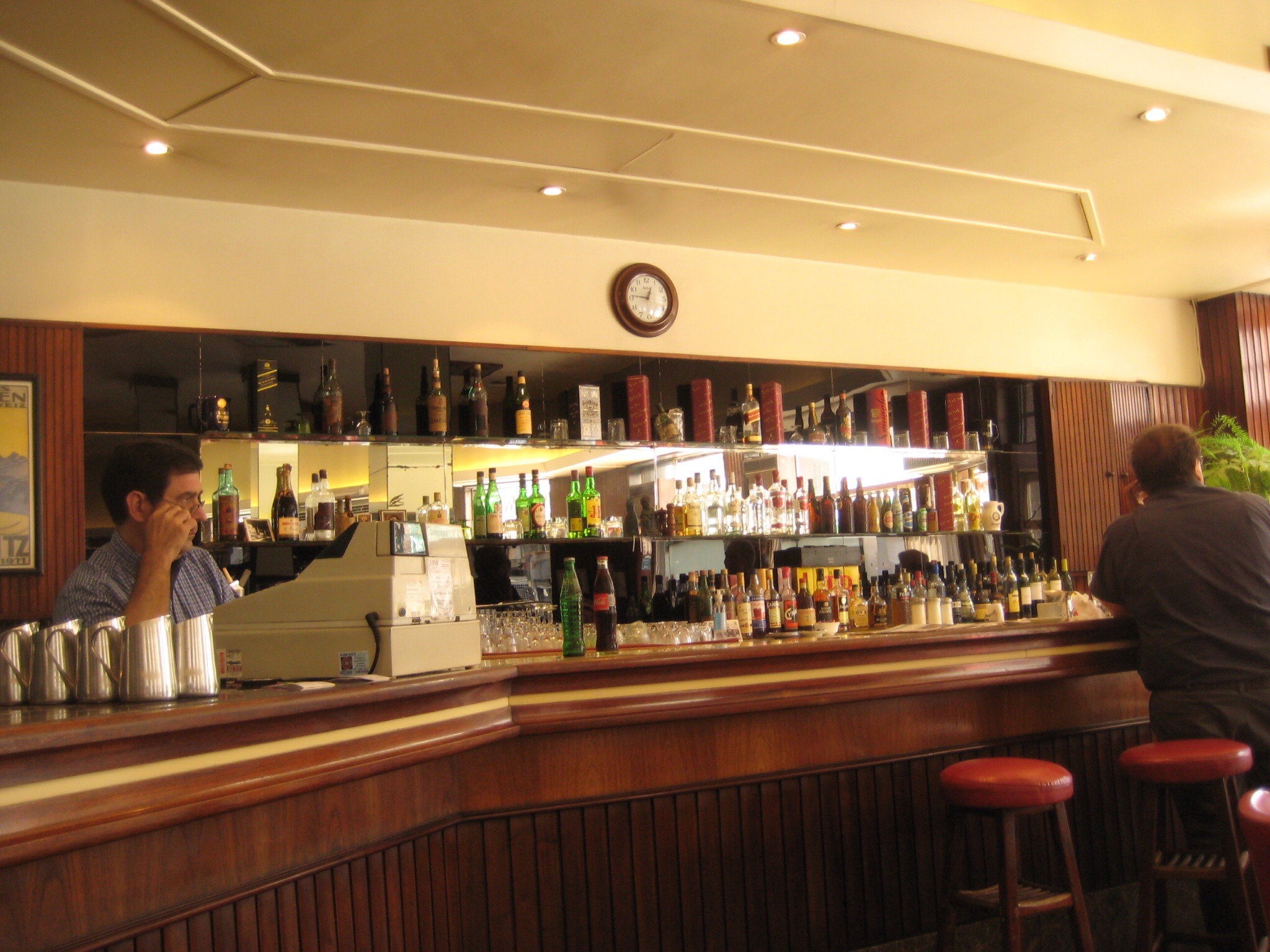
Saint Moritz Bar
Like many Notable Bars, the Saint Moritz has seen better days. According to waiter I spoke to (who had worked there 38 years), back in the day it was full of regulars, all of whom lived nearby. In the morning it would be busy with manual workers taking a break, the office crowd would descend at lunchtime, and in the evening the smart set would arrive for the “Hora de Vermouth”. Most nights it would shut at 2 or 3am.
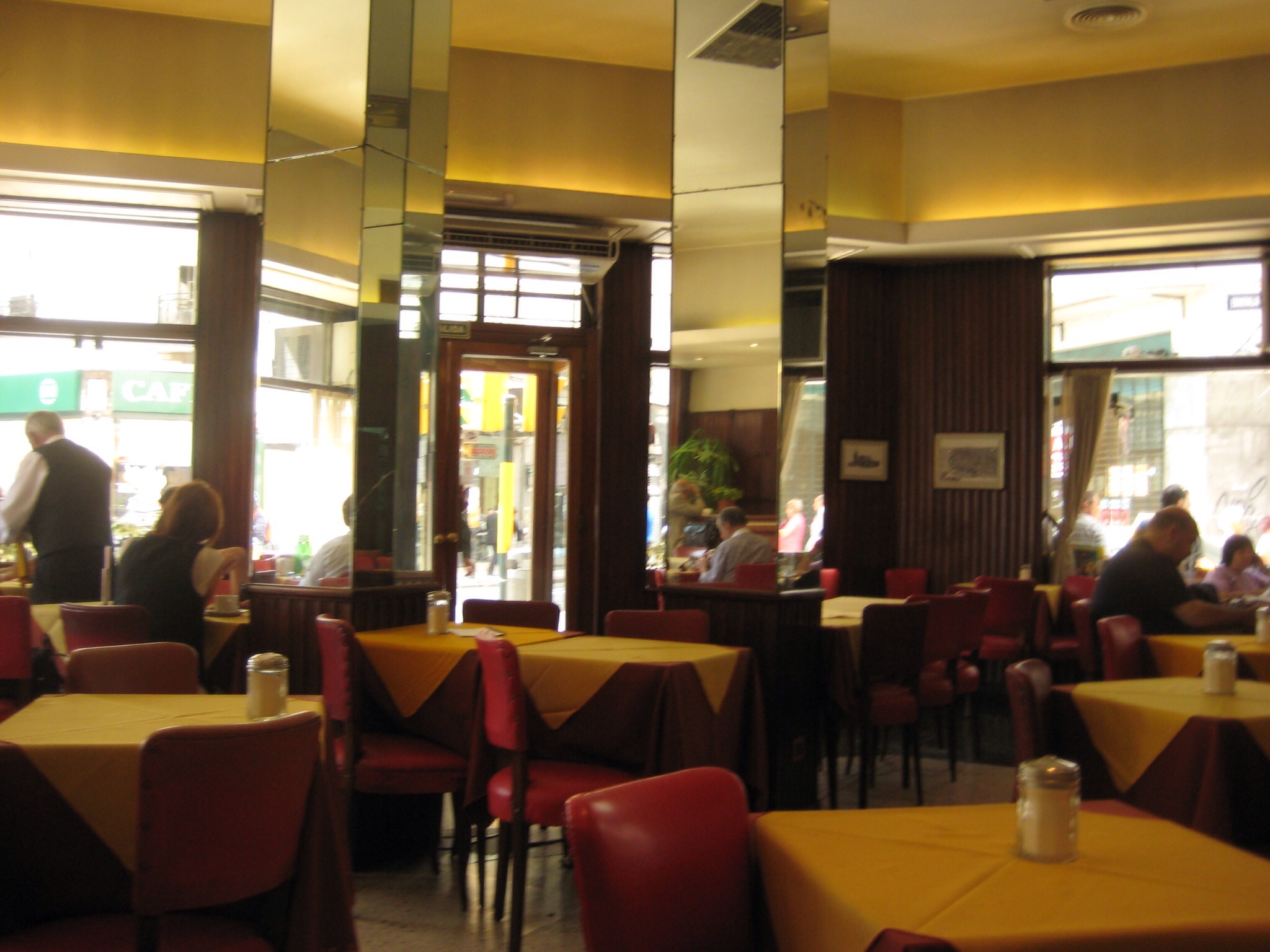
Saint Moritz Interior
Nowadays it’s mainly office workers who come in for lunch. The area is no longer residential and the bar has very few regulars left. Visually the Saint Moritz doesn’t have much going for it, but as a small part of Buenos Aires history it’s important that bars and cafes like this one continue to exist.
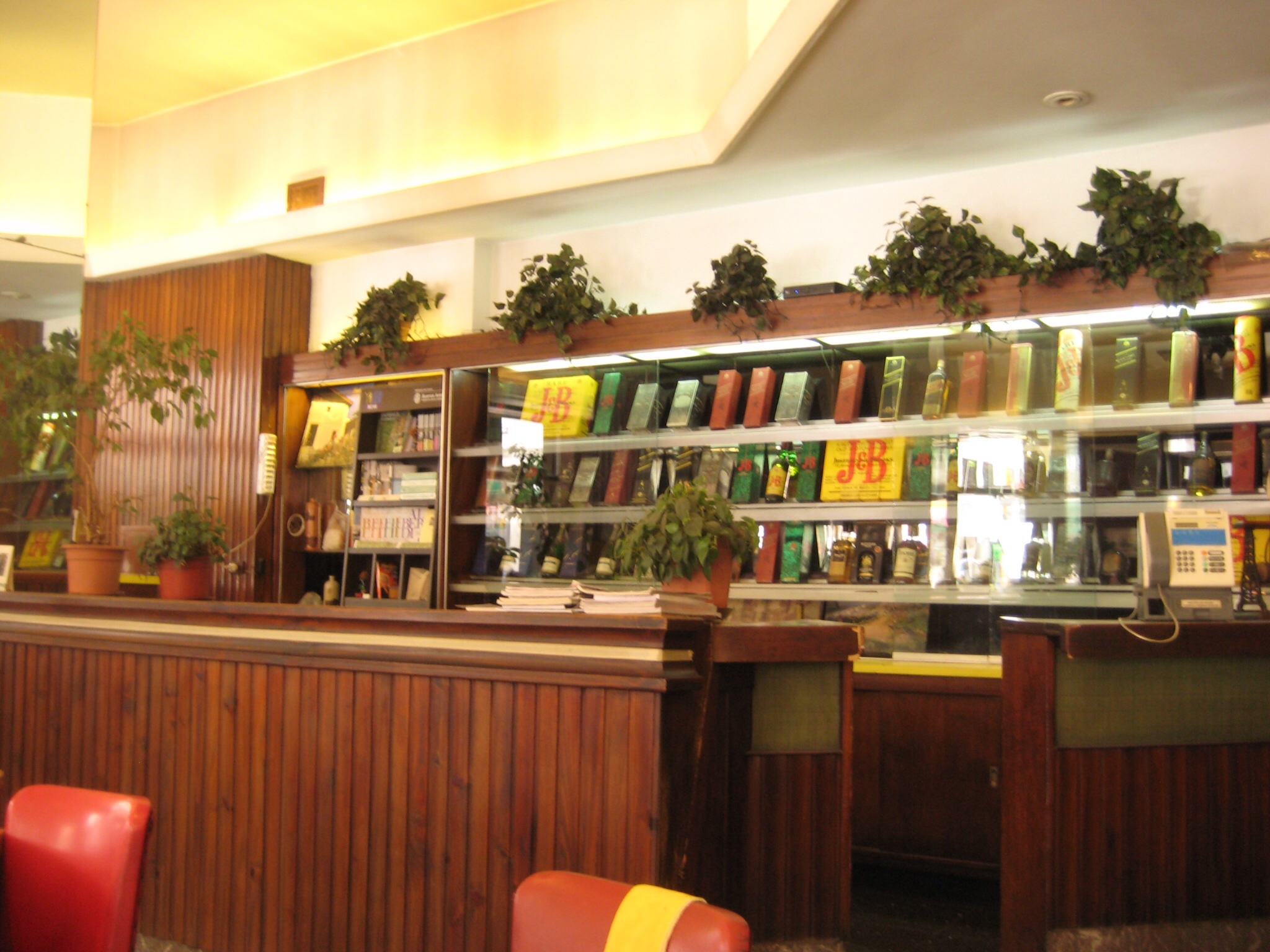
Saint Moritz Whisky Collection
Saint Moritz: Esmeralda 894
Subte: Lavalle, Line C
This page is part of a series examining the Notable Bars of Buenos Aires.

Windows
I must confess that at first glance, Capisci was not the sort of place I was expecting to see on the list of Notable Bars and Cafes of Buenos Aires. Situated in busy and upscale Belgrano, barely a block from Avenida Cabildo, with its faux-Italian name and a small army of waiting staff in smart trendy uniforms, I didn’t see much to differentiate it from dozens of other cafes round the city.

Capisci Brickwork – Detail
And whilst the cafe itself didn’t do anything to dispel that notion, it turns out Capisci does indeed merit its spot due to the building in which it is housed. Built within the old stables of the controversial historical figure Juan Manuel de Rosas, the cafe has kept large chunks of the original building intact from the large arched windows on the front, to the brickwork and tunnels in the cellar (now the toilets).

Capisci from the outside
From a cafe point of view, nothing really stands out in Capisci but the restoration and the historical significance of the building makes it worth a visit if you’re in the area.
Capisci: Vuelta de Obligado 2072
Subte: Juramento, Line D
This page is part of a series examining the Notable Bars of Buenos Aires.
A Q&A with Dan Perlman in which the US chef, sommelier, writer and blogger tells us the best places to get empanadas, ice cream and steak in Buenos Aires and why you should never trust Google Maps
El Preferido holds a special place in my heart as it is the first notable bar of Buenos Aires that I ever visited back in October 2007, although in those heady days I didn’t have much idea of what a notable bar was, or indeed that one day I would be attempting to visit them all.
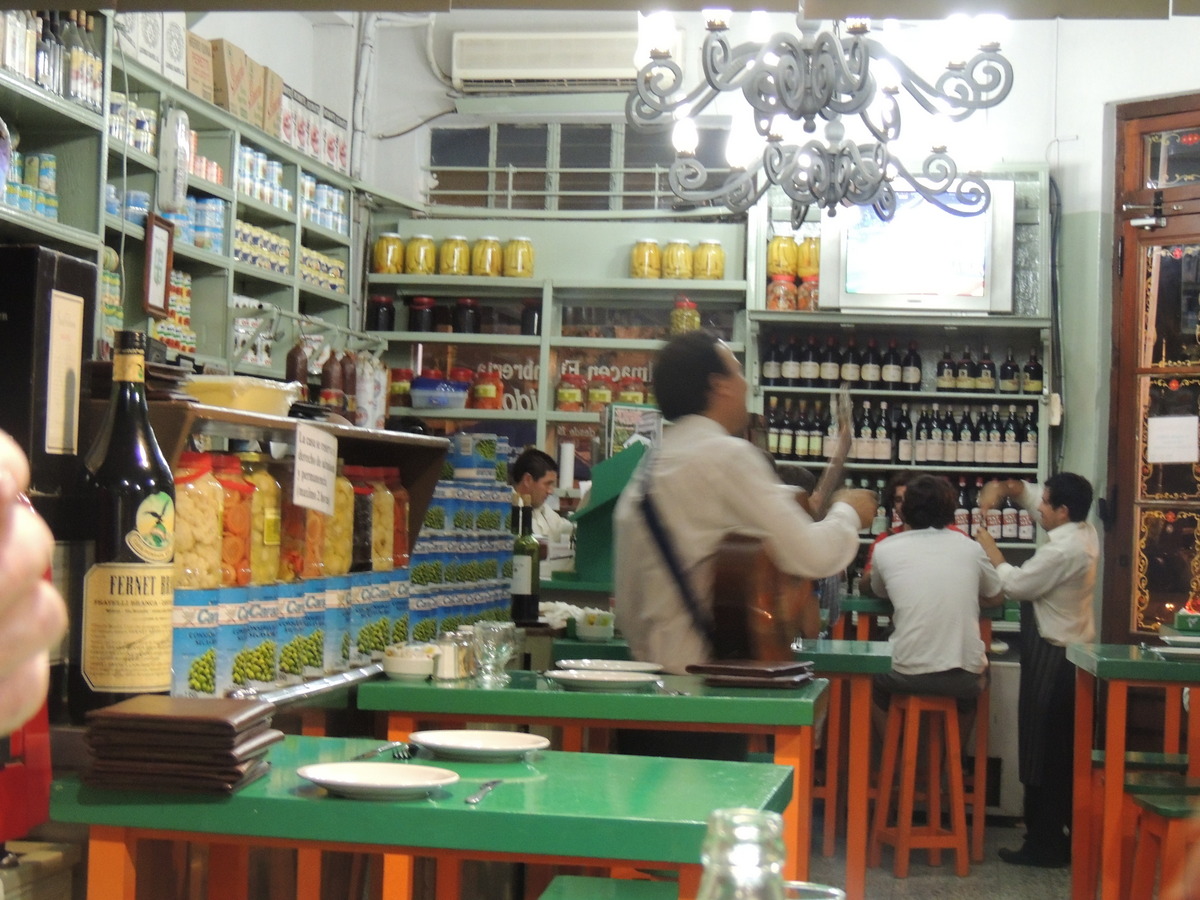
El Preferido, Palermo
Sitting on a prime corner in Palermo Soho, and pre-dating the area’s trendiness by many decades, El Preferido has been serving plates of Argentine goodness (albeit with a Spanish twist) since the middle of the 20th century.
Split into two halves, one side restaurant and the other a classic Porteño almacén-style bodegón, complete with tins of pickled vegetables still lining the walls, I’ve always opted for the high-stools and cramped tables of the non-restaurant side.
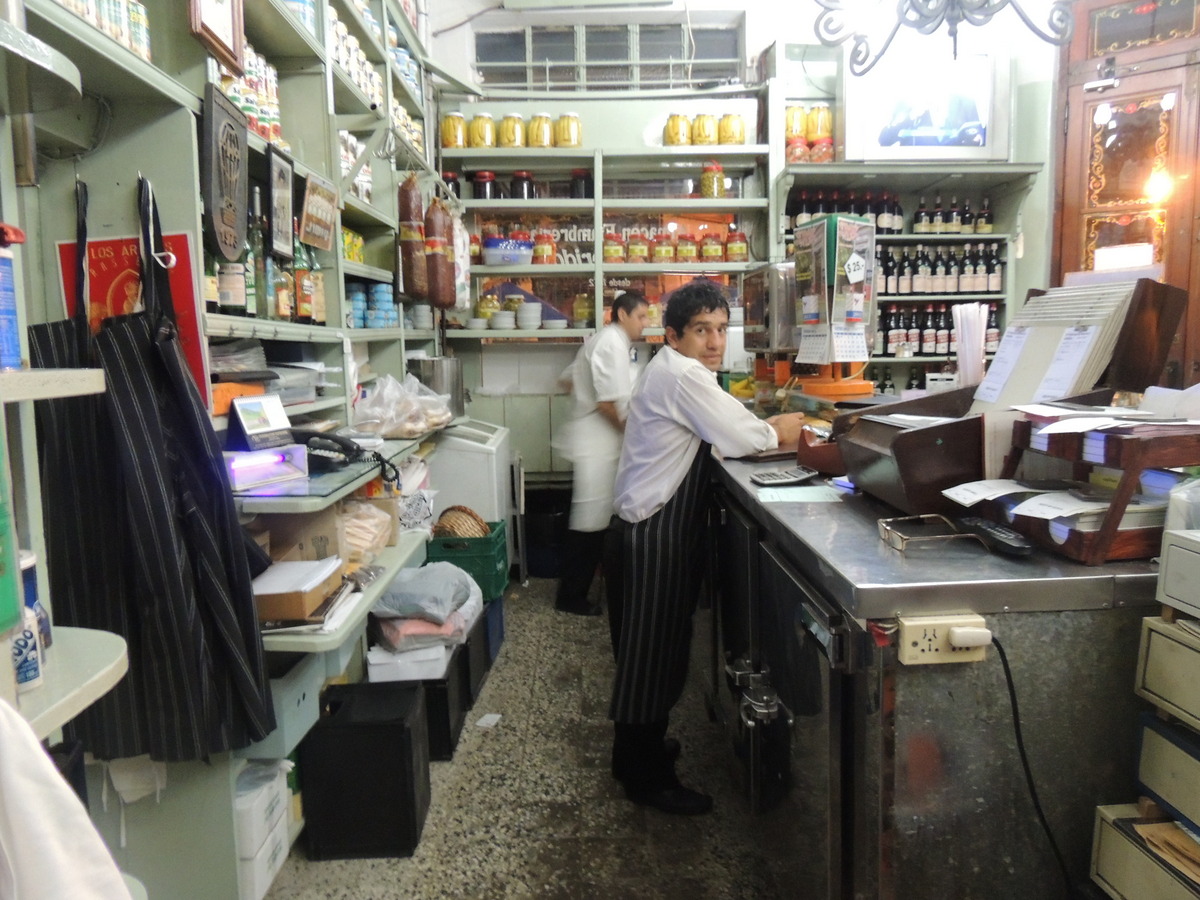
El Preferido, Palermo
The menu features all the standard Argentine classics; picadas, milanesas and the like but in my humble opinion, and based on many visits the stars of the show are the rabas (fried squid rings) and the Revuelto Asturiano, El Preferido’s take on porteño favourite the Revuelto Gramajo.
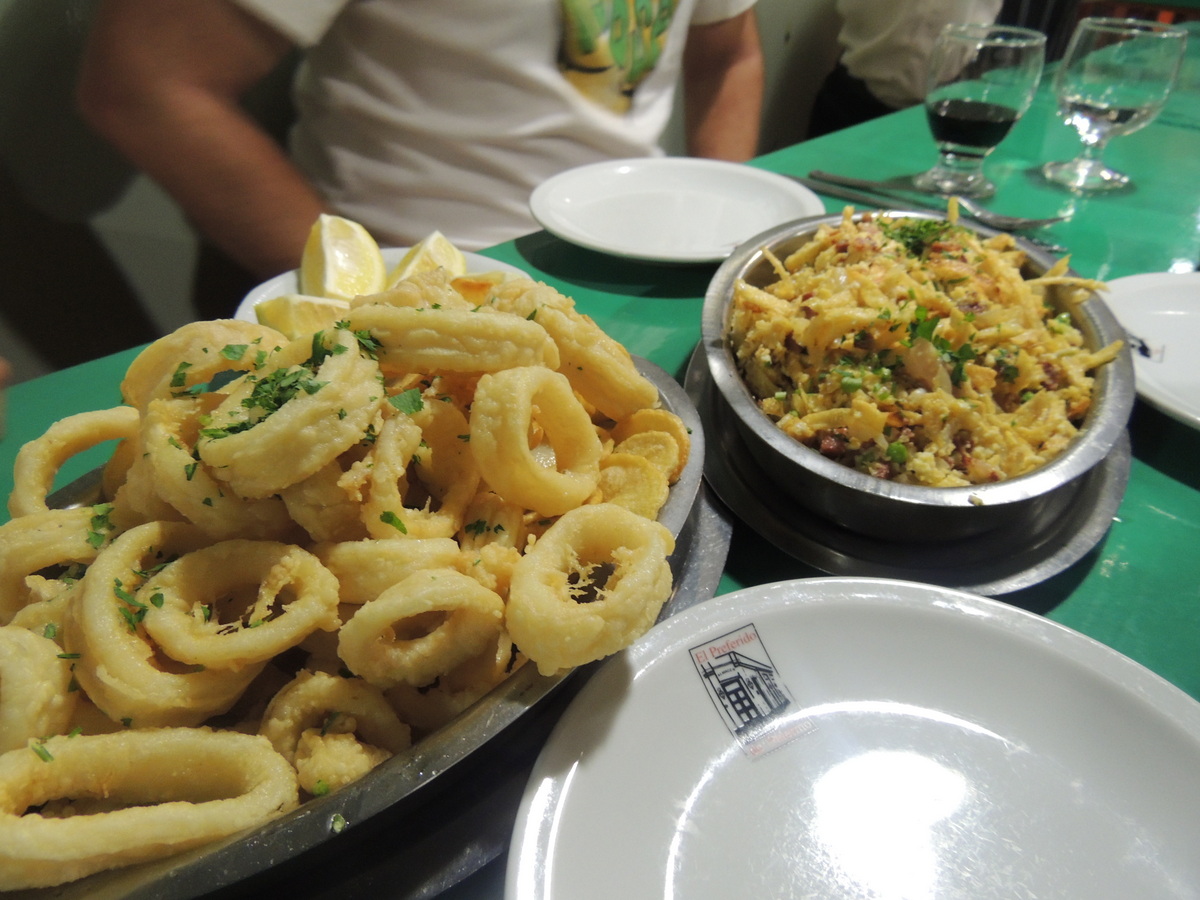
Rabas and Revuelto, El Preferido
El Preferido is a neighbourhood classic and personal favourite of mine ever since I came across it on my second ever day in Buenos Aires. It’s said that it’s a preferred (get it?) spot of Francis Ford Coppola when he’s town and if that’s not recommendation enough, then I don’t know what is!
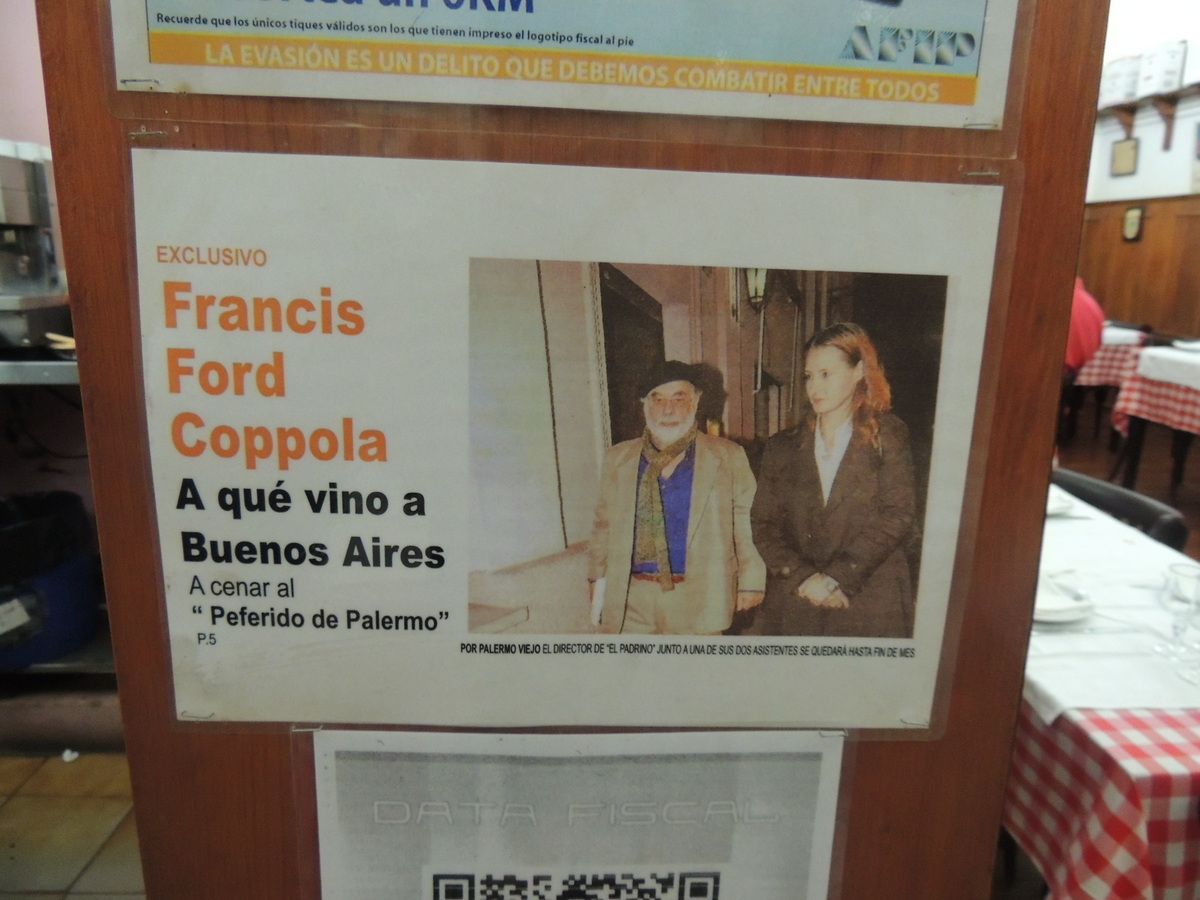
Francis Ford Coppola in El Preferido
El Preferido de Palermo: Borges 2108
Colectivos: 34, 39
This page is part of a series examining the Notable Bars of Buenos Aires.
If you were to spend only 24 hours in Buenos Aires, there is a strong possibility you would come across La Biela; a Recoleta classic, it sits on Avenida Quintana, in the shade of an enormous 215 year-old Ombú and more importantly just steps from the entrance of the world-famous Recoleta cemetery.
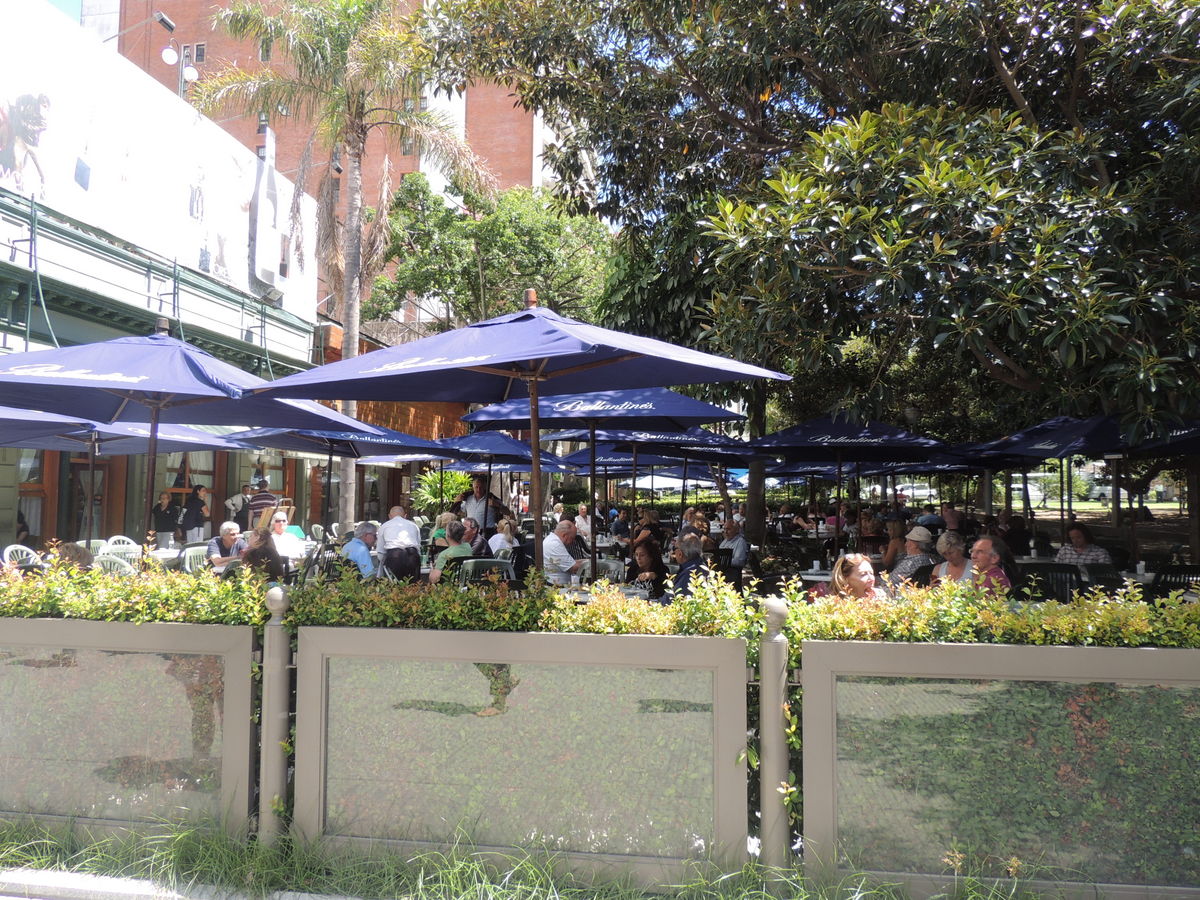
The terrace, La Biela
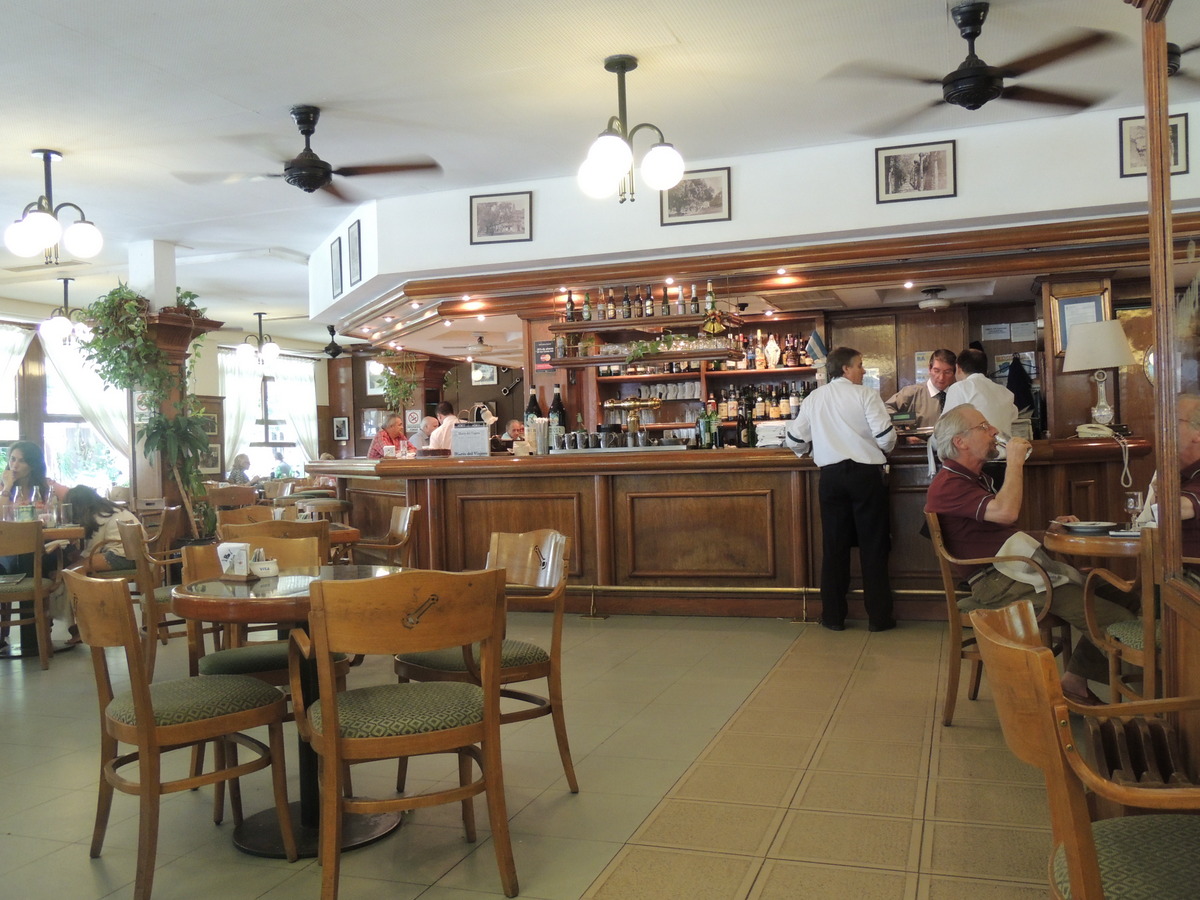
The bar, La Biela
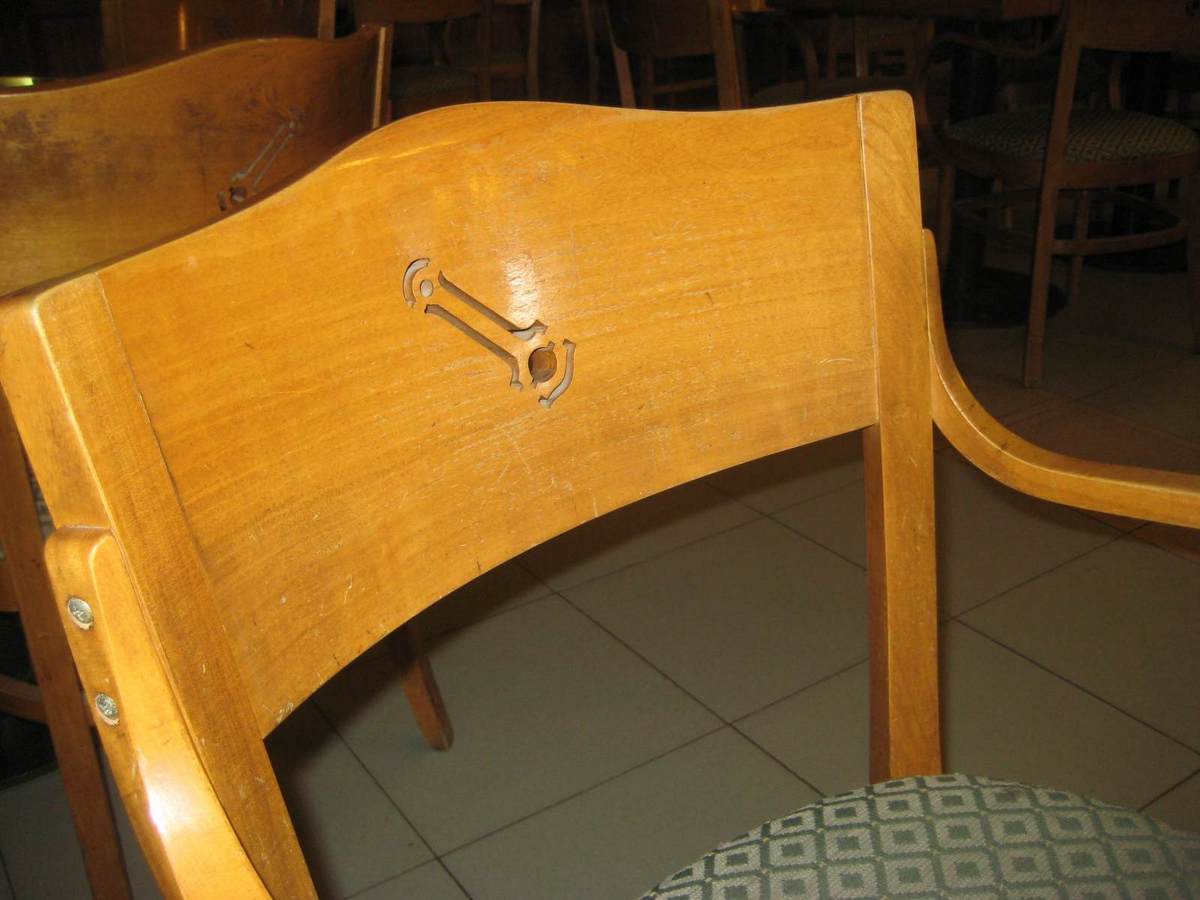
La Biela seatback
La Biela: Avenida Quintana 500
Colectivos: 101, 10
This page is part of a series examining the Notable Bars of Buenos Aires.
More than just a restaurant, the Argentine Experience is more like an interactive dinner party. Learn to make empanadas and serve mate as well as enjoying what is claimed to be the best steak in the city.