El Tokio

When you walk into a bar and there is large reproduction of Valezquez’ painting The Drunkards on the wall you know you’re somewhere special.

El Tokio (named after the street it is on, rather than any link to the Japanese capital) is quite way off the beaten track tucked away in Villa Santa Rita which is not a barrio most tourists or even expats have heard of, let alone visited.

So when we arrived on a quiet, sunny, Saturday afternoon we weren’t sure what to expect and at first glance it didn’t feel like we were still in the same city. The streets felt empty and dusty, with a couple of old boys sitting outside the bar watching us, their pickup trucks next to the kerb, like a slightly less-menacing Argentine version of Deliverance.

The bar is lined with pictures (the aforementioned Velazquez copy being the star), football shirts and jockey colours and the menu is classic Argentine bar fare – we were impressed by the deal on rabas and Stella Artois – pleasingly specific and a great mix to boot.

El Tokio is not the sort of place you just drop into, but if you’re ever out that way, it’s well worth a detour. Let me know how the rabas are.

El Tokio: Av Alvarez Jonte 3550
Colectivos: 24, 109, 124

This page is part of a series examining the Notable Bars of Buenos Aires.

La Nueva Andaluza

Most of the Notable Bars of Buenos Aires are concentrated in fairly central parts of the city and visiting them doesn’t often take you off the beaten track, so one of things that attracted me to the idea of checking them all off the list was the fact that I would get to visit some of the more far-flung (from my point of view) parts of town.

La Nueva Andaluz

Which is how Mark, Laura and myself found ourselves in La Paternal at 4pm on a hot and sticky December afternoon, knocking back a cold beer in La Nueva Andaluza.

On walking in, I immediately liked the place. Firstly it was open, which is not always the case. Secondly the air-conditioning was working, which given the temperature outside was 35C was a blessing.

Lastly, I just liked the feel of the place. A few scattered tables with some old boys reading their Saturday news, the clack of billiards from the back room and not much else. The waiter wasn’t sure when it had opened, but he’d been working there 42 years.

One of personal measures of how much I like a Bar Notable is whether or not I could imagine myself using it as a local – popping by in the morning for a coffee and then dropping in on the way home for a chinwag and a beer with the boys and La Nueva Andaluza would certainly fit the bill. Almost worth moving to La Paternal for the privilege.

La Nueva Andaluza: Camarones 1412
Colectivos: 109, 110

This page is part of a series examining the Notable Bars of Buenos Aires.

Cafe Don Juan

UPDATE: The first time I tried to visit Don Juan it was shut so I needed to return and I’m very glad I did as Don Juan is an absolute classic Buenos Aires bar.

The highlight is by far the owner, the 83 year-old son-in-law of an Italian who bought the bar in the 1930s. He and his wife, who were both sitting at a table when I went in, have been running the place for the last 54 years, which as he pointed out is probably longer than I have been alive.

He regaled me, at some length, about the films which have been made in the bar including Assassination Tango and in fact Robert Duvall would often sit in the exact same seat that I was occupying!

Don Juan is certainly off the beaten track out in Villa General Mitre, but if you want to see what a real Buenos Aires bar looks like, then you need to make the trip.

FIRST VISIT: Visiting the Notable Bars of Buenos Aires is not an exact science. Opening hours are notoriously difficult to obtain in advance so things can be a bit hit and miss. Having struck out on a Sunday in Flores, I thought Saturday would be a more of a sure bet. Turns out there is no such thing as a sure bet.

Don Juan, closed on Saturday afternoons it would appear.

Don Juan, I shall return!

Café Don Juan: Camarones 2702
Colectivos: 109, 110

This page is part of a series examining the Notable Bars of Buenos Aires.

La Farmacia

Here’s a tip: if you travel across most of Buenos Aires to visit a Notable Bar in Flores on a Sunday afternoon – check if it’s open first.

I’ll be back.

La Farmacia: Av Directorio 2400
Colectivo: 180

This page is part of a series examining the Notable Bars of Buenos Aires.

Bar Oviedo

As a visitor to Buenos Aires, you are unlikely to stumble across Bar Oviedo, given its location in Mataderos which on a good day is an hour-long bus ride from the tourist strongholds of Palermo and Recoleta.

This doesn’t mean that you have no reason to visit, as Bar Oviedo sits at the heart of the one of the more off-beat tourist attractions, the Feria de Mataderos which takes place every Sunday outside of the summer months.

Selling itself as a gaucho fair, the Feria de Mataderos features a dizzying array of stalls, folklore music and sizzling barbecue which on their own make it worth a visit. It that weren’t enough, smack in the middle of the action is the 113 year-old Oviedo which provides all the refreshment and character you could require on a hot sticky Sunday in November.

Bar Oviedo: Lisandero del Torre 2407
Colectivos: 55, 126, 180

This page is part of a series examining the Notable Bars of Buenos Aires.

How to Make Great Images with a Point-and-Shoot

Photojournalist Jerry Nelson shares his tips for how to get the most out of your point-and-shoot or camera phone

One of the challenges that I face almost daily as a pro photographer is the fact that with the proliferation of cameras, everyone thinks they’re a photographer. I’m not a songwriter and putting a guitar in my hand and showing me a few basic chords doesn’t make me a singer and giving me a paintbrush doesn’t make me a painter. Yet, everyone with a camera thinks they are a photographer.

The majority of cameras, 85% according to some studies, in use today are either camera phones or point-and-shoots.  With some guidance and practice even someone with the most basic point-and-shoot can drastically increase their picture taking skills. Regardless of the platform, most users fall on a continuum between being a Happy Photographer and a Detailed Planner.

Happy Photographer

We all know digital camera users that think that taking pictures is switching on the camera, holding it at arms length at the weirdest angle possible and clicking the shutter over and over and over again, hardly giving any thought to where the subject is in the frame. At the end of the day, these images are just a ferris wheel ride between some great creative shots and the bizarre.

Detailed Planner

At the other end of the continuum is the Detailed Planner.  We all know photographers like this also.  The person with the camera spends hours, well it feels like it, getting you posed just right and then spends more time staring into their view finder and playing with the controls (if any) to make sure the exposure is perfect.

Once you hear the click of the shutter, you relax and try to move on only to find out that the photographer needs to go through the whole thing again because the sun moved, the reflection changed, someone walked in front of the viewfinder, you closed your eyes or, well, pick any excuse.
So maybe it sounds like I’m making these two types of shooters sound evil.  Truth is, even the best shooters that I know do both at times.

A good shooter has the ability to be spontaneous, experimental and creative yet still take the time to consider the photos that they are shooting BEFORE they go into rapid-fire-sequence.

If you ask yourself just five questions before taking the shot, you’ll find the results are better than what you’ve been getting and you’ll get better shots more consistently than if you just randomly fill your card with images.

• What is the subject of this photo?
• What is the mood of the moment?
• What is going on in the background of this shot?
• Is the place I’m shooting in light or dark?
• Is my subject moving or still?

Asking yourself these questions might seem like it puts the brakes on the creative process.  Well, taking too much time can definitely kill the fun and only you can assess the moment to see which end of the spectrum you need to shoot from.

You can save yourself, and your subjects, some aggravation by anticipating the shot, looking through the viewfinder and snapping the picture.  Don’t over plan.  Be creative. Have fun.

Camera Phone

No matter what camera you use to make images, composition is the key that makes or breaks them.  It’s never the camera that makes the image, it’s you.  Or more precisely, it’s your eye. If you’re like most iPhone/Camera users, you’ve downloaded a bunch of camera apps.  Maybe you delete them quickly or maybe there’s a few still hanging out that you haven’t used in a while.

Doesn’t matter.  Delete all the camera apps now.  Go ahead.  I’ll wait.

Done?  Good.  Now we can get on with the serious business of making some great images.
Great images come from holding the camera properly, managing perspective and paying attention to composition.

When you’re taking the image, hold the camera up while you keep your arms close to the body.  Holding the camera steady is key regardless of what kind of image maker you have, but it’s more critical with the small format of the iPhone.

Frame the scene in your viewfinder, take a breath and push the shutter.  That’s all there is to it.
Once you get comfortable composing the shot, you will want to take images every day and that’s the best way to learn to pay attention to the settings around you.

What is Perspective?

One example of perspective.  Notice how the tracks seem to converge in the disance.

One example of perspective. Notice how the tracks seem to converge in the distance.

Perspective is one of the ways that the eyeball can judge depth within a scene and refers to the angle and location of parallel lines within a scene. If you’ve ever stood on railroad tracks and  noticed how the rails start getting closer in the distance, you’ve seen perspective. Another way to think of perspective is the ‘binocular’ effect your vision experiences when you look at a distant object.  Because your eyes are spaced several inches a part, your brain receives two different images that are combined to produce the feeling of depth and perspective.

The change from binocular to monocular can be challenging when someone loses sight in one eye as all depth perception goes out the window and the person needs time to re-learn and readjust.
A point-and-shoot can never ‘learn’ how to see depth; you as the photographer have to give it that ability by using a technique called ‘layering’ to do it.

Layering, like many other things, isn’t difficult once you’ve practiced. In essence, layering is the placing of one or more objects in the foreground and the subject of your photograph in the background.  Or vice versa – placing something in the background behind your subject that appears in the foreground. By itself this can get confusing to the viewer of the image though.  Which object is ‘the’ subject of the photograph; the one in the foreground or background?  A technique called “bokah” comes to the rescue.
"Bokah", an effect you've seen many times.

“Bokah”, an effect you’ve seen many times.

If you’ve seen a photograph where the object in the foreground was in nice, sharp focus while the object(s) in the background were fuzzy and blurred, then you’ve seen bokah at work.
Depending on the make and model of your camera phone or point and shoot you may be able to achieve bokah also.  If you can’t then you’ll have to resort to photo editing through software to accomplish it.

Composition
A plane over a busy airport.  The story is obvious.

A plane over a busy airport. The story is obvious.

Composing an image through the viewfinder is subjective.  What one person finds pleasing and appealing, someone else won’t like it. Basically, composition is organizing and arranging the individual details of the scene in front of you into a pleasing arrangement.  While there is no right or wrong composition in photography, a composition that shows what your intended meaning was is affective.  If the image confuses the viewer, then it’s a bad composition.

Rules of Composition are Just Guidelines

You don’t need to think that guidelines of composition are hard-and-fast and the photography police will come take you away if you break them.  The guidelines are just that, guidelines.
Photographic guidelines are valuable.  They are time-tested and have provided great guidelines for shooters regardless of the skill level.

Now, go have fun and make some great images!

Esquina Homero Manzi

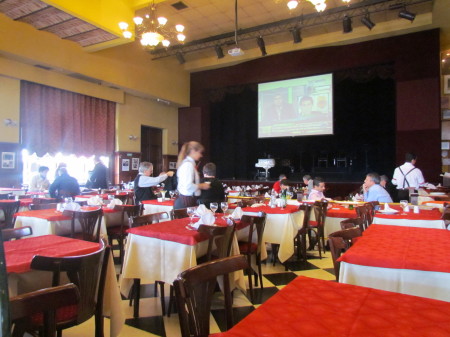
Like La Perla, this is a Notable Bar which is all about a song. It is named for Homero Manzi, a prolific and politically-active tango songwriter, best known for his tango “Sur“, an ode to a lost-love which namechecks many of the barrios in the south of Buenos Aires, including the corner of San Juan and Boedo avenues where the bar is situated.

Given this illustrious tango history, it’s not a surprise to find that the bar itself plays heavily on this heritage. A long room with high ceilings, walls lined with tango photos with a stage at the far end, this is clearly a place with one message.

manzi1

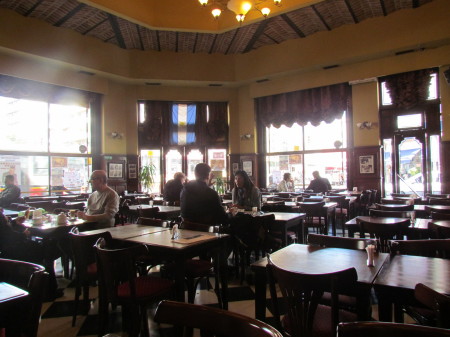
At lunchtime it’s divided in two, one side set up for coffee drinking and the other laid out with tablecloths and clearly catering to a local (all-male) business crowd.

manzi2

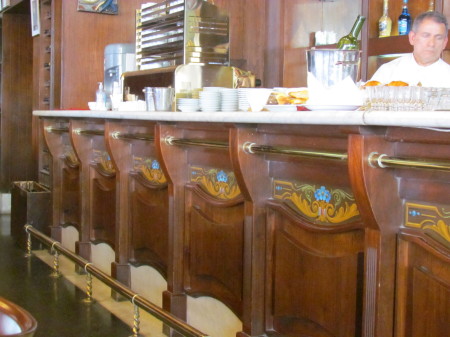
The waiters all are kitted out in black trousers, white shirts, red cravats and armbands, topped off with a red and black apron. This is the industrial version of the Notable Bar, trading on its location and name, happy to market itself as a traditional bar whilst at the same time stripping itself of any atmosphere.

manzi3

Esquina Homero Manzi: Av San Juan 3601
Subte: Boedo, Line E

This page is part of a series examining the Notable Bars of Buenos Aires.

Shoot Outside the Postcard

Avoid a memory card full of comedy snaps of your friend balancing the Obelisk on his hand with acclaimed photojournalist Jerry Nelson’s tips on how to side-step cliches and better capture Buenos Aires

Allie Lazar, Food Blogger & Writer

Allie Lazar of the Buenos Aires food blog Pick Up The Fork tells us about her favorite foodie spots, where to find the best ice cream and recalls the time a stranger once asked her to lend him a shoe.

La Perla (Once)

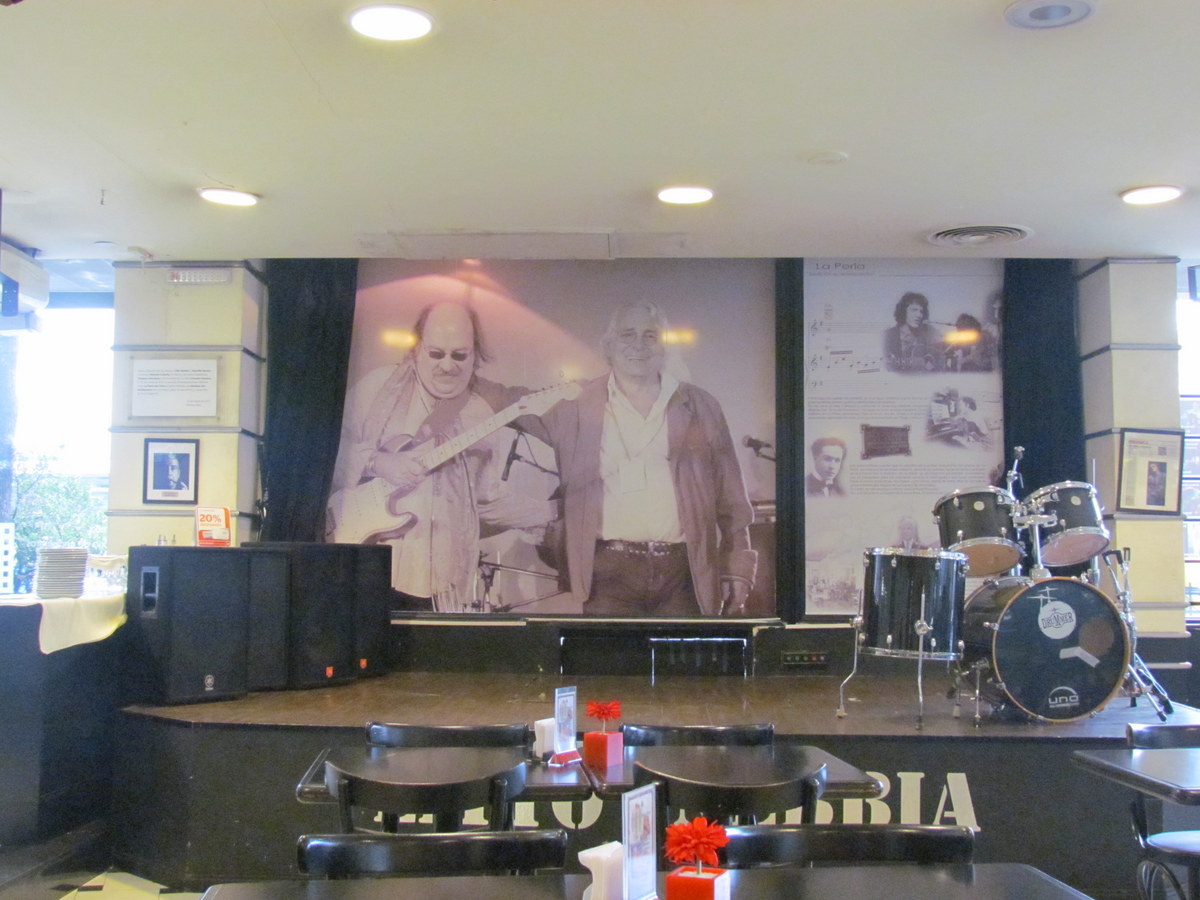
La Perla, sitting right on the corner of bustling Plaza Miserere, owes its place on the list of Notable Bars and Cafes, not for being an especially notable bar or cafe, but it’s all down to a song – one that is generally considered to be the greatest Argentine rock song of all time.

[youtube https://www.youtube.com/watch?v=Yv9PnHsEGas]

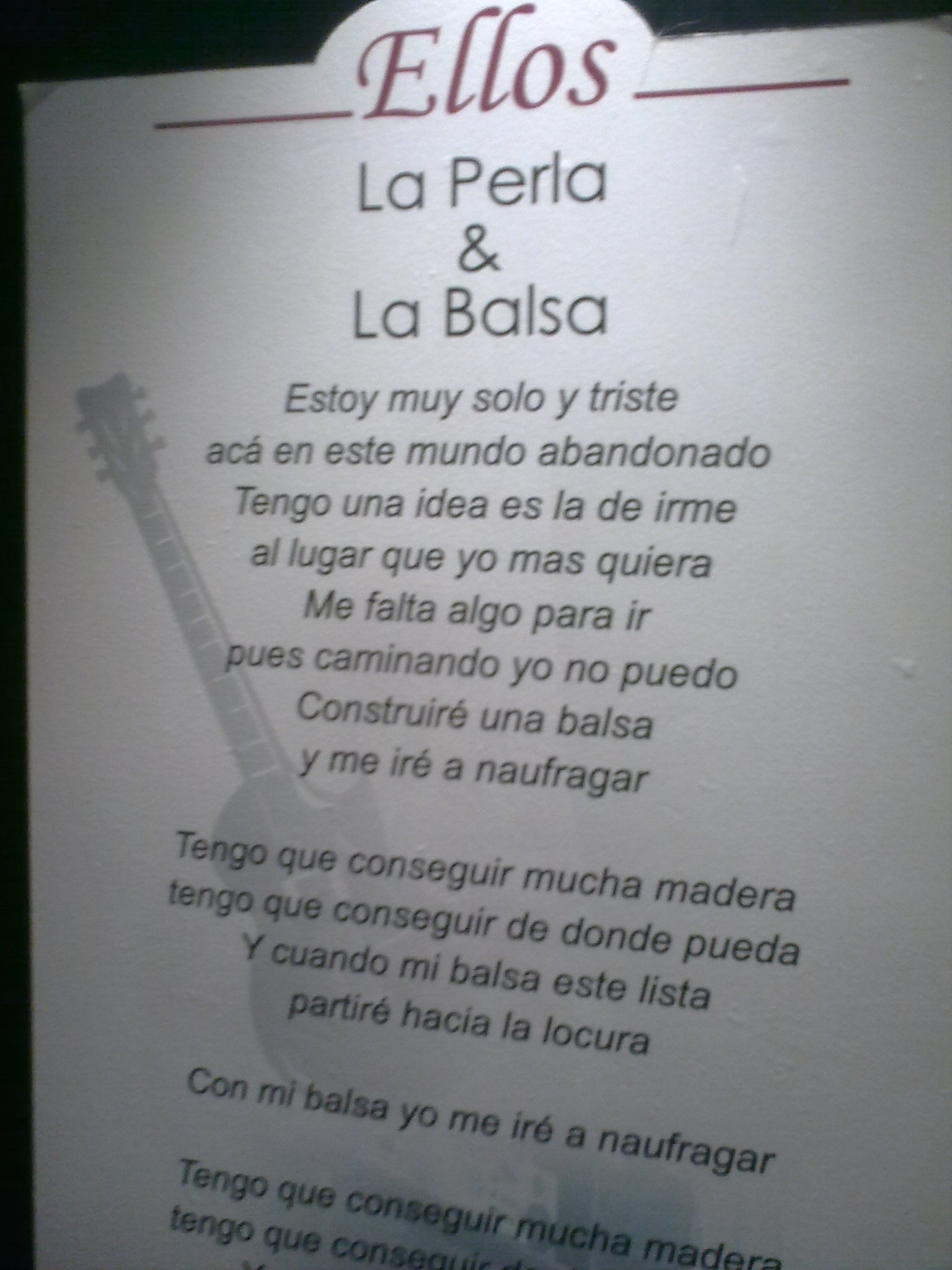
La Balsa (The Raft) by Los Gatos was released in July 1967 and sold over 250,000 copies, finally giving Argentina their answer to the Rolling Stones and kickstarting the Rock Nacional movement which is still going strong today.

La Perla’s role in all this took place a couple of months before the record hit the stores, because the song’s two authors, Tanguito y Litto Nebbia, were inspired to write the song in La Perla itself, more specifically in the gents toilets.

Gent's Toilets, La Perla

What possessed them to spend that long in the toilet of a pizzeria in Once is lost in the mists of history, but what emerged is a classic of Spanish-language rock and La Perla is certainly making the most of its accidental role in its history.

La Perla

Whilst the place itself is not especially memorable, they are clearly proud of their (self-proclaimed) status as “the Birthplace of Rock Nacional”. The song’s co-author Litto Nebbia still plays at La Perla every Friday and it’s no doubt turned into a pilgrimage for both die-hard and curious fans alike. La Perla is an unusual slice of Argentine history and as such deserves its Notable status.

Cafe de los Angelitos: Jujuy 36
Subte: Plaza Miserere, Line A

This page is part of a series examining the Notable Bars of Buenos Aires.