
Argentine Spanish Phrases: What to Say in Buenos Aires

Last Updated on September 25, 2026 by Alan Seabright
You do not need fluent Spanish to enjoy Buenos Aires. In hotels, popular restaurants and many visitor-facing businesses, you will often find someone who speaks at least some English. Even so, a few words of local Spanish make everyday exchanges warmer and easier.
The Spanish spoken here is usually called castellano. It has its own rhythm, uses vos where many textbooks teach tú, and includes plenty of words you may not hear elsewhere. This guide starts with the phrases you are most likely to need, then explains what makes Argentine Spanish sound different.
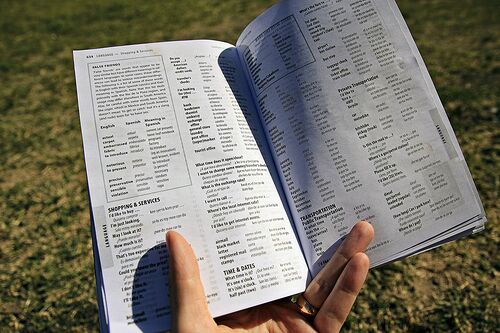
Useful Argentine Spanish phrases to save before you arrive
| Spanish | Meaning | When to use it |
|---|---|---|
| Hola, buen día | Hello, good morning | A friendly way to begin a morning exchange |
| Por favor | Please | Add it to requests |
| Gracias | Thank you | Useful everywhere |
| Perdón | Sorry or excuse me | To apologize or get someone’s attention |
| Permiso | Excuse me, may I pass? | When moving through a crowd or past someone |
| No entiendo | I do not understand | When you have lost the thread |
| ¿Podés repetir? | Can you repeat that? | A useful example of local vos Spanish |
| ¿Podés hablar más despacio? | Can you speak more slowly? | Often more helpful than switching straight to English |
| ¿Hablás inglés? | Do you speak English? | A polite practical question |
| ¿Dónde queda…? | Where is…? | For places, streets and stations |
| ¿Dónde está el baño? | Where is the bathroom? | In cafés, restaurants, museums and other public places |
| ¿Cuánto sale? | How much does it cost? | In shops, markets and cafés |
| La cuenta, por favor | The bill, please | When you are ready to pay in a café or restaurant |
If you remember only four, make them hola, por favor, gracias and perdón. A friendly tone matters more than a perfect accent.
Why Spanish sounds different in Buenos Aires
Buenos Aires Spanish belongs to the Rioplatense variety spoken around the Río de la Plata. Visitors usually notice three things first.
People say vos instead of tú
In everyday conversation, Argentines normally use vos for the informal singular “you.” It is not slang or bad Spanish. It is the standard local form among friends, colleagues and people of a similar age, and you will hear it in shops and restaurants too.
You do not need to master every verb before your trip, but these common forms are useful:
| Textbook Spanish | Argentine Spanish | Meaning |
|---|---|---|
| tú eres | vos sos | you are |
| tú tienes | vos tenés | you have |
| tú quieres | vos querés | you want |
| tú puedes | vos podés | you can |
| tú vienes | vos venís | you come |
| tú hablas | vos hablás | you speak |
If you use tú, people will still understand you. Recognizing vos is more important than producing it perfectly.
Ll and y often sound like sh
Many people in Buenos Aires pronounce ll and consonantal y roughly like the English “sh” sound. Some speakers use a sound closer to “zh,” as in the middle of “measure.”
That is why calle may sound a little like “CA-she” and yo may sound like “sho.” The exact sound varies by speaker. There is no need to put on an exaggerated porteño accent. Just knowing what to listen for makes conversations much easier to follow.
The rhythm has an Italian influence
The city’s large waves of Italian immigration helped give porteño Spanish its distinctive musical rise and fall. You may also hear people speaking quickly and using expressive gestures. If you need more time, ¿Podés hablar más despacio? is completely normal.

Greetings and polite everyday Spanish
- Hola: Hello.
- Buen día: Good morning. Very common in shops and cafés, especially earlier in the day.
- Buenas tardes: Good afternoon.
- Buenas noches: Good evening or good night.
- ¿Cómo va?: How is it going?
- Todo bien, gracias. ¿Y vos?: All good, thanks. And you?
- Mucho gusto: Nice to meet you.
- Chau, nos vemos: Bye, see you.
- Disculpá: Excuse me or sorry. This is the local vos form.
- De nada: You’re welcome.
You may also hear no, por favor after you thank someone. In this context it is a warm Argentine way of saying that no thanks are necessary.
When you do not understand
- No entiendo: I do not understand.
- Entiendo un poco: I understand a little.
- ¿Podés repetir?: Can you repeat that?
- ¿Podés hablar más despacio?: Can you speak more slowly?
- ¿Cómo se dice…?: How do you say…?
- ¿Qué significa…?: What does … mean?
- ¿Hablás inglés?: Do you speak English?
People will often slow down once they know you are learning. Starting in Spanish, even if you then need to switch languages, is usually appreciated.
Asking for directions and using transport
- ¿Dónde queda…?: Where is…?
- ¿Está lejos?: Is it far?
- ¿Puedo ir caminando?: Can I walk there?
- ¿Dónde tomo el subte?: Where do I take the subway?
- ¿Dónde tomo el colectivo?: Where do I take the bus?
- ¿Esta línea va a…?: Does this line go to…?
- ¿Me avisás cuando lleguemos?: Will you tell me when we get there?
- Voy a [address]: I am going to [address].
- ¿Me llevás a…?: Can you take me to…?
- Acá está bien: Here is fine.
In Buenos Aires, the subway is the subte and a city bus is a colectivo. You may also hear bondi, an informal word for bus.
For practical information about SUBE cards, the Subte, buses, taxis and ride apps, see our guide to getting around Buenos Aires.
Spanish for cafés and restaurants
- Una mesa para dos, por favor: A table for two, please.
- ¿Me traés la carta?: Can you bring me the menu?
- ¿Qué me recomendás?: What do you recommend?
- Para mí…: For me, I will have…
- Un café con leche, por favor: A coffee with milk, please.
- Un cortado en jarrito, por favor: A cortado with a little milk in a medium-sized cup, larger than the espresso-sized chico.
- Sin…: Without…
- Soy alérgico a… / Soy alérgica a…: I am allergic to…
- No como carne: I do not eat meat.
- No como pescado: I do not eat fish.
- No consumo lácteos: I do not consume dairy products.
- La cuenta, por favor: The bill, please.
A café con leche is similar to a latte, though not quite the same. A cortado is smaller and stronger. In the traditional café size range, a jarrito is medium-sized and larger than a chico, although exact cups vary by café. Our Buenos Aires coffee guide explains the local choices and gives you a few complete orders to use at the bar or table.
For food vocabulary, cuts of beef and dishes that do not translate neatly, open our Argentine menu reader before you order.
Serious allergies need more than a phrase. If an allergy is serious, carry a written explanation that names the ingredient, states the risk of cross-contact and says what must be avoided.
Paying and shopping
- ¿Cuánto sale?: How much does it cost?
- ¿Aceptan tarjeta?: Do you accept cards?
- ¿Se puede pagar con tarjeta?: Can I pay by card?
- En pesos, por favor: In pesos, please.
- ¿Hay descuento pagando en efectivo?: Is there a discount for paying in cash?
- ¿Tenés cambio?: Do you have change?
- Solo estoy mirando: I am just looking.
Payment habits and exchange-rate choices change more quickly than vocabulary. Check our current Money in Argentina guide rather than relying on an old phrasebook for financial advice.
Asking for help
- Necesito ayuda: I need help.
- ¿Dónde hay una farmacia?: Where is there a pharmacy?
- Necesito un médico: I need a doctor.
- ¿Podés llamar a una ambulancia?: Can you call an ambulance?
- Perdí mi pasaporte: I lost my passport.
- Me robaron el teléfono: My phone was stolen.
For city-specific precautions and what to do after a theft, read our Buenos Aires safety guide. Save important contact details offline before you go out.

Argentine words you are likely to hear
These words are useful to recognize. You do not need to force them into every conversation.
- Che: Hey, listen, or a way to address someone informally.
- Dale: Okay, go ahead, come on or agreed, depending on the tone.
- Bárbaro: Great or excellent.
- Re: Very or really, used as an intensifier. Está re bueno means it is really good.
- Buena onda: A good, friendly or relaxed vibe. It can also describe a nice person.
- Plata: Money.
- Laburo: Work or a job.
- Pibe / piba: Young man, young woman, boy or girl, depending on context.
A warning about boludo
You will hear boludo frequently. Between close friends it can sound affectionate, teasing or simply conversational. In another tone, or from a stranger, it can be an insult. It is worth recognizing, but it is not a safe phrase for a visitor to try out casually.
Do I need Spanish to visit Buenos Aires?
No. You can manage a trip without speaking Spanish, especially in hotels and businesses that regularly serve international visitors. English is less reliable with taxi drivers, small neighborhood shops, market vendors and in unexpected situations. A few phrases, an offline translation tool and your destination written down will cover many gaps.
Is it español or castellano?
Both words refer to Spanish. In Argentina, castellano is very common. If someone asks ¿Hablás castellano?, they are asking whether you speak Spanish.
Should I use vos or usted?
Use vos in most relaxed everyday situations. Usted is more formal and respectful, but politeness in Buenos Aires depends as much on tone, greeting people and saying por favor and gracias as it does on the pronoun you choose. If you learned tú, people will understand you.
What is lunfardo?
Lunfardo is a body of popular vocabulary associated with Buenos Aires and the Río de la Plata. It grew through immigration, working-class city life, tango and wordplay, and it continues to change. Some words are part of ordinary speech; others sound dated, playful or highly informal. Learn to recognize the common ones before trying to perform them.
Learn the city as well as the words
The fastest way to understand Buenos Aires is to connect its language with its neighborhoods, history, food and everyday habits. On the Buenos Aires Essentials Tour, our small groups leave plenty of room for questions, including the expressions and cultural details you notice along the way.
Thank you so much for this! I will be traveling to Argentina in 6 months and I have never taken a Spanish class in my life. But I have worked with people and that is who I will be visiting. Again thank you for this!
Hi Jessica!
You’re welcome for the article, and buena suerte learning Spanish! Studies show that the most important factor in learning another language is drive and motivation, so keep it up and you’ll be able to chat with Argentines when you get here. And if you have any questions at all about your upcoming trip, we’d be happy to help!
Buen viaje!
Quincy
hi i would like to send letter to pope francis can you help me with translation of sentences? hope you have free time for this.. thankyou and godbless..
Hello Joy,
Thanks for your comment and sorry for the delay in replying, we’re really busy with our tours at the moment.
If you want to send me an email to bsaires AT gmail DOT com (I’m not writing the email properly due to that attracting spammers) then I could do my best to help when I have time. However, I must warn you that I am not a translator by any stretch of the imagination.
All the best,
Alan
Hola ,gracias.
For the help with the spanish lessons yet I’m struggling with Argentine in school because my high school is going to be in Argentina so gracias for the help.
Hola Jase! De nada!
Buena suerte with your Spanish lessons and your time at high school in Argentina!
Alan
Hola.Gracias for helping me with my spainish project.
De nada, Dolphy! Best of luck with the Spanish project. Alan
[…] used to. De facto spanish sounds a little like italian and spanish mixed together. Here are some phrases in Argentina translated to english. Notice how some of them are a tad bit different tfrom the spanish of other spanish speaking […]