
Buenos Aires Museums & Cultural Centers

Last Updated on September 29, 2026 by Alan Seabright
 Browse: BuenosTours › Buenos Aires Guide › Things To Do › Museums
Buenos Aires has enough museums to fill several days, but most visitors do not need a long checklist. Pick one collection that matches your interests, then combine it with the neighborhood around it. That usually makes a better day than crossing the city to collect museum names.
The choices below cover major art collections, smaller museums with a strong point of view and two places where immigration and political history become much easier to understand.
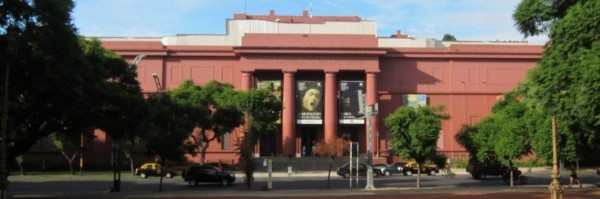
For a broad art collection: Museo Nacional de Bellas Artes
The Museo Nacional de Bellas Artes in Recoleta is the best starting point if you want a broad survey. Its collection brings Argentine art into the same visit as European works, which is useful for seeing local artists in a wider context.
It also fits easily into a Recoleta day. The museum is near the cemetery, parks and Centro Cultural Recoleta, so you can decide how much time to spend indoors without building the whole day around transport.
For Latin American modern art: MALBA
MALBA focuses on modern and contemporary Latin American art. Its collection gives visitors a regional frame rather than treating Argentine art in isolation, and its temporary exhibitions can be as important as the permanent works.
Check the current exhibitions before deciding how long to allow. MALBA sits between Recoleta and Palermo, making it easy to combine with the parks, the Japanese Garden or another stop in that part of the city.
For Evita in political and personal context: Museo Evita
The Museo Evita is housed in a building acquired by the Eva Perón Foundation in 1948 and once used as a temporary home for women and children. Its displays use clothing, photographs, personal objects and archival material to follow Evita’s life, public image, political role and social work.
It is a useful introduction, especially if your visit to Recoleta Cemetery has raised more questions than it answered. The museum is in Palermo, close to the Botanical Garden and Plaza Italia.
For the story of arrival: Museo de la Inmigración
The MUNTREF Museo de la Inmigración occupies part of the former Hotel de Inmigrantes. Its setting matters as much as the exhibits: newcomers once passed through this complex after arriving at the port.
The museum explores the many migrations that shaped Argentina. It is in the northern part of Puerto Madero, with its own access arrangements, so read the official directions rather than relying only on the neighborhood name in a map app.
For a singular Argentine artist: Museo Xul Solar
The Museo Xul Solar is smaller and more personal than the large institutions. Xul Solar moved between painting, invented languages, music, astrology and systems of thought that resist a simple label. The museum incorporates his former home and rewards visitors who enjoy unusual artists and compact collections.
Because it is in Barrio Norte, it can be combined with an unhurried walk or café stop rather than treated as an isolated expedition.
In La Boca: Quinquela Martín and Fundación Proa
La Boca offers two very different art stops close together. The Museo Benito Quinquela Martín connects paintings of the port with the artist’s home and his public contribution to the neighborhood. Fundación Proa, beside Caminito, presents changing modern and contemporary exhibitions.
See our La Boca guide before deciding how to fit them into the rest of your visit.
Cultural centers are worth checking too
Buenos Aires’ cultural centers are not simply smaller museums. Their programs can include free exhibitions, concerts, talks, film and activities for children. The Usina del Arte in La Boca is particularly good when its current program gives you a reason to go. Centro Cultural Recoleta is easier to add to a day already planned around Recoleta.
Programs change often, which is precisely the point. Check what is on during your dates instead of visiting only because a building appears on a generic list.
How to plan a museum day
- Check the institution’s own website on the day you plan to visit. Opening days, exhibitions, ticket systems and access arrangements can change.
- Choose by interest first, then by geography. Bellas Artes works naturally with Recoleta; MALBA or Museo Evita with Palermo; and Quinquela Martín with Proa and Caminito.
- Leave room for one good collection. A museum followed by a neighborhood walk is usually more memorable than three rushed entrances.
- Do not assume every museum closes on Monday. The schedules differ, which is another reason to use the official links above.
For help putting the neighborhoods and their history together, start with our Buenos Aires Guide. If art, architecture or political history is a priority for your group, a private Buenos Aires tour can be planned around those interests.